


As a marketer, entrepreneur, or simply an enthusiast, you want to know what the marketing trends for 2017 are. Whether you’re building your marketing strategy based on these or you want to know the latest news guiding your favorite brands’ actions, here are the most important directions for 2017.
To keep up with these changes, we’ve decided to summarize the main marketing trends you’ll use for your brand strategy. Consumers are not only keeping up with them but are actually setting the tone for trends.
More than ever, customers are the ones who will set the trends. Customer satisfaction is the performance indicator that marketers are adopting this year, from service and Customer Care departments.
This is another indication that the boundaries between marketing, services, and sales are blurring. Marketing is becoming a service that also deals with loyalty, not just bringing in new customers.
Today’s consumers interact with the brand and even build it, in collaboration with other consumers and together with the marketing team. And all this because technology allows them to.
Marketing Trend 2017: The Customer Journey
The customer journey incorporates any technology that transforms a simple shopping experience into a personalized and unique one. The trend is to bring online conveniences directly to store shelves. Retail and technology will become inseparable.
Artificial intelligence, virtual & augmented reality, and the Internet of Things will contribute significantly to personalizing the shopping experience.
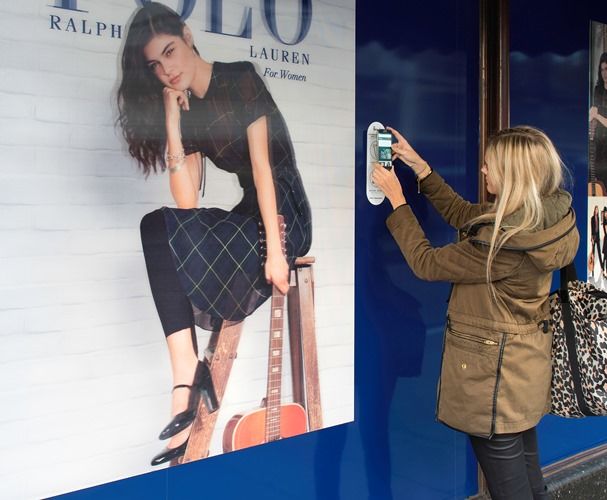
To promote their new clothing line, Harrods stores implemented several interactive screens. The screens provide stickers that can be scanned with a mobile phone, allowing for online product purchases even when the stores are closed. This approach increased online sales by 15%.
The criteria consumers consider important are the speed and comfort they experience while shopping. As people increasingly value their time, they tend to give up walking through the maze of shelves in favor of the promise that they will find their products as soon as they step through the store’s door.
Customers will appreciate retailers’ openness to making the entire shopping process easier, from entering the smart parking lot to paying at the checkout with a mobile or contactless system.
Prosumerism
Access to real-time communication has led to an increased consumer appetite for information. This leads to increased attention regarding the origin of the products they consume, as well as how green the brand is in general.
According to our study, searching for desired products on Google is the main source of information for both online and offline consumers: approximately 60% of them use Internet searches to identify the stores where they will make purchases.

Net-a-porter combined customers’ favorite way of finding products with their favorite way of buying them. In other words, products can be found in a printed magazine and purchased through a virtual method. Following a study, the online fashion store found that 80% of their customers prefer to get inspiration by looking at outfits in specialized print magazines.
Thus, Net-a-porter launched a magazine that allows their customers, through a mobile app, to instantly buy the product seen in print.
It has become a norm for information to be just a click away, and buyers can become frustrated if they do not have immediate access to details about the products they purchase. In recent years, companies have emerged that have developed a policy focused on transparency and sustainability.
Who offers consumer experiences
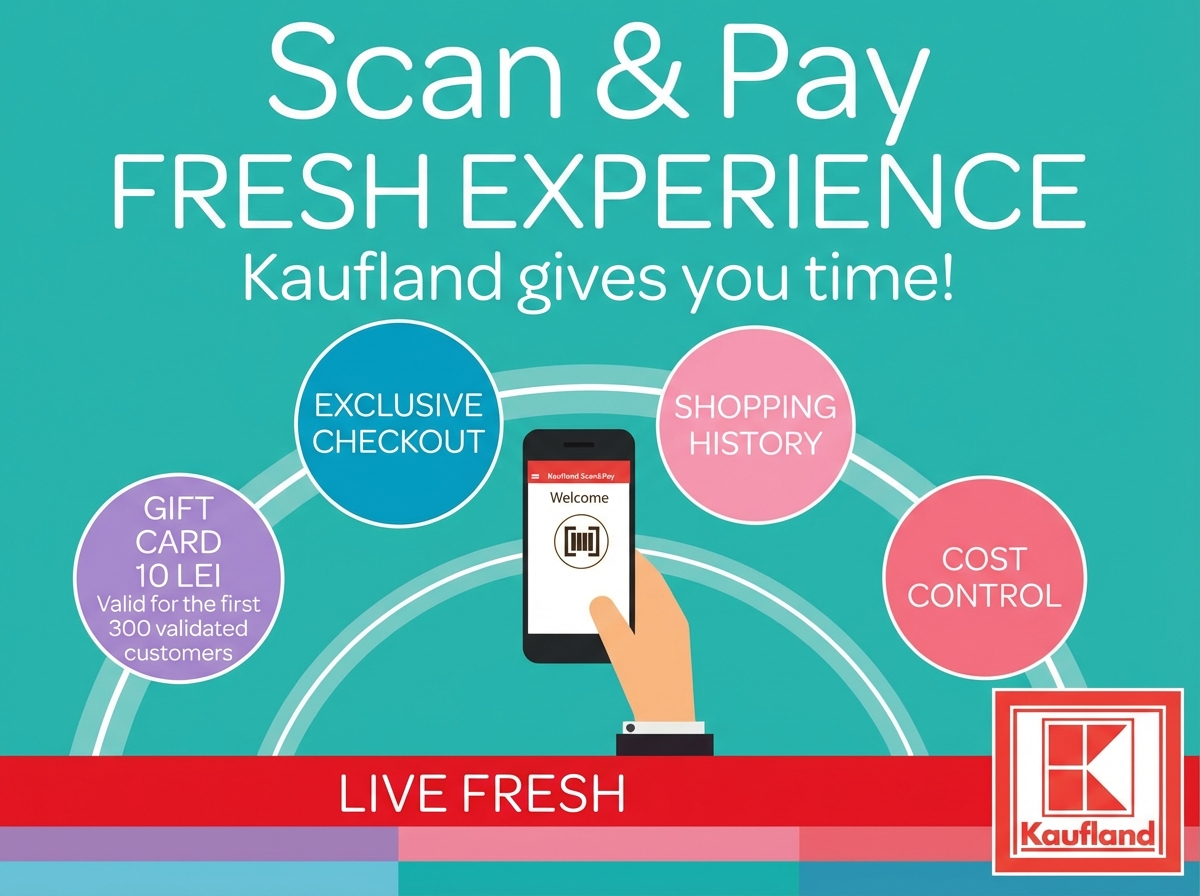
For example, Kaufland introduced an application in Romania that allows for faster shopping. Kaufland Scan&Pay allows customers to directly scan the product’s barcode, thus eliminating the time spent placing products on the conveyor belt, at the checkout, and back into the basket.
Payment for the products is made later at a self-checkout in the store.
Among the advantages of the mobile application are the possibility to see the history of previous purchases and scanning the product once with the possibility of multiplying the chosen quantity.
Because the abundance of the market makes choosing difficult, consumers will be attracted to buy from places that, in addition to the sought-after product, also offer a pleasant experience. Thus, the notion of retail-tainment emerged, meaning the association between retail and entertainment.
Consumers seek to personalize the shopping experience to match their preferences as much as possible. This translates into more effective targeting based on customer preferences and their location to propose a personalized offer in return.
In Romania, IKEA opened for a month, in a space on Calea Victoriei, an urban stopover. Although it is not a point of sale, the space offers workshops and events with themes from the IKEA universe. This innovative concept offers a series of advantages to stimulate people to cross the threshold of the stores.

Multisensory
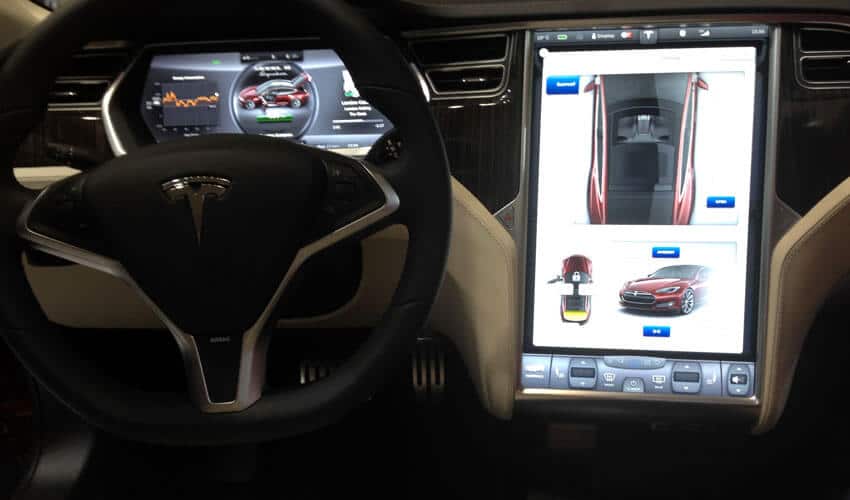
The cars of the future promise an interior that constantly interacts with the user, thus transforming the car into a personal and fun space. In the development of self-driving cars, special emphasis will be placed on electronic prints given that drivers will no longer have to concentrate so much on the road and will seek new forms of entertainment.
3D printing technology
3D printing technology is developing day by day, and its applicability continues to surprise. The great advantage of using this technology in marketing and advertising is the possibility of creating unique experiences.
From product presentation and personalization to food printing, 3D printing technology has the capacity to surprise, to say the least. 3D prints are particularly suitable for events or exhibitions, where customers will be excited to experience three-dimensionality.

Forum8 used two innovative technologies, 3D printing and projection mapping, to display products in an interactive way. With the help of a device, images are projected around a 3D printed object, and thus it is brought to life.
Virtual reality
Virtual reality will bring consumers into the midst of their favorite series’ characters, offer them a preview of their next vacation, or allow them to test drive the car of their dreams. If until now VR technology represented a novelty, now it will become part of the mainstream.
With a massive approach in the gaming industry, VR will also assert itself in other industries where marketers can use it intelligently to bring products closer to consumers.
For a successful campaign using VR, the key is personalization. VR allows for the creation of 360-degree stories, which means more interactivity with the brand.
https://www.youtube.com/watch?v=3R5J8Je2j_4
Ephemeral marketing
To deliver integrated campaigns that connect consumers, especially the younger generation – namely millennials, brands must offer exclusive content that has an expiration date.
Ephemeral marketing is about short and to-the-point communication. In a world where people have less and less time, this approach connects them instantly with a brand.
Instagram is a good channel for presenting and selling products, and Snapchat can be a good tool for increasing transparency.
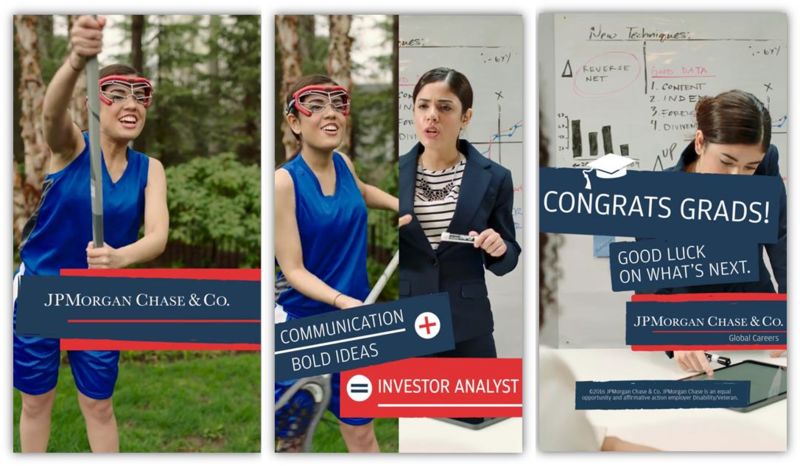 JP Morgan found an inventive way to become a more attractive employer for young graduates. The targeting was as precise as possible: they used a communication channel that young people use intensively and, in addition to this, they addressed those on student campuses directly.
More specifically, they implemented a photo editing filter on Snapchat that is available in 80 campuses. The recruitment campaign encouraged students to use the filters and show how they would highlight the skills with which they could be hired at JP Morgan.
Influencer Marketing
If last year Influencer Marketing grew in importance, this year it will become an integral part for many companies. Until now, this type of marketing has been used in the beauty & lifestyle industries, but there are also other sectors with potential.
Content remains the most relevant element for marketing, but the context in which it is delivered has become more important than ever. Good content is delivered organically with the help of an influencer.
The fact that the product tells a story is more relevant for consumers who are increasingly attentive to the way they interact with a brand.
Social Media & Content
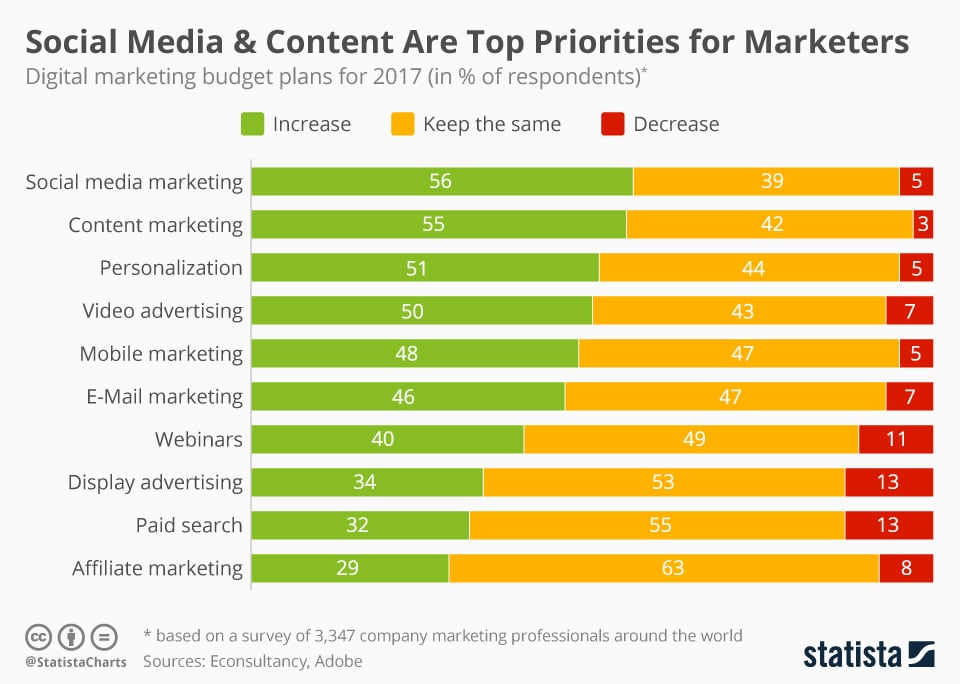
Marketing in the digital world is no longer a secret to anyone. According to figures from Statista, brands continue to invest in Social Media and Content strategies. High video consumption makes Social Media remain a priority in 2017 as well.
Mobile
Since previous years, a clear preference for mobile has been observed, and this year smartphone and tablet users are more numerous than desktop users. Besides this aspect, mobile users prefer video content. In other words, 2017 will be the year of mobile video growth.
Any type of technology involving mobile has seen growth that cannot be ignored. Only in the 2015-2016 period, the mobile app usage rate increased by 98%, while SMS communication increased by 111%. The trend for marketers will be to use mobile apps and SMS as means of interacting with customers.
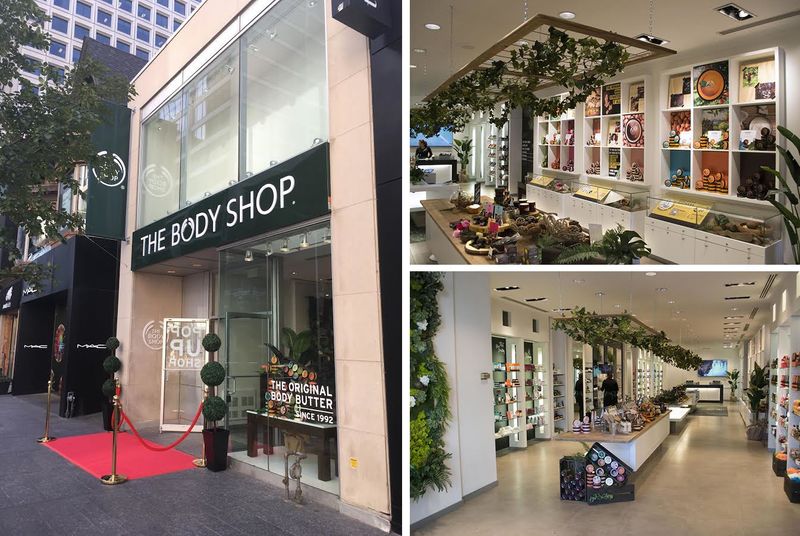 For example, The Body Shop provides iPads that customers use to find out information about the origin and manufacturing process of the products.
Virtual Reality & Augmented Reality
Adapting to this trend means mobile-optimized websites, brand-dedicated mobile apps, or mobile-targeted campaigns, as well as adapting to the wave of virtual and augmented reality, IoT, through VR/AR applications, social media integration, or live streaming.
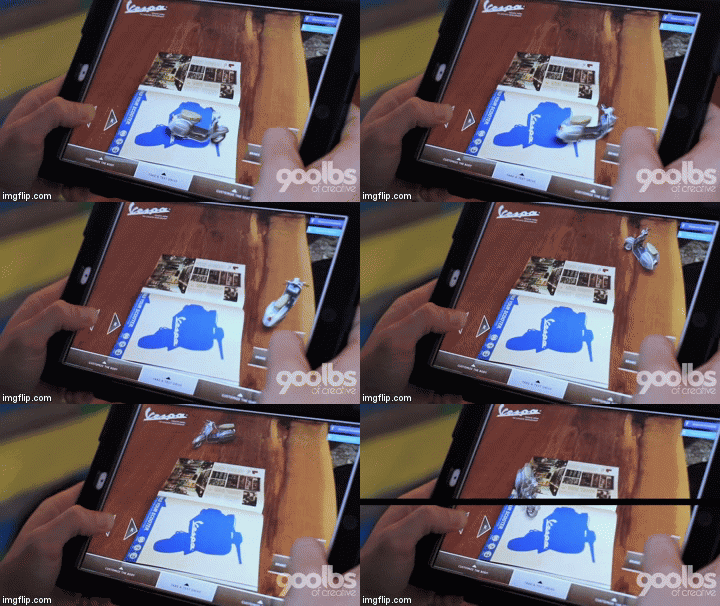
The manufacturer Vespa has brought its scooters closer to customers through augmented reality. Starting from a print advertisement, with the help of an app, those interested can customize the scooter, study its features, and see it in action. Finally, based on their current location, they will be directed to the nearest Vespa dealer.
Artificial Intelligence & Big Data
Marketers have databases, information, and indicators in their blood. They need quantitative data to know who, what, when, why, and what they buy in order to approach them as effectively as possible.
Due to mobile and wearable devices, the amount of data collected has increased significantly, but the human brain does not have the capacity to process it constructively. Fortunately, this is no longer a problem because technologies such as Artificial Intelligence and tools such as Data Visualization have emerged.
The ideal solution lies at the intersection of online and offline
Today’s consumers shop whenever they want, from whatever device they want. For them, it is no longer as important to be present in the online or offline store. What matters is that the brand is present whenever and wherever they choose to shop.
Do you want your business to keep up with the latest trends? Contact us and let’s talk over a coffee!
Have you read everything? Comment / join our newsletter / read our other research posts!