

The trust crisis is changing the way we shop
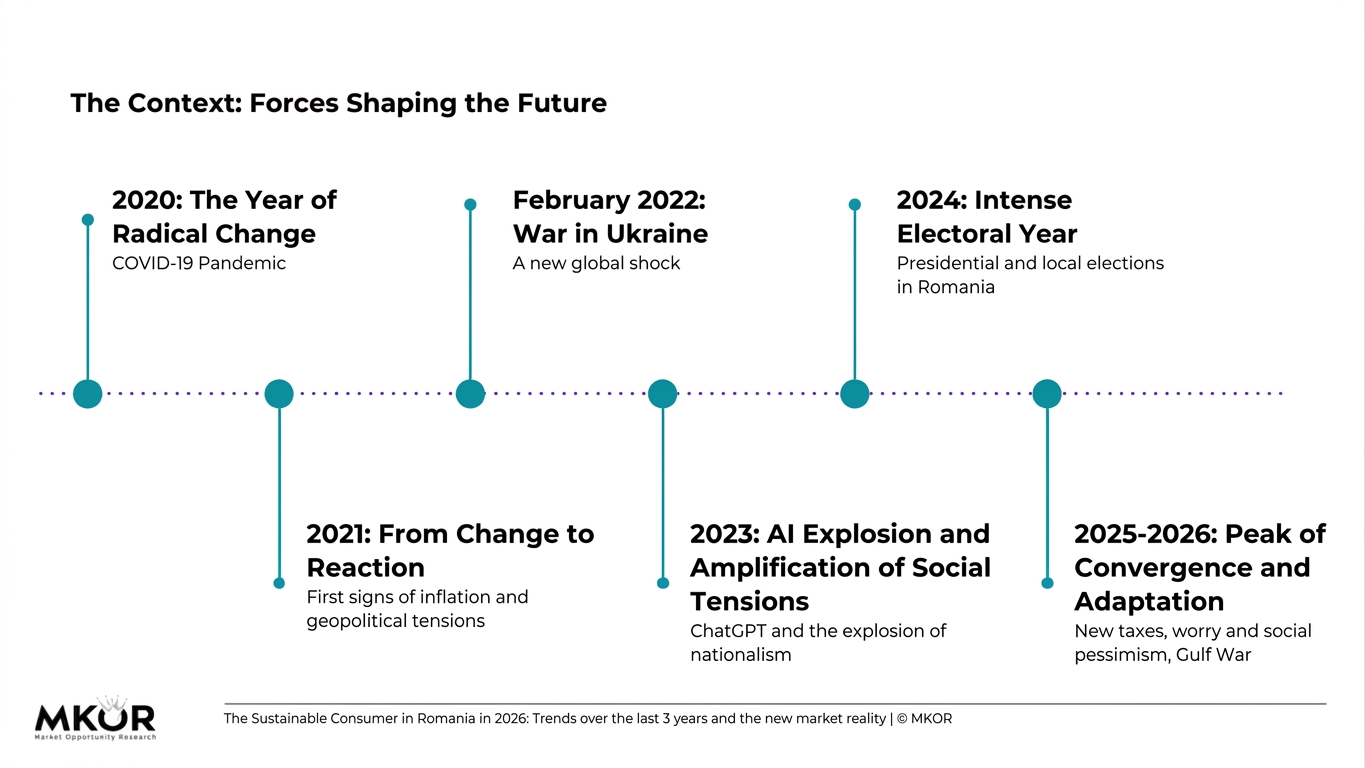
Since February 2020, Romania has navigated six years of consecutive shocks: pandemic, inflation, war, political instability, geopolitical turbulence. Each situation has had effects on consumer behavior. In 2026, pessimism reached its highest level in the last three years, fueled by new taxes, uncertainty in governance, and a broad crisis of trust in institutions.
However, an interesting tension arises here. Although the general mood is deteriorating rapidly, trust in the private sector is slightly increasing. Romanians are more pessimistic about the future, but more willing to believe in the business environment. A recalibration is occurring: when uncertainty grows, people end up seeking certainty in concrete objects and brands they can test daily.
This social change has profound effects on consumption behaviors. The lack of trust makes us more cautious, more risk-averse, and more attentive to every leu spent. For the sustainable consumer, this pressure creates a unique situation: they want to buy responsibly, even though the context is increasingly difficult. For the indifferent consumer, we can say that pessimism is just one more excuse to be careful with the budget.
MKOR has been tracking this phenomenon for four years. The study was previously known as The Ethical Consumer (see the 2022, 2024 and 2025 editions) and was renamed in 2026 to The Sustainable Consumer, to more accurately reflect the behaviors we measure. The comparison over the last three years shows us what endures and what gives way under pressure.
What the data from the last three years tells us is clear: sustainable commitment is recalibrating, not disappearing. Some behaviors resist under pressure, others give way. And here lies the key for brands: if they understand the behaviors the consumer still performs, they can position themselves pragmatically, based on market data, not on morality.
Conținut
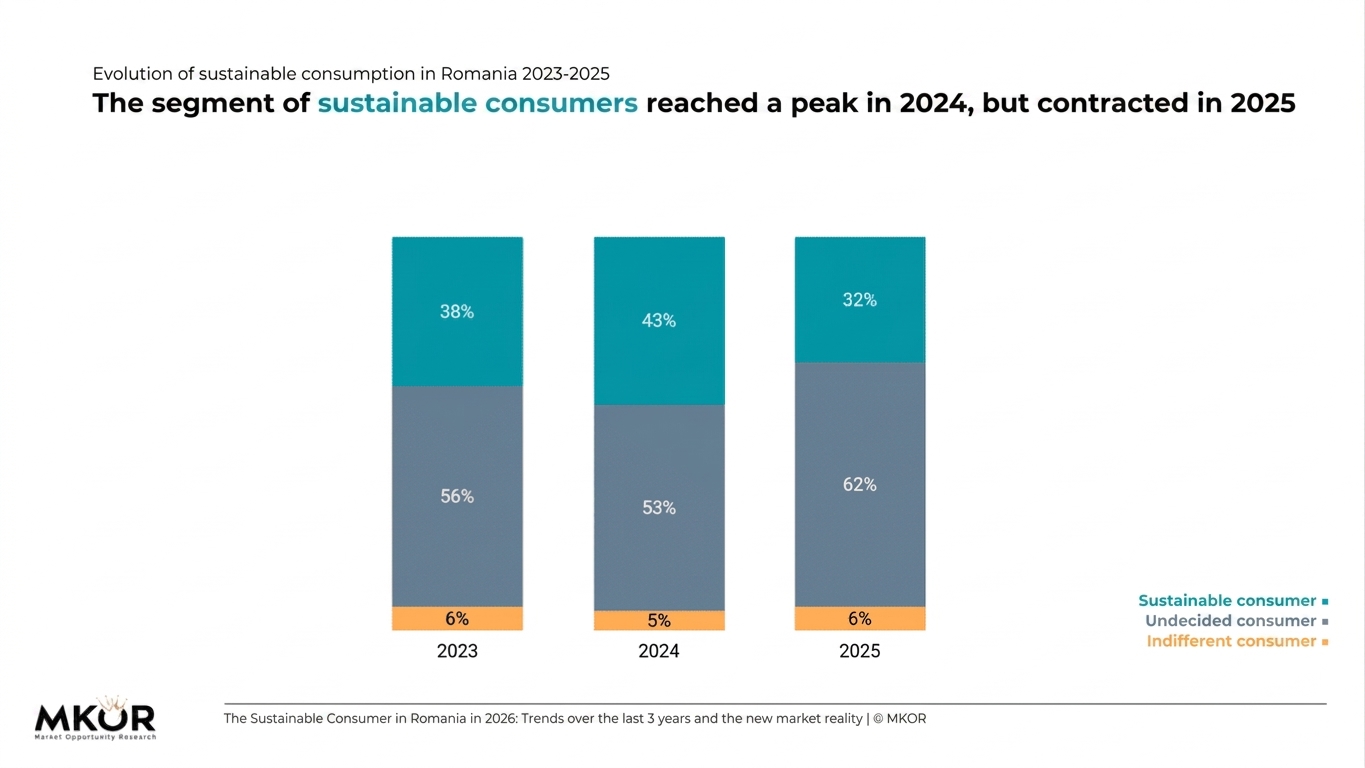
32% of Romanians are already sustainable consumers. Who are the 62% who have not yet decided?
In 2026, sustainability is either a conscious choice or a secondary detail, with no real impact on the shopping basket for those who are undecided or indifferent. The MKOR Sustainable Consumer in Romania in 2026 study analyzes both the profile and behaviors of three distinct market segments: the sustainable consumer, the undecided consumer, and the indifferent consumer.
32% of consumers fall into the sustainable category, with a higher presence among men (51%) and the urban population (78%). The sustainable consumer is on average 38 years old and has a high level of education, with almost half (49%) having higher education. A relevant detail: 42% of these consumers have low incomes, which shows that sustainability is not conditioned by income level.
The sustainable consumer chooses products with an ecological label and integrates behaviors such as recycling and reducing food waste into their daily routine. For this segment, sustainability functions as an active selection criterion, not as an occasional option.
At the opposite pole, the indifferent consumer (6%) remains exclusively oriented towards price, quality, and convenience. Social responsibility messages have a low impact on their purchase decision, and moralizing communication tends to distance them from the brand rather than attract them.
The most important finding of the study remains, however, the size of the undecided segment: 62% of Romanians have not yet adopted a concrete position regarding sustainable consumption. These consumers are open to eco alternatives, but their decision depends on accessibility, price, and the product’s presence in the usual purchasing context, not on brand messages.
For companies, this undecided segment represents the greatest growth opportunity. The difference in strategy is clear: the sustainable consumer responds to values, the indifferent consumer responds to price, and the undecided consumer responds to accessibility and direct experience with the product.
The commitment to sustainability is recalibrating, not disappearing
The 2025 context marks the first year in which economic pressures and social pessimism have led to an adjustment of sustainable behaviors. Thus, the sustainable consumer currently does less than two years ago on almost all indicators studied. They perform an average of 5.6 sustainable actions, compared to 6.2 in 2023. Surprisingly, the indifferent consumer performs 4.2 actions compared to 3.8 in 2023.
At the general population level, protecting the environment through routine actions holds up best and remains the most practiced behavior by this segment (but even this has decreased from 52% in 2023 to 46% in 2025). At the opposite pole, avoiding brands involved in child exploitation is the most vulnerable criterion (it decreased from 43% in 2023 to 32% in 2025): being an abstract behavior, without immediately visible consequences, it is also the first to be abandoned when pressure increases.
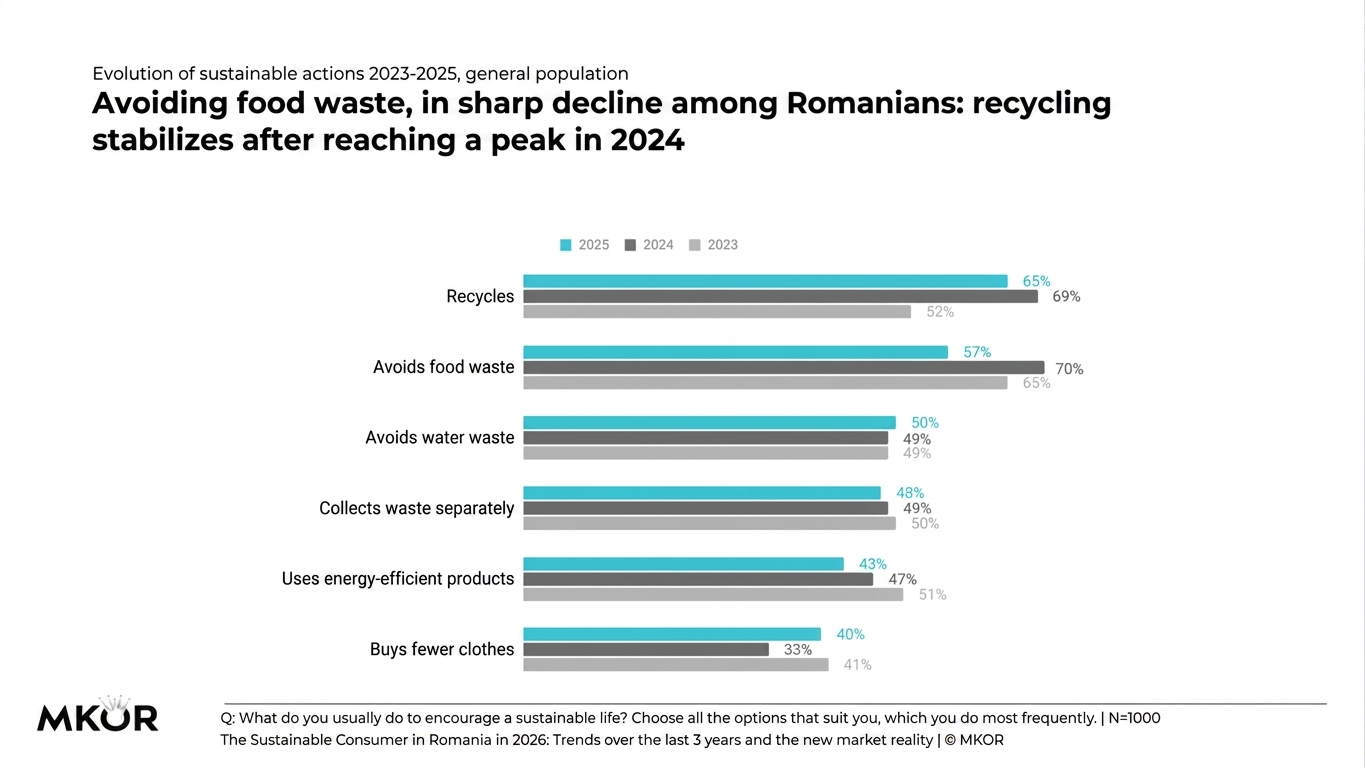
The same pattern appears at the level of concrete consumption actions. Avoiding food waste registers the steepest drop (from 65% in 2023 to 57% in 2025), while recycling has increased compared to 2023 (65% compared to 52%), but decreased compared to 2024 (69%).
The gap compared to the indifferent consumer remains, however, substantial: this segment does not abandon sustainability; it withdraws selectively, maintaining behaviors that are easier to integrate and temporarily giving up those that require constant attention.
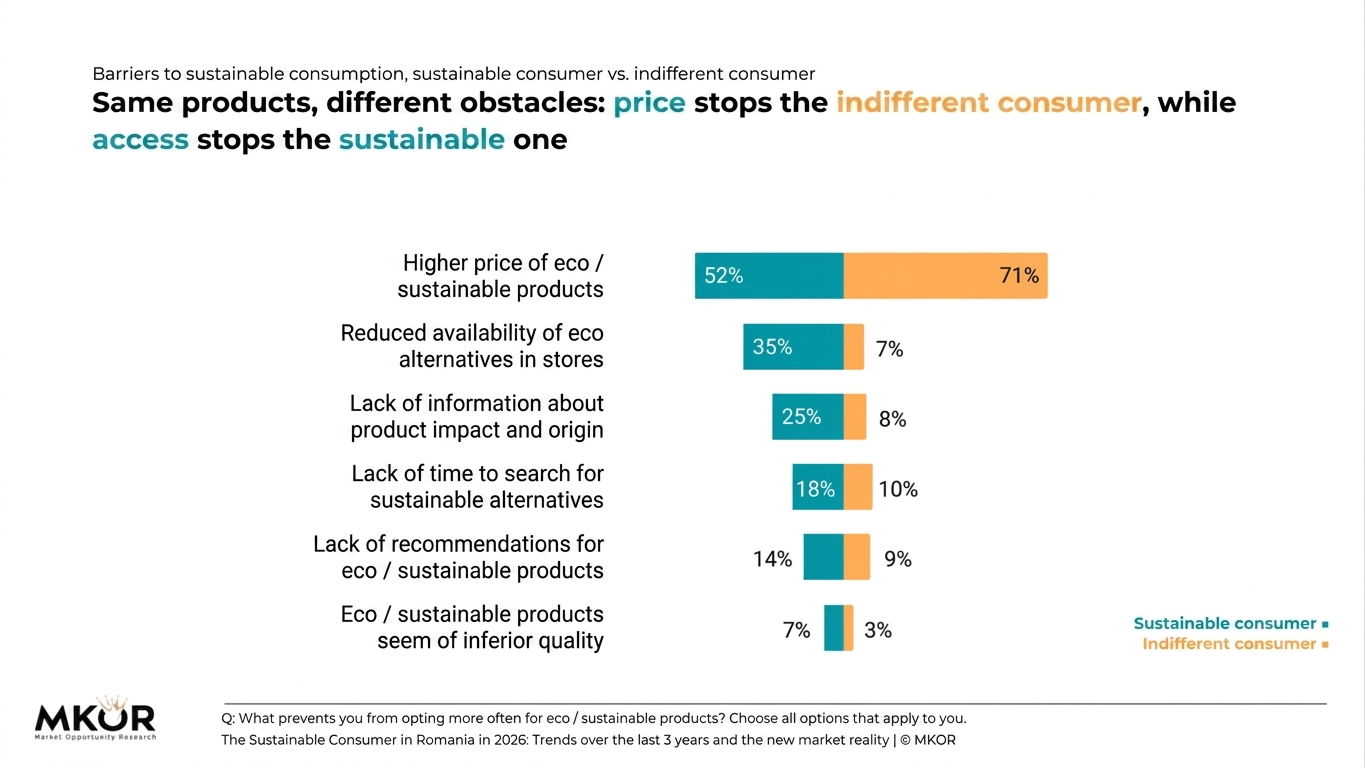
This is where the central paradox of our study emerges: the sustainable consumer reports, on average, more barriers (2.5) than the indifferent consumer (2.1). The more you want to buy sustainably, the more acutely you feel the obstacles in the way of this decision. The indifferent consumer generally stops at price, while the sustainable consumer faces low availability in stores, a lack of information, and a lack of time to search for sustainable alternatives—barriers of access, not budget.
From discipline to comfort: Romanians seek low-effort health
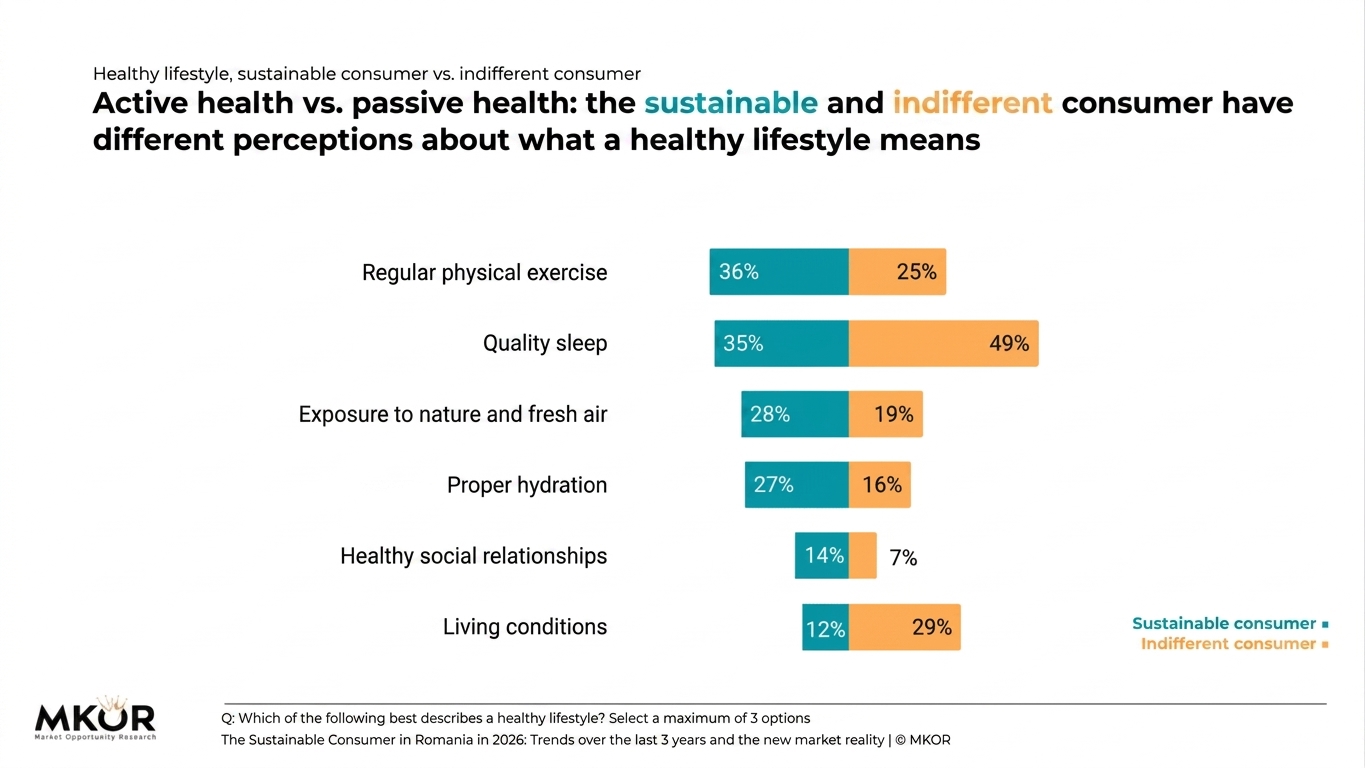
Health continues to be at the top of Romanians’ priorities, but behaviors requiring constant effort are decreasing, while those that integrate easily into daily routines are gaining ground.
At the general population level, regular physical exercise, healthy eating, and avoiding smoking and alcohol are decreasing compared to 2024. At the same time, quality sleep, exposure to nature, and proper hydration are steadily increasing: behaviors that do not require extra effort, but only a minimal adjustment of the routine.
59% of sustainable consumers prioritize healthy eating, compared to 66% in 2024. They consider regular exercise as part of a healthy lifestyle (up by 6% compared to 2024), but give in when it comes to smoking and alcohol (25% in 2025 compared to 34% in 2024).
For the general population, the definition of health is changing. The importance of healthy eating is decreasing (only 59% choose it in 2025 compared to 63% in 2024), as are dietary discipline and avoiding smoking and alcohol (from 33% to 27%), and regular physical activity (down from 34% to 29%), while quality sleep is starting to be included more in a healthy lifestyle (increased to 40% in 2025 compared to 37% in 2024).
The difference compared to the indifferent consumer confirms this pattern. The sustainable consumer chooses movement and social relationships, while the indifferent consumer chooses sleep and home comfort.
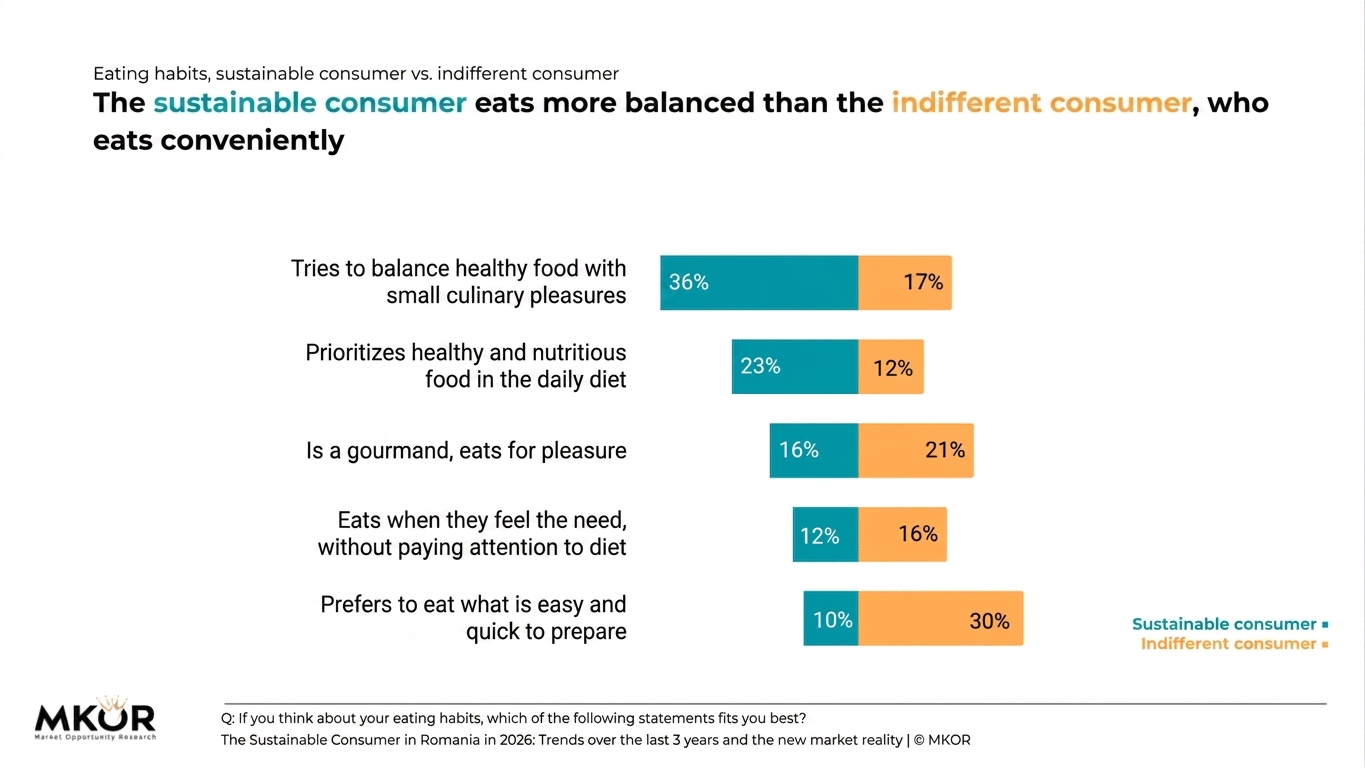
The same recalibration is seen on the plate. Dietary balance is quickly giving way: fewer and fewer Romanians are trying to combine healthy food with small culinary pleasures, while more and more are choosing either to eat for pleasure or what is quick and easy to prepare.
The sustainable consumer does not remain immune to this trend: they no longer strive to combine healthy food with small pleasures (down from 55% to 36% in 2025 compared to 2024), yet 23% prioritize healthy and nutritious food in their daily diet, compared to only 13% in 2024.
Food identity remains, however, the differentiator between segments. The sustainable consumer prioritizes what they put on the table, unlike the indifferent consumer who frequently opts for speed and convenience.
At the level of concrete behaviors, low-effort health is constantly gaining ground: more vegetables and fruits (44% of sustainable consumers and 33% of indifferent consumers), more cooking with fresh ingredients (40% of sustainable consumers, respectively 28% of indifferent consumers), fewer sweetened beverages (40% of sustainable consumers, respectively 29% of indifferent consumers).
Romanians choose to add healthy behaviors, not to give up those they already do habitually. The result of this approach is directly reflected in the perception of their own state of health: 6 out of 10 sustainable consumers consider themselves in an excellent or near-excellent state, compared to only 4 out of 10 indifferent consumers.
Sustainable actions are seen in daily life in the shopping basket
Romanians’ shopping basket is shrinking: almost all product categories have decreased or stagnated in the last 3 years. Food (58%), coffee and beverages (25%) and personal care products (25%) have maintained their top positions over three consecutive years, with the observation that home care products were in 3rd place in 2024, but reached 4th place in 2025. Practically, sustainability has integrated into the purchasing routine and remains constant even in a general context where eco-purchases are declining.
As differences between segments, it is noted that for the sustainable consumer, sustainability works as an active filter applied to every purchase, while for the indifferent consumer, it remains an irrelevant detail.
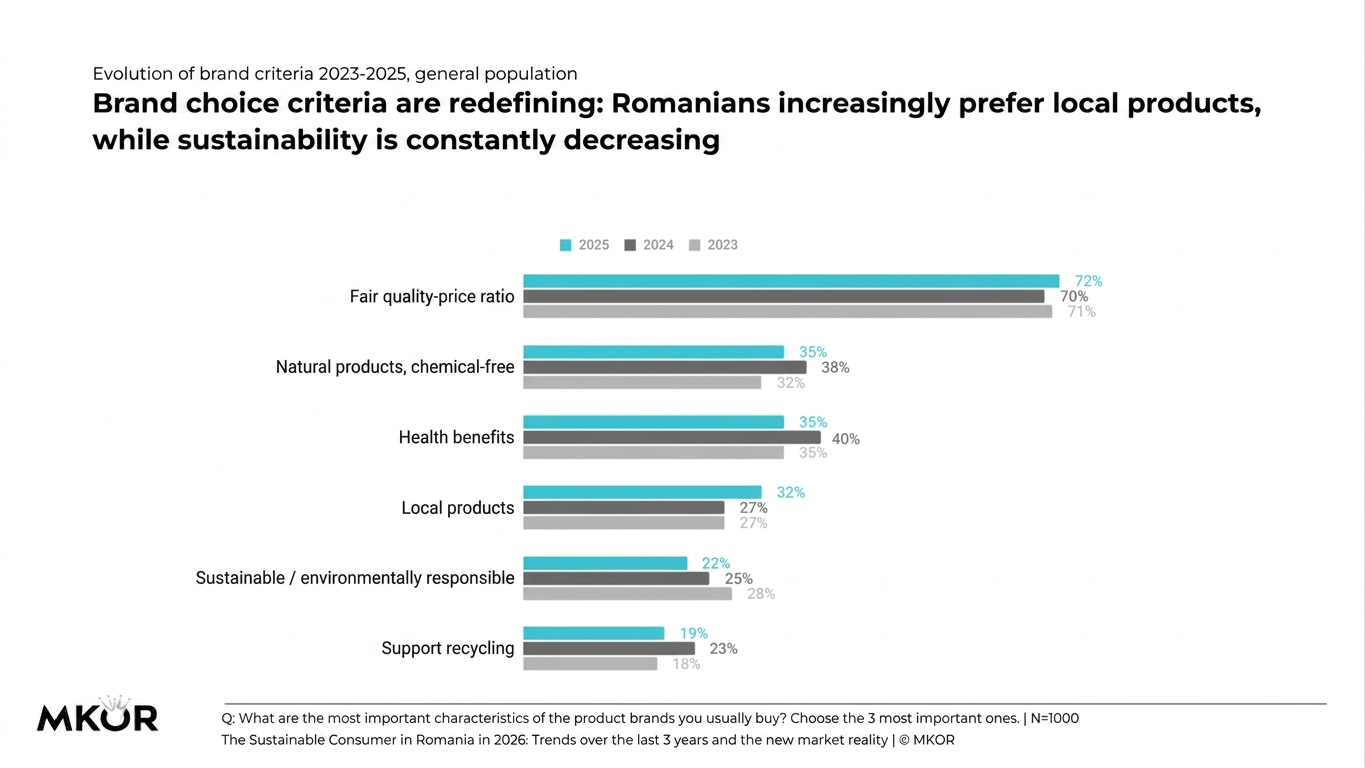
At the level of the general population, when it comes to the most important characteristics of the brands they usually buy, the quality-price ratio and local products record small fluctuations (increases and decreases from year to year).
In contrast, two environment-related characteristics are constantly decreasing from year to year: the brand being sustainable and / or environmentally responsible, and the brand supporting recycling (for example, in the packaging process). Romanians do not give up on quality, but set aside environment-related brand criteria.
For the indifferent consumer, things are simpler: a good brand is, first and foremost, a brand with a fair price. The product’s composition, its impact on the environment or how the brand manages packaging recycling do not, on their own, change the choice.
Barriers in the transition to more responsible consumption
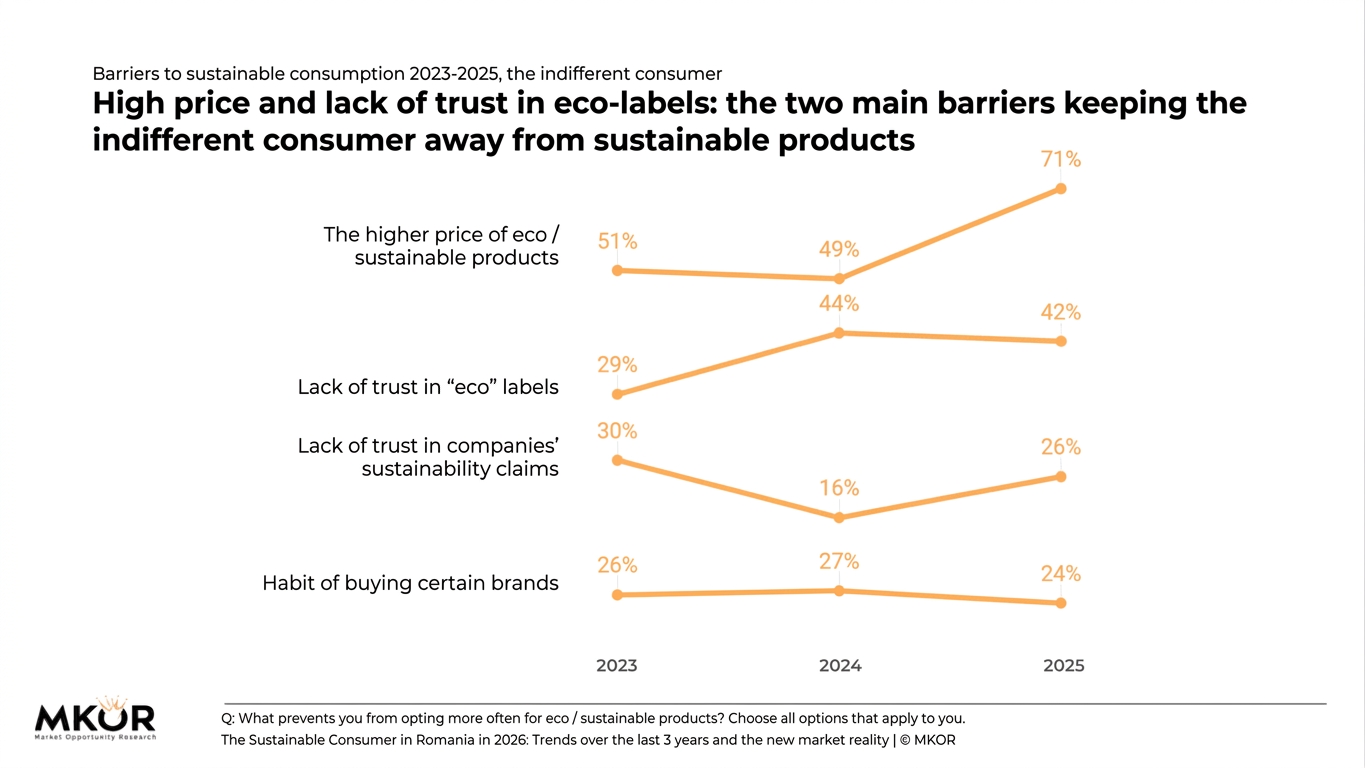
Except for the higher price, the sustainable consumer and the indifferent consumer do not avoid eco products for the same reason. For the indifferent consumer, price has become the dominant barrier, with a sharp increase in 2025 that clearly distances it from all other obstacles (from 49% in 2024 to 71% in 2025). At the general population level, price (58%) and the lack of trust in eco-labels (38%) remain fairly constant from year to year.
Beyond price (52% compared to 71% for the indifferent consumer), the sustainable consumer faces low availability in stores (35%), lack of information (25%) and lack of time (18%), representing barriers related to accessibility and availability. And here the central paradox of the study appears: the sustainable consumer reports, on average, more barriers (2.5) than the indifferent consumer (2.1). The more you want to buy sustainably, the more acutely you feel everything that stops you.
To this structural obstacle, one of trust is added. The credibility of eco-labels remains fragile and continues to be one of the main barriers to sustainable consumption.
For the sustainable consumer, the problem is, therefore, access: they want to buy eco, but cannot find it, do not have time to look for information or no longer believe in the label on the packaging. The investment with the greatest impact here is not education about sustainability, but distribution, shelf visibility and concrete evidence of eco products.
About the study
At MKOR, we treat every figure as a promise of accuracy. To faithfully capture the evolution of sustainable consumption in Romania from 2023-2025, we followed a rigorous methodological protocol, aligned with ESOMAR standards.
- Sample size: 1,000 respondents
- Sample characteristics: nationally representative, weighted by gender, age, and geographical distribution
- Target: general population of Romania aged between 18 and 55
- Research method: opinion poll (CAWI)
- Instrument: questionnaire
- Approach: online, through the MKOR Consumer Panel
How do you turn these sustainability data into a competitive advantage for your company?
The data from our study can be viewed as a diagnosis, but they are much more useful in relation to the actions companies can take based on our analyses. Thus, for each market segment, we propose a direction worth investing the brand budget in.
- Sustainability as a routine.
The sustainable consumer is doing less than two years ago on almost all studied indicators, because constant daily effort exhausts them, in a context of economic pressure and social pessimism.
The most affected behavior is avoiding food waste; recycling, on the other hand, holds up best because it has already been established as a routine with low barriers. Thus, brands that communicate sustainability as a routine, not as a daily sacrifice, have a better chance of resisting this recalibration. Direct impact investments are in solutions that reduce effort: pre-measured portions, products close to expiration at a reduced price, eco-packaging.
- Distribution and accessibility.
Price remains the main barrier at the market level and continues to grow in importance. But the sustainable consumer and the indifferent one are not blocked by the same obstacle: the indifferent one cites price, while the sustainable one signals the lack of products in stores and the absence of information.
Therefore, for the sustainable segment, shelf availability is a significant barrier. They want to buy eco, but cannot find it.
- Local products, not abstract messages.
Trust in eco-labels remains fragile, and the sustainable consumer is, paradoxically, more skeptical of company claims than the indifferent one: precisely because they understand the problem better and recognize a message without substance more quickly.
Brand choice criteria confirm this distrust: local products are gaining ground, while generic environmental commitments are losing relevance. “Made in Romania” carries more weight in this context than an abstract eco-certification. Our recommendation for companies is to replace “we are sustainable” type messages with concrete and measurable evidence, verifiable origin, recognized certificates, and quantifiable impact.
- Direct experience with the product.
The undecided segment, 62% of the market, remains the largest untapped opportunity. It does not have a firm position and is not loyal to anyone.
For them, the first barrier is price, not values, and conversion does not come from an appeal to responsibility, but from a direct experience: a sample, a promotion, an eco-product placed next to the usual alternative.
How can you collaborate with MKOR?
National data from The Sustainable Consumer tells you what the market looks like. It doesn’t tell you how your customers perceive you.
If 62% of the market has not yet decided regarding sustainable consumption, the right question for your brand is simple: are your customers more likely to be sustainable, indifferent, or undecided? And what are their specific barriers, not just the general market ones?
Without your own data, you cannot know this. And the difference between guessing and measuring is the distance between a campaign that hits the right message and one that misses it completely.
The same principle applies to all studied indicators. Recycling holds up at a national level, but for your product category, the real barrier might be different: shelf availability, distrust in the label, or a price perceived as unjustified.
A brand that communicates sustainability without its own data works on assumptions or informal feedback from product research, not on what its consumer actually thinks and feels.
MKOR can conduct such studies dedicated to your category and brand. Data is collected independently, which means more honest answers than through an internal brand survey or research perceived as being done “by the company, for the company.”
Long-term value: a brand that performs this measurement year after year builds its own trend. It can see concretely if a label repositioning has increased trust, if an educational campaign has reduced perceived barriers, or if an investment in distribution has transformed declared interest into actual purchase.
We invite you to access the Services section to learn more about the types of studies we conduct. In our portfolio you will find case studies of collaborations with clients from various industries, as well as own studies conducted by our team.
Schedule a free strategic session with one of our consultants. You come with the business objective, we research the market.
* Methodological accuracy and the data contained in this article have been validated by Mihaela Nicolae, Senior Researcher.
The Excel database will reach your account within a maximum of 24 hours after payment confirmation. The 90-minute consultancy session is scheduled at your choice, within 30 days.
Understand the current state of sustainable consumption in Romania with data from the Sustainable Consumer 2026 study, conducted by the MKOR team on a sample of 1,000 respondents, nationally representative.
The study tracks the evolution of sustainable consumption behaviors over three consecutive years (2023, 2024, 2025), across three distinct market segments: the sustainable consumer, the undecided consumer, and the indifferent consumer. 62% of the market still falls into the undecided segment – the largest segment, yet the least analyzed by brands, since most communication targets those already convinced or those who are indifferent.
If you work in marketing, product development, or brand strategy and want to know what the majority of your consumer market actually looks like, this data gives you the exact profile of the undecided segment: who they are, what income they have, what education level they have, and what could actually move them toward sustainable consumption.
What you get
The Sustainable Consumer Romania 2026 database in Excel format, which includes:
- Complete study data, segmented by gender, age, area of residence, income level, education level, and region
- Access to the complete profile of the undecided consumer, the largest segment (62%) and the least explored: who they are demographically, what income they have, what education level they have, what barriers they report, and what factors could lead them to adopt sustainable behaviors
- Profile of the sustainable consumer and the indifferent consumer, with segmentation variables, for direct comparison
- Three-year evolution (2023, 2024, 2025) of sustainable actions, food habits, and lifestyle, across all three segments
- Data on barriers to sustainable consumption (price, availability, trust in eco labels)
- Sustainable brand-choice criteria and their year-over-year evolution, at the general population level
90 minutes of strategic consultancy with an MKOR expert, in which we:
- Interpret the national data in relation to the specifics of your product category
- Identify what’s holding the undecided segment back and what can trigger its conversion
- Formulate priority action directions for positioning your brand in 2026
- Answer your team’s questions about interpreting and using the data
What questions does this data answer
- Who is the undecided consumer, really – what income, what education, what age do they have?
- What stops the undecided consumer from adopting a sustainable consumption style: price, lack of access, or lack of trust?
- How do the sustainable consumer’s barriers differ from those of the indifferent consumer?
- How has sustainable consumption behavior evolved over the past three years, for each segment?
- What brand characteristics matter today for each of the three segments?
- What food and lifestyle habits differentiate the consumer segments?
- What type of communication works with the undecided segment, and what type drives them away?
What the study covers
Behaviors tracked longitudinally over the past 3 years
- General sustainable actions (recycling, avoiding food waste, protecting the environment)
- Food habits and healthy lifestyle
- Brand-choice criteria (price, quality, sustainability, support for recycling)
- Barriers to sustainable consumption (price, availability, trust in labels)
Segmented analysis
- Sustainable consumer, undecided consumer, indifferent consumer
- Gender, age, area of residence
- Income level and education level
Why buy access to the raw data
- The complete profile of the largest market segment (62%), data that no other public source offers for Romania’s undecided consumer
- Three years of comparable longitudinal data, across three distinct segments, unavailable anywhere else publicly
- 90 minutes of strategic consultancy with an MKOR expert, turning national data into directions relevant to your specific brand
- Independently collected data, with a CAWI methodology aligned to ESOMAR standards, on a nationally representative sample
The study’s media coverage in the press
The study has been picked up by the Romanian press, and we present here some of the publications that have written about the research: