

The Challenge: Intensified competition: from being the only mall to one of 7 retail centers / commercial areas. A need emerged for more complex information, not just about what was happening inside the mall, but also about everything happening outside it: who the visitors are, which neighborhoods they come from, their age, their interests, how often they visit the mall, and why.
The Decision: After 20 years of existence in Iași, the IULIUS Group’s decision was to move away from intuition and turn to concrete market data, alongside internal data.
The MKOR Solution: We conducted longitudinal research, which began in 2019 across 4 cities. The study aimed to measure not just traffic, but real market share, consumer behavior, and brand health (from awareness to usage and NPS score).
Impact for the Client: Net Operating Income growth: +76.85% in 2024 compared to 2018 and Net Promoter Score growth: 71.4 points in 2025 versus 59 points in 2022.
Contents
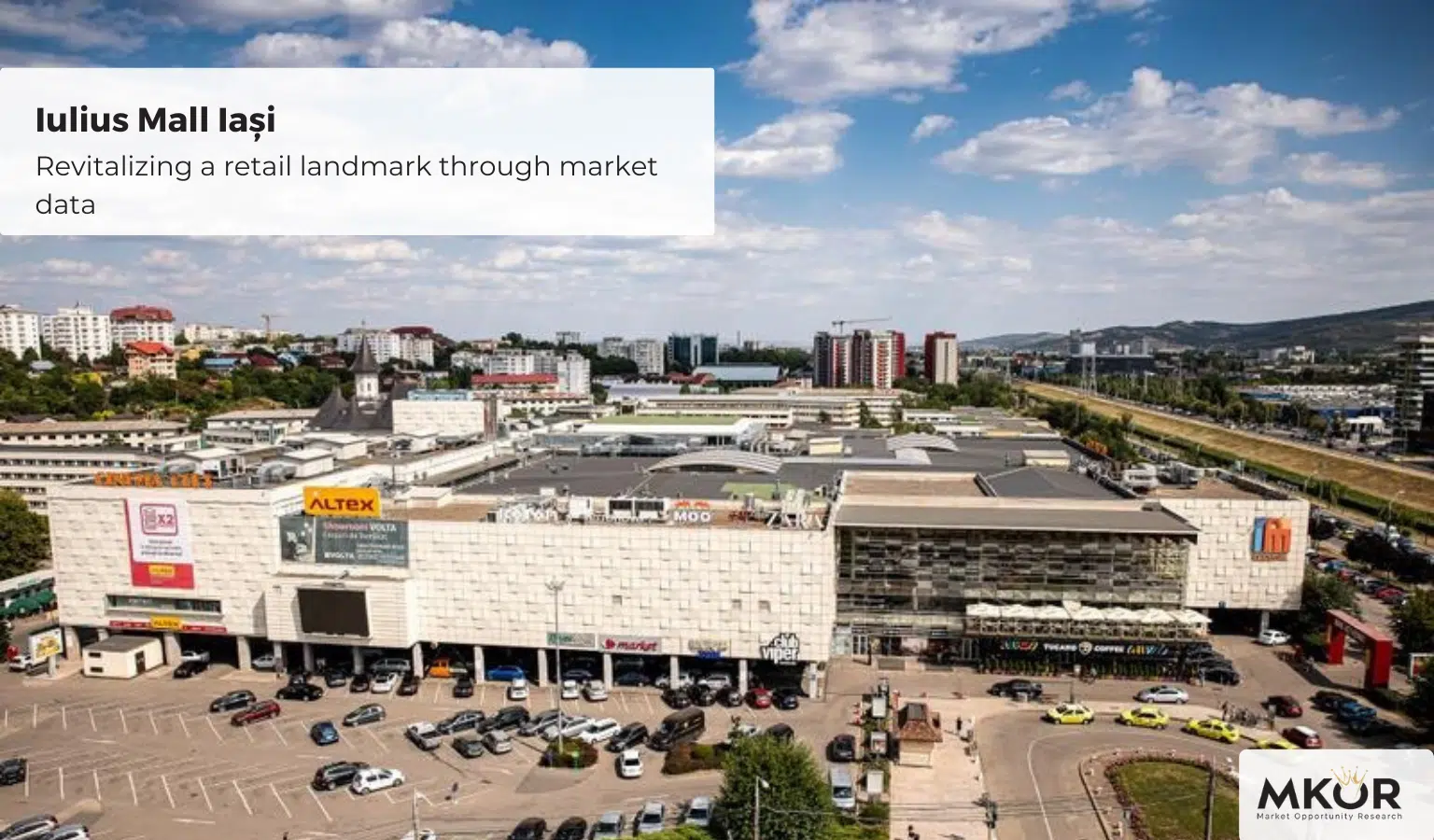
The Context: A strategic dilemma 20 years after launch
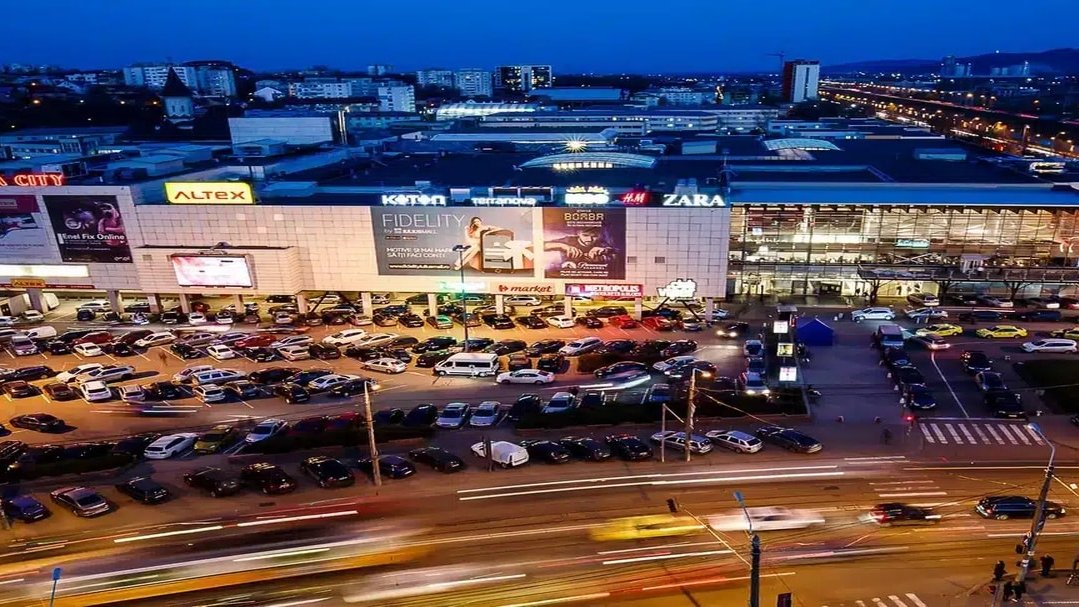
In 2020, IULIUS Mall Iași, one of the first shopping centers in Romania, with a history of two decades, was at a turning point.
After two decades of operation, IULIUS Mall Iași was perceived as an “aging” space and faced direct competition from within the group itself, Palas Iași, which dominated the market due to its central location, much more generous space, and modern design.
Practically, the IULIUS Group was at an important moment of strategic reflection regarding the future of this mall in Iași.
For the company’s management, the real challenge was managing strategic uncertainty at a challenging time for Iulius Mall Iași. Although the company monitored footfall, these figures provided only a partial picture.
In retail, footfall is often considered the ultimate indicator. However, as comforting as it may be to know that “8 million people crossed the threshold of the shopping center this year,” the figure is insufficient for a strategic decision.
The problem with traditional footfall is that entrance sensors count steps, not people. They cannot tell if your traffic is increasing because the market is expanding or if it is decreasing because your loyal visitors have started going to the competition more often. Practically, you don’t know where visitors are coming from, what brings them to you, or how likely they are to go to the competition tomorrow.
The MKOR Solution: an evolutionary research model, based on data collected in annual waves
The strategic partnership between MKOR and IULIUS was launched as early as 2019, providing a complex longitudinal database that allowed for real-time monitoring of the transformation. However, the turning point in redefining the business strategy was marked by the granular analysis started in 2022.
2022: Market share analysis at the city level
The hardest thing in market research isn’t collecting data. It’s measuring what truly matters. For IULIUS, this meant moving from the number of visitors to something much more relevant: real market share, calculated from the visitor’s perspective.
MKOR went into all markets where IULIUS Group is present, with representative regional studies: residents of Iași, Suceava, Cluj-Napoca, Timișoara, and the metropolitan areas of each city.
To track real evolutions, the study was replicated annually.
And yes, traffic measurement continued, but differently. From the visitors’ perspective. We started with how often people go to the mall in a year. Then, we took into account that people visit multiple shopping centers with different frequencies. Based on this behavior, we calculated the market share.
This means that beyond “8 million visitors crossed your threshold this year,” we can also say that nearly 30% of all mall visits in Iași were to Palas, because we mapped the market shares of all relevant shopping centers in Iași.
2023: Geographical and demographic granularity
Once the reference framework was established, MKOR deepened the analysis through two new directions: mapping the distribution of visits per shopping center at the neighborhood level, as well as by generations (Gen Z, Millennials, Gen X). Geographical granularity provided IULIUS Group with the clarity needed to understand where people are coming from and where they could still come from. And, more than that, it opened the door to highly targeted communication campaigns, such as “Neighbor with IULIUS“.
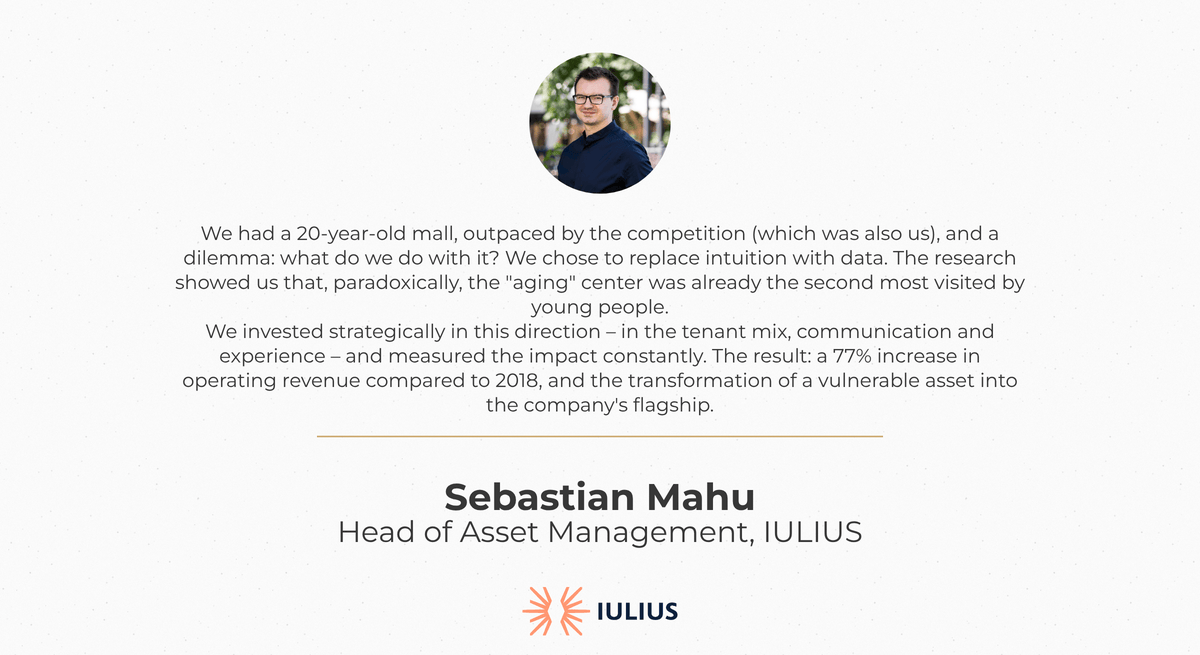
Granular segmentation provided the IULIUS team with more than just numbers: it provided the certainty needed to act. Although management sensed the potential of the young segment, the 2023 data transformed this intuition into a grounded strategy.
The analysis revealed a fact that, at first glance, seemed paradoxical: the “aged” center was already the second favorite destination of Generation Z in Iași. Proximity to the student campus was not just a theoretical geographical advantage, but an organic growth engine, validated by numbers.
Demographic segmentation worked as a catalyst, providing the necessary confirmation for a vision the team already sensed. Essentially, market data brought an existing advantage to light, giving management the confidence to invest in a project that, without this data rigor, might have been overlooked.
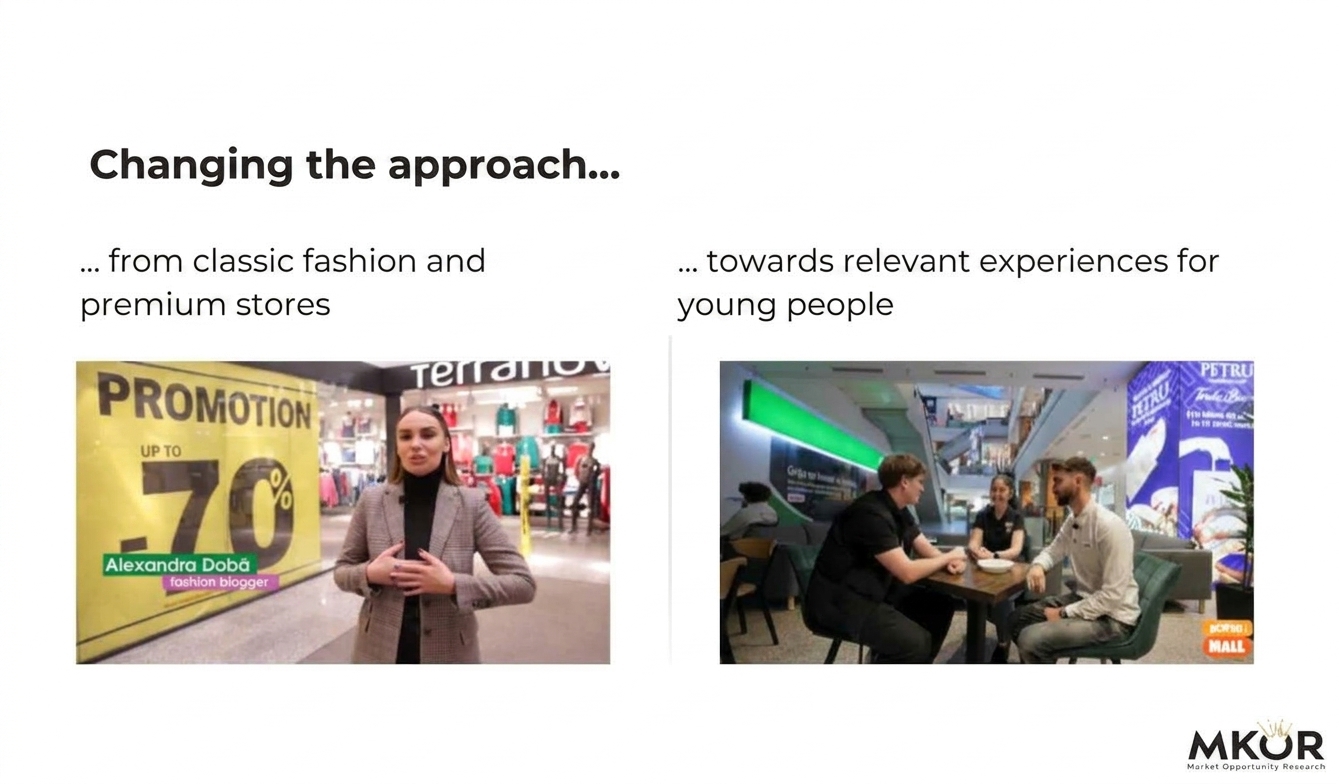
What did the client do? Based on the data, IULIUS made an intentional change of direction: reorienting the brand identity from classic fashion and premium stores to experiences relevant to young people. Therefore, communication moved from fashion bloggers to content creators relevant to youth, within video projects such as “Escaped to the Mall”.
2019–2025: From diagnosis to continuous strategy
As IULIUS Mall began implementing data-driven changes, the MKOR methodology evolved from diagnosis to active strategic monitoring. The question was no longer just “where are we?”, but “what are we doing to maintain our lead?”. This approach focused on three strategic pillars:
- Prioritizing investments through the analysis of unmet needs
Although IULIUS management constantly maintains a list of potential brands and services to expand its tenant mix, MKOR research functioned as a local prioritization filter through recurring open-ended questions (“What is missing from the mall?”).
Impact: The introduction of the Sinsay and Mohito brands (2023) was a direct response to visitor demand.
Infrastructure: The expansion of the parking lot and the addition of the playground (2024) were prioritized because they were consistently identified as the main pain points.
- Monitoring the “health” of the relationship with visitors (NPS & Funnel)
Good financial performance can sometimes mask a decline in loyalty that will only show up in the figures 12 months later. Active monitoring involved using the Net Promoter Score (NPS) as an early warning system.
Alert system: Annual monitoring allowed the team to observe the score increase from 59 to 71.4 points.
Proactive retention: Funnel analysis showed that the challenge was not awareness (which was already at its maximum, 88%), but the conversion rate into frequent visits. This constant monitoring allowed for the fine-tuning of the mall experience before visitors migrated to new market options.
- Integration into the local leisure ecosystem
Extensive research conducted by MKOR in the four cities (Iași, Suceava, Cluj, Timișoara) confirmed an increasingly clear trend in the retail market: malls are no longer places for transactions, but spaces that offer experiences and are leisure destinations.
Local nuances: The data confirmed that, in Iași, socializing in indoor spaces is a stronger traffic driver than pure recreational shopping.
Correct positioning: Understanding these preferences (for example, the affinity for restaurants vs. cinema) allowed IULIUS to adapt its entertainment and event offerings not according to a national model, but according to the specific cultural footprint of Iași.
As IULIUS Mall began implementing strategic changes, the MKOR methodology evolved from diagnosis to proactive maintenance. The question was no longer just “where are we?”, but “what are we doing to maintain our lead?”:
- Conversion from awareness to visit (brand health funnel)
- Net Promoter Score (NPS), which was monitored annually from 2022 to 2025
- Main visit drivers (hypermarket, fashion, food & drinks)
- Areas for improving the shopping center experience and their annual monitoring
- Purchase preferences by channel (online, offline, omnichannel) and product categories
- Leisure activities, to understand who else they are competing with for visitors’ time
What new insights did the client receive?
Monitoring how awareness transforms into visits revealed an interesting difference compared to Palas: although visibility was the same (88%), the conversion rate was visibly lower, 122 visits versus 287 in the last 12 months, indicating a lower frequency of visits, not a lack of awareness.
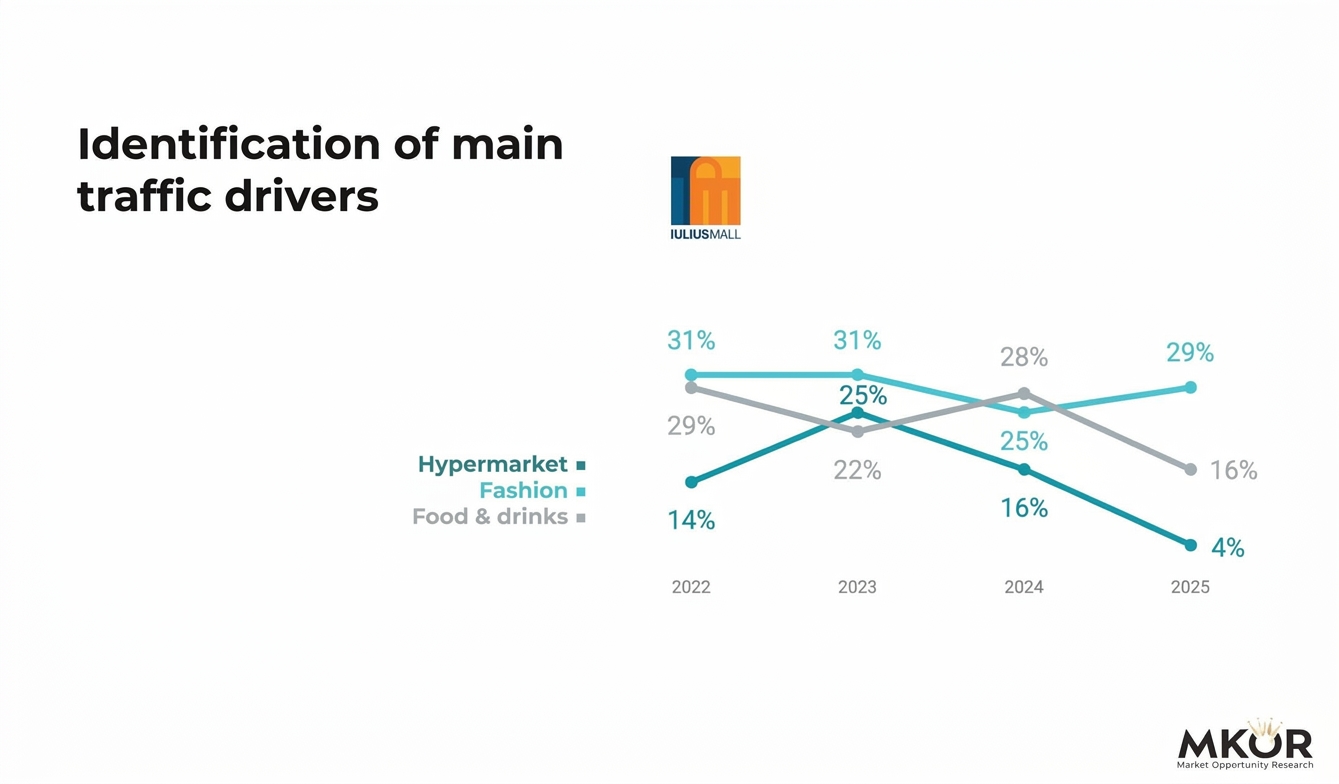
Analysis of visitor motivations showed that while in 2022, the hypermarket and fashion were the main drivers (31% vs. 14%), by 2025 fashion had become dominant (29%), while the hypermarket had dropped to only 4%. This is likely also a result of repositioning for the youth segment, as well as the introduction of new brands.
Essentially, beyond these brand indicators, we also looked at what brings people to Iulius Mall and how these traffic anchors have evolved.
The extensive research conducted by MKOR in the four cities (Iași, Suceava, Cluj, Timișoara) confirmed a clear trend: malls are no longer places for transactions, but spaces that offer experiences. Recreational shopping is one of the most common forms of leisure, and socializing in indoor spaces remains a constant habit in all 4 analyzed cities.
But why people choose a specific mall, in a specific city, at a specific time, that is the truly valuable question. The answer is not universal. It is shaped by local infrastructure, purchasing power, the entertainment offer in the area, and the specific cultural habits of each region.
It is precisely this granularity that allows Iulius not to compete generically, but to position itself correctly in the local leisure ecosystem of each city.
The impact of market data for the client: improving financial and operational results
The utility of research as a tool for reducing strategic uncertainty is confirmed by both market indicators and the financial performance of the IULIUS Group:
- Optimizing financial performance (NOI)
Internal IULIUS data shows that the Net Operating Income (NOI) of IULIUS Mall Iași increased by over 20% in 2024 compared to 2023 and by nearly 80% compared to 2018, having the highest growth in the Iulius network, surpassing the other centers in the group.
- Strengthening loyalty and organic promotion (NPS)
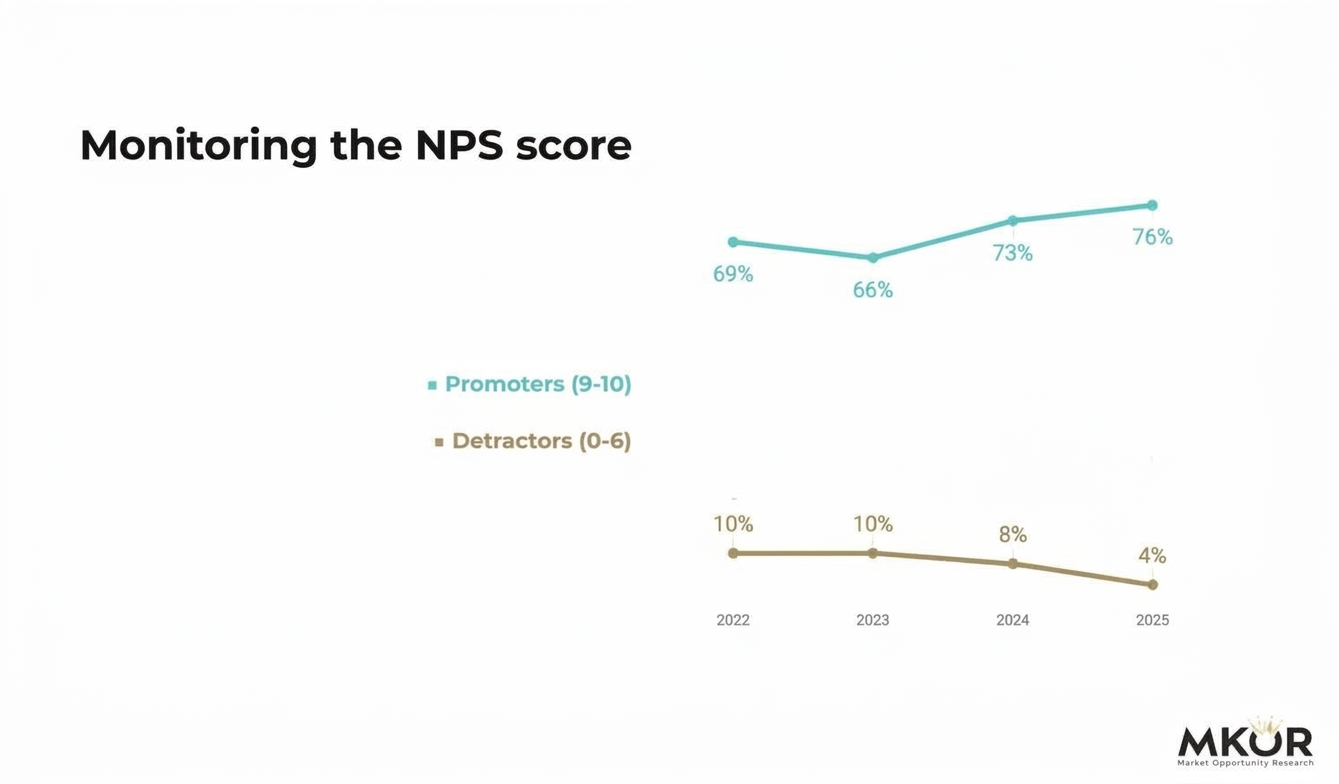
The NPS of IULIUS Mall Iași increased from 59 in 2022 to 71.4 in 2025, amid the growth of the promoter base (from 69% to 76%) and the decrease in the number of detractors (from 10% to 4%). Why is the increase in Net Promoter Score important? Because it means that those who visit Iulius Mall Iași are mostly enthusiasts. And happy people bring you friends and family.
- Continuous market monitoring
Annual tracking also functions as an early warning system. The competitive landscape in 2025 has been reconfigured: the major rebranding of Mall Moldova (formerly ERA) led to an increase in its visitation share to 18.3%, surpassing the share of IULIUS Mall, which stabilized at 16.6%.
This is precisely the context with which the team entered 2026: to defend what they built, in the face of a competitor that managed to reinvent itself. And that is exactly why research does not stop when things are going well.
- Strategic revitalization of the asset
By understanding public micro-segments (Gen Z) and their specific needs, IULIUS managed to transform an “aging” shopping center into a profitable and relevant asset, prepared to face new competition (such as the transformation of ERA into Mall Moldova).
The lesson: Invest in research even when you are winning, to stay ahead
Market research is not only relevant when things go wrong. It is precisely when the trajectory is upward that data shows you why and gives you the power to repeat, improve, and stay ahead of the competition.

Cori Cimpoca – MKOR Founder
The IULIUS Mall Iași case study demonstrates that continuous market research is not just a crisis tool. Its real value lies in transforming good performance into excellent performance in a competitive environment that is constantly reconfiguring itself.

Transform uncertainty into confident decisions with MKOR research solutions
The most costly decisions are made in the absence of data.
We don’t sell market studies. We sell a deep understanding of the market, meaning that level of clarity that transforms uncertainty into a safer decision.
Maybe you are already number one in your market. Or maybe you want to get there. Either way, the market doesn’t stand still, and neither does the competition. You launch a new product, enter a niche, choose whether to continue investing or change direction — in all these moments, the financial stakes are high. And the information you have is often fragmented, contradictory, or based on “that’s what we think”.
Market studies are not just for difficult times. Companies that stay ahead do research even when they are doing well, which is exactly why they continue to do well.
The most dangerous decisions are not those made in a crisis. They are those made when everything seems to be going well. And if you feel the market is changing faster than your plans, you need a reliable anchor. So before making a major decision, listen to what the market says.
We do research because we are fascinated by people and the mechanisms behind buying decisions. And this passion is visible in the energy we put into every project, in the questions we ask beyond the client’s brief, and in the reports we deliver (easy to read and understand, with concrete recommendations).
Do you have big plans for your business, even in these turbulent times? If so, we’d love to connect! Let’s talk in a free strategic session to discover how we can collaborate.
* The methodological accuracy and data included in this case study were validated by Dr. Mădălina Iorga, Senior Researcher & MKOR Associate.
This case study was presented at ESOMAR Connect 2025 by Dr. Mădălina Iorga and Sebastian Mahu.
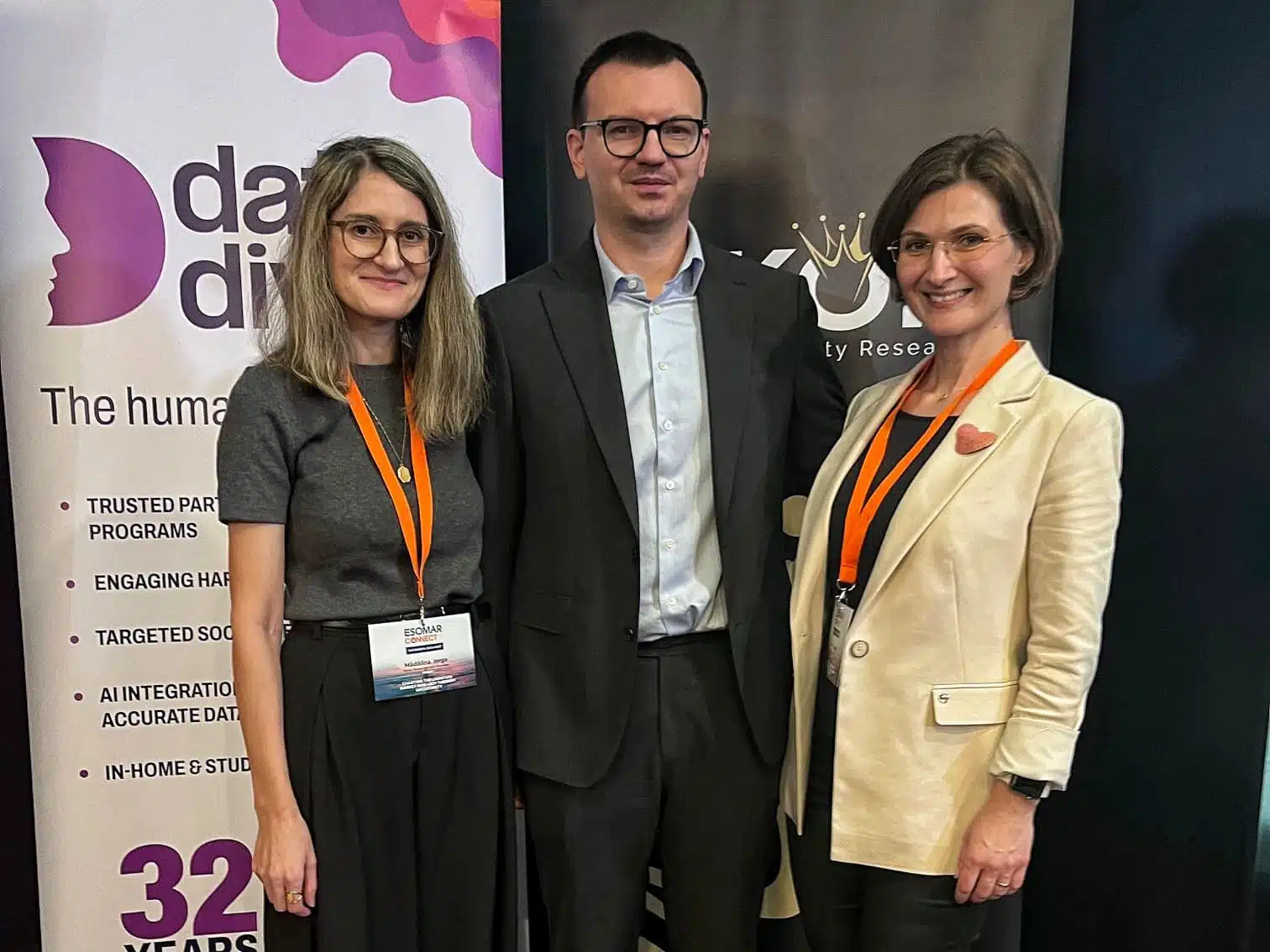
Mădălina Iorga, PhD, Senior Researcher & Associate | MKOR
Mădălina brings to MKOR projects a rare combination: analytical curiosity, a background in social sciences and communication, and a constant focus on methodological quality. She explores complex topics and delivers conclusions that clients can put directly into practice.

Sebastian Mahu, Head of Asset Management | Iulius Group
Sebastian’s experience combines hands-on practice in real estate development with studies in marketing and econometrics – a combination that allows him to transform market data into strategic decisions. The projects he coordinates simultaneously meet the criteria of economic efficiency, sustainability, and community relevance.