


A CAWI study by MKOR for Arctic Stream: 1,000 employees in Romania, 200 of them managers and business owners, a public report and press coverage.
How well do employees in Romania protect their company in their day-to-day work? How much of the investment in security technology goes to waste because of behavior at the workplace? Do managers behave differently from employees in operational roles?
To find out, Arctic Stream, a Romanian IT integrator specializing in hardware and software infrastructure, cloud and cybersecurity, commissioned MKOR to carry out the first national study on cyber literacy in the workplace. Cyber literacy shows how well employees understand digital risks and how correctly they react in practice.
MKOR designed and ran a quantitative online study on a nationally representative sample of employees with digital exposure. The result is called “Cyber Literacy Audit 2026” and is the first national benchmark of its kind: a public report, free to download from the Cyber Arena website.
Contents
We discussed the study at MKOR Talks
The Cyber Literacy Audit shows what employees do in practice, and we discussed the same topic live. On 24 November 2026, Ioana Manea from Arctic Stream and Cori Cimpoca from MKOR spoke at MKOR Talks about how prepared Romanian employees are for a cyberattack.
We covered:
- everyday actions: passwords, email links, public Wi-Fi;
- how prepared employees feel and how well they recognize an attack;
- which behaviors are worth tracking in a company and how to present the results to leadership.
The recording of the discussion is available on YouTube:
The study at a glance: the challenge, MKOR’s solution and the results
The challenge: Arctic Stream wanted its own data, at national scale, on how well employees understand cybersecurity, in a context of a growing number of incidents. Until then, no study of this kind existed in Romania.
MKOR’s solution: MKOR ran a quantitative study on 1,000 employees, with a separate question path for the managers and business owners in the sample (200), analyzed both through what respondents believe and through what they do in practice.
The results: The study produced the first national cyber literacy benchmark, a public report on the Cyber Arena website and a press campaign in which the study was picked up by, among others, Agerpres, Economedia, Forbes România and Revista Cariere.
What the Cyber Literacy Audit 2026 data shows
The MKOR study shows that technical measures are in place in most companies, but day-to-day behavior weakens their effectiveness.
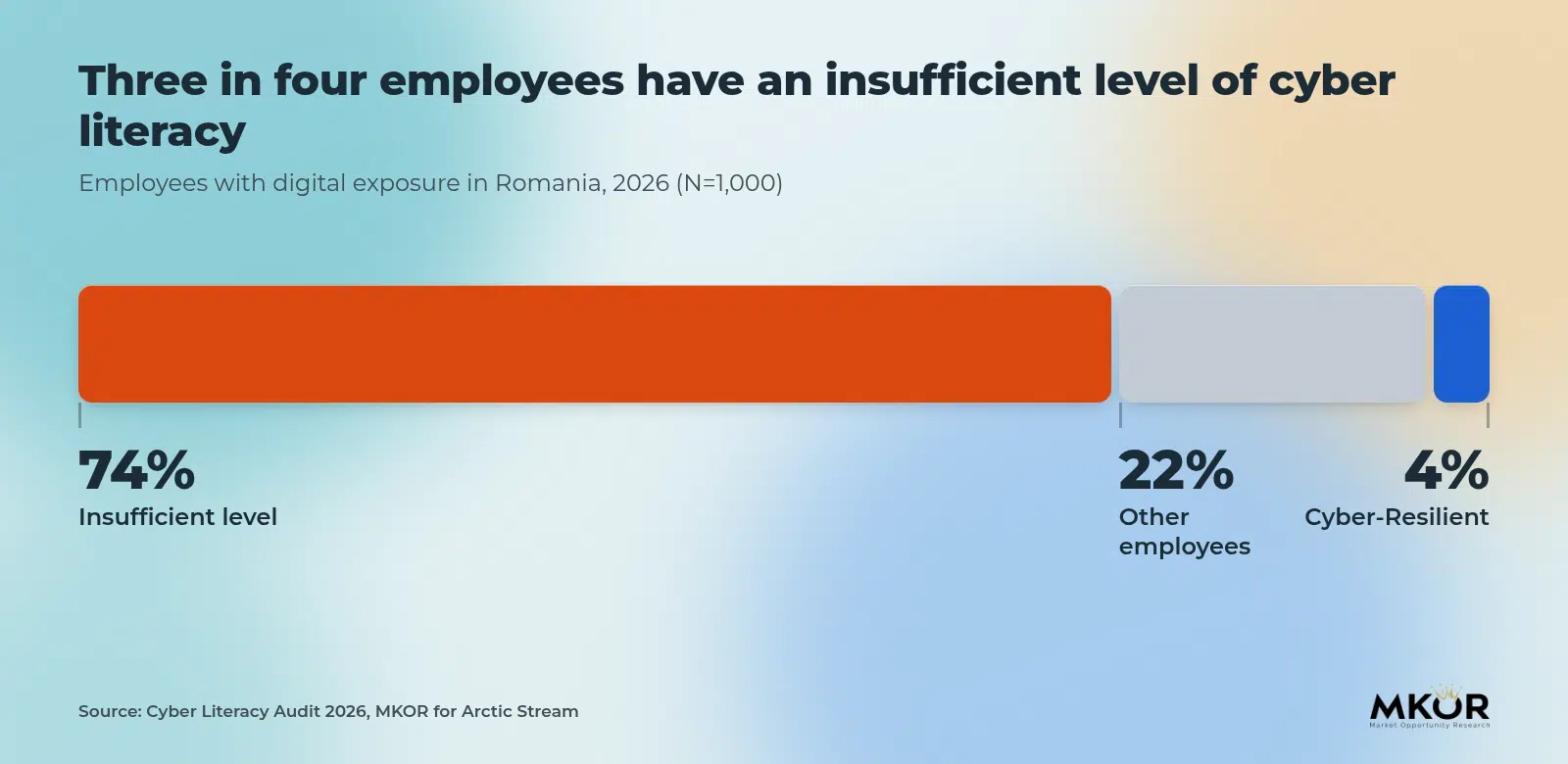
Three in four employees have an insufficient level of cyber literacy
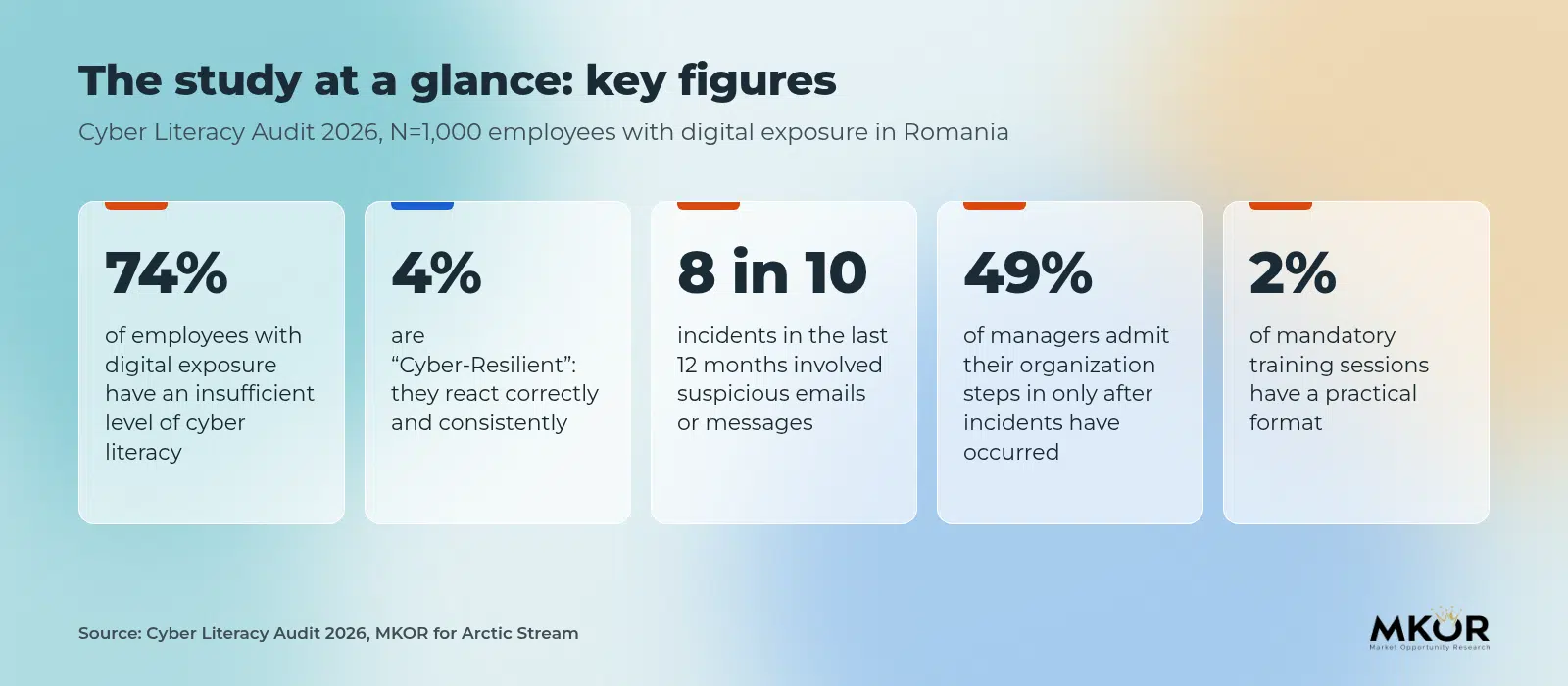
74% of employees with digital exposure have an insufficient level of cyber literacy. Only 4% are “Cyber-Resilient”, meaning they react correctly and consistently. Phishing dominates: 8 in 10 incidents that employees faced in the last 12 months involved suspicious emails or messages.
Managers adopt the most risky behaviors
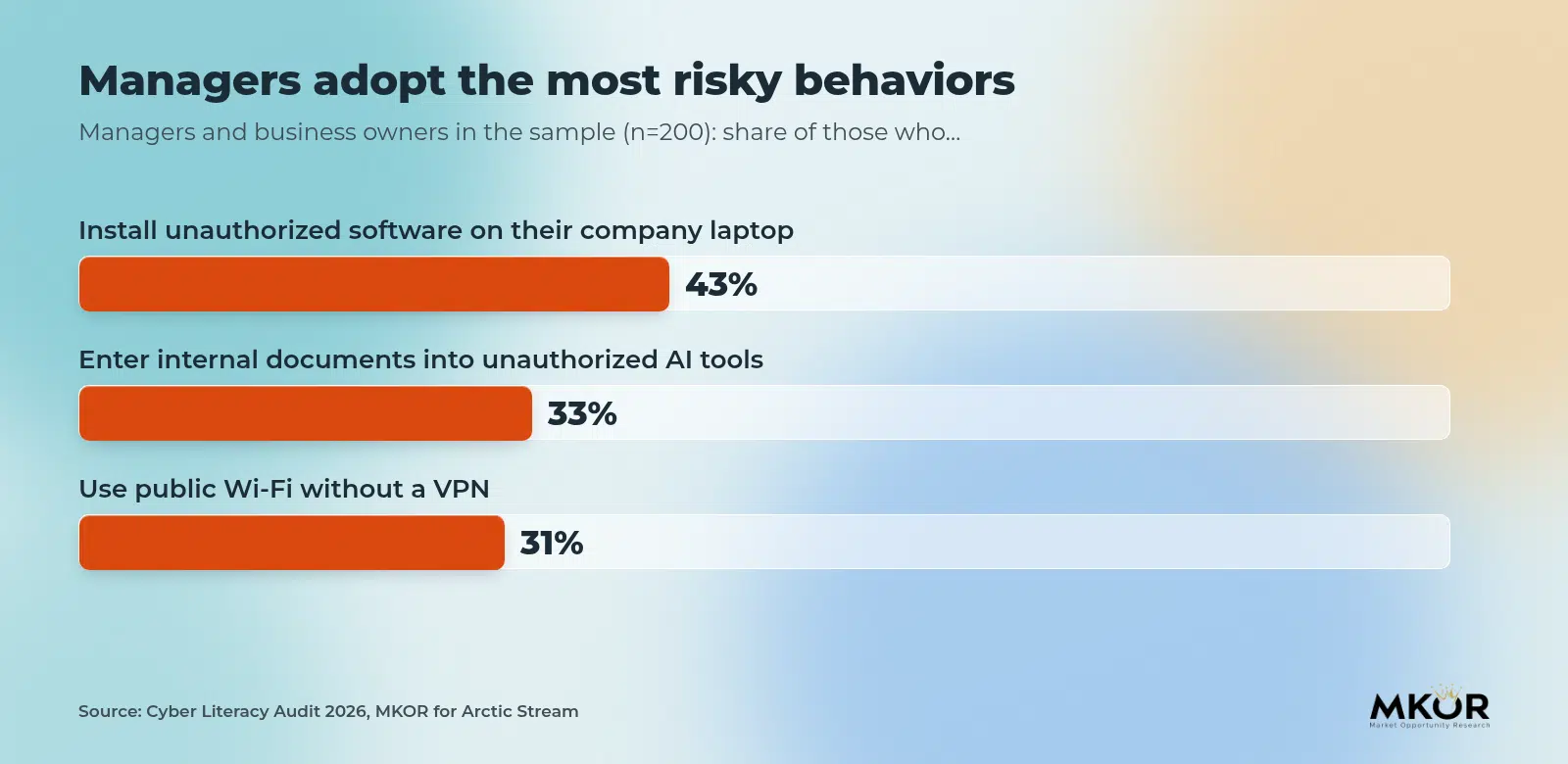
The people with the most access to sensitive data break the rules most often. 43% of managers install unauthorized software on their company laptop, while a third use public Wi-Fi without a VPN and enter internal documents into unauthorized AI tools. Managers know the risk and know what to do after an incident, but the pressure to deliver fast drives their behavior.
Companies react after an incident, not before
49% of managers admit that their organization steps in only after incidents have occurred. Only 2% of mandatory training sessions have a practical format. The rest are passive briefings that do not build defensive reflexes.
Hybrid infrastructure carries the highest risk and the weakest reporting
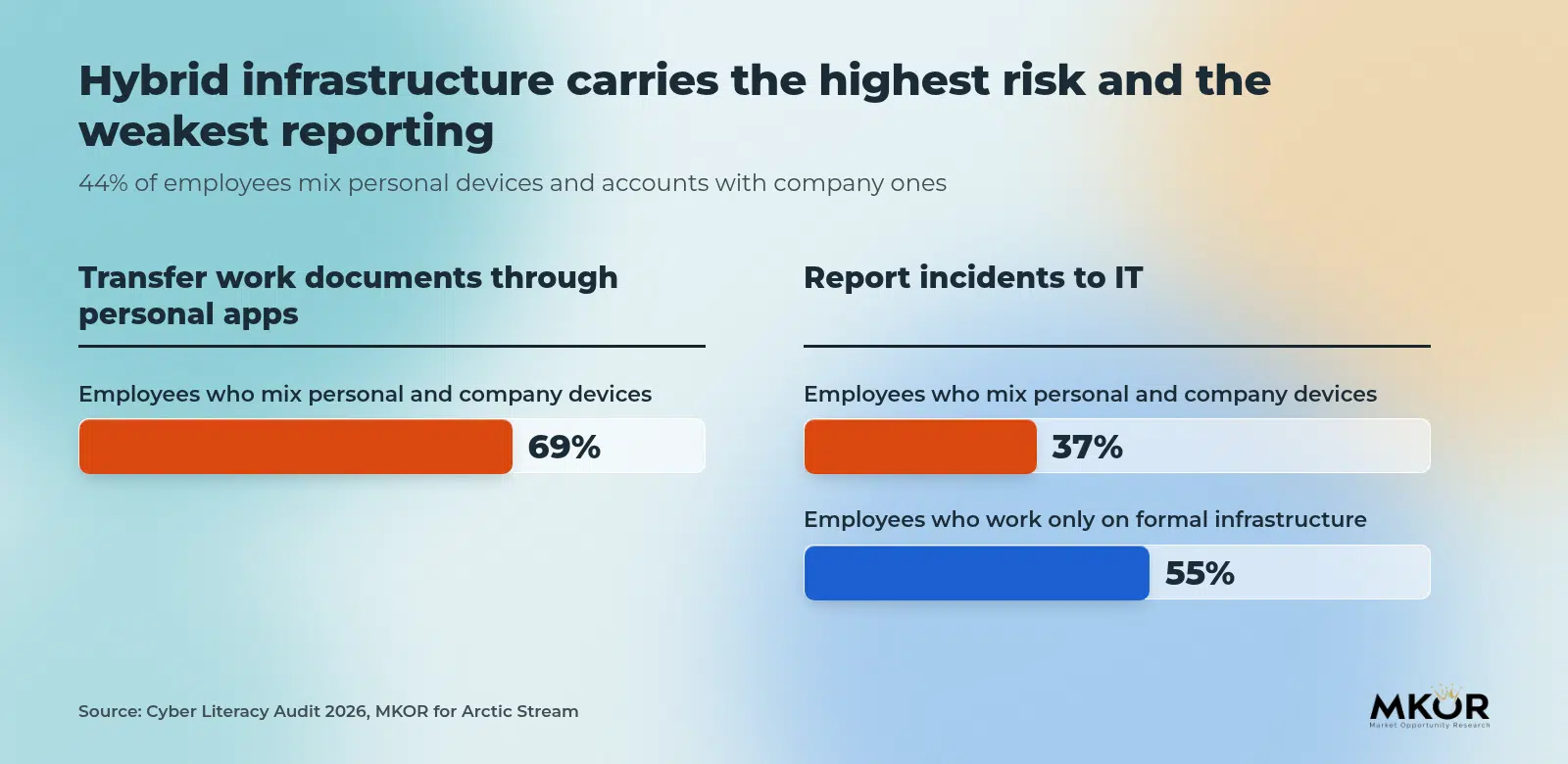
Almost half of employees (44%) mix personal devices and accounts with company ones. In this segment, 69% transfer work documents through personal apps, and the rate of incident reporting to IT is 37%, compared with 55% among those who work only on formal infrastructure.
What Arctic Stream got from this study
Arctic Stream received a data set and a report that can be used in public communication and in consulting work:
- National benchmark: a reference point for cyber literacy, comparable over time if the study is repeated.
- The full report, in the client’s visual identity, published free of charge on the study page on the Cyber Arena website.
- A joint MKOR and Arctic Stream press release, issued on 7 May 2026.
- A second reading of the data, for SMEs, published in June 2026 and picked up by the press.
What benefits did the Arctic Stream cyber literacy study bring?
The study gives an objective picture of the gap between declared policies and real behavior. The main benefits:
- Prioritizing investment: it shows where to invest first: in technology or in practical training.
- Comparison by category: it allows comparison by role, company size and type of infrastructure.
- A public message built on data: a company that talks about risk can do so with figures.
- A baseline for repetition: the same instrument can be applied again to measure progress from one year to the next.
How was the study for Arctic Stream carried out?
MKOR carried out a quantitative online B2C study, with a questionnaire administered through the MKOR Panel to a nationally representative sample of employees with digital exposure.
- Target market: Romania
- Target: employees with digital exposure, representative at national level for the employed workforce
- Research type: primary, quantitative
- Method: online questionnaire (CAWI), through the MKOR Panel
- Sample: N=1,000 employees, of whom 200 managers and business owners
- Margin of error: ±3.1%, at a confidence level of 95%
- Standard: ESOMAR, with a sample weighted by the latest INS data
The full report, in the client’s visual identity, is published free of charge on the study page.
Who is Arctic Stream, the client behind the study?
Arctic Stream is an IT integrator with fully Romanian capital, specializing in on-premise and cloud infrastructure, cybersecurity and AI-based automation. The company was founded in 2017, is based in Bucharest and is listed on the Bucharest Stock Exchange.
Through Cyber Arena România, a partnership with Eximprod Engineering, Arctic Stream offers advanced cybersecurity training, with simulations based on real attack scenarios.
Who a national study like the one for Arctic Stream is right for
A national quantitative study measures the behavior of a large category of employees and compares it with what they say they do. It is a fit for:
- IT, security or training providers that want their own data to back up a public position.
- Professional associations and organizations preparing a regulatory or market-education initiative.
- Large companies that want a benchmark for their own employees against the national average.
- HR and training teams planning their training programs around real behavior.
You can find other projects MKOR has carried out on its own initiative on the own studies page. An example of a B2B study with a public report is the study for Gociu Lawyers.
What press coverage the Cyber Literacy Audit received
The results were announced in a joint MKOR and Arctic Stream press release on 7 May 2026. The study was picked up by the national news agency, by business and HR publications, and then again in June and September 2026:
- Agerpres (7 May 2026)
- Economedia (7 May 2026)
- Club Antreprenor (7 May 2026)
- Europa FM (7 May 2026)
- EVZ (7 May 2026)
- Wall-Street.ro
- PortalHR (8 May 2026)
- Revista Cariere (9 May 2026)
- Forbes România (25 June 2026, SME analysis)
- Bursa.ro (25 June 2026)
- Curierul Național (25 June 2026)
- Energynomics (29 September 2026)
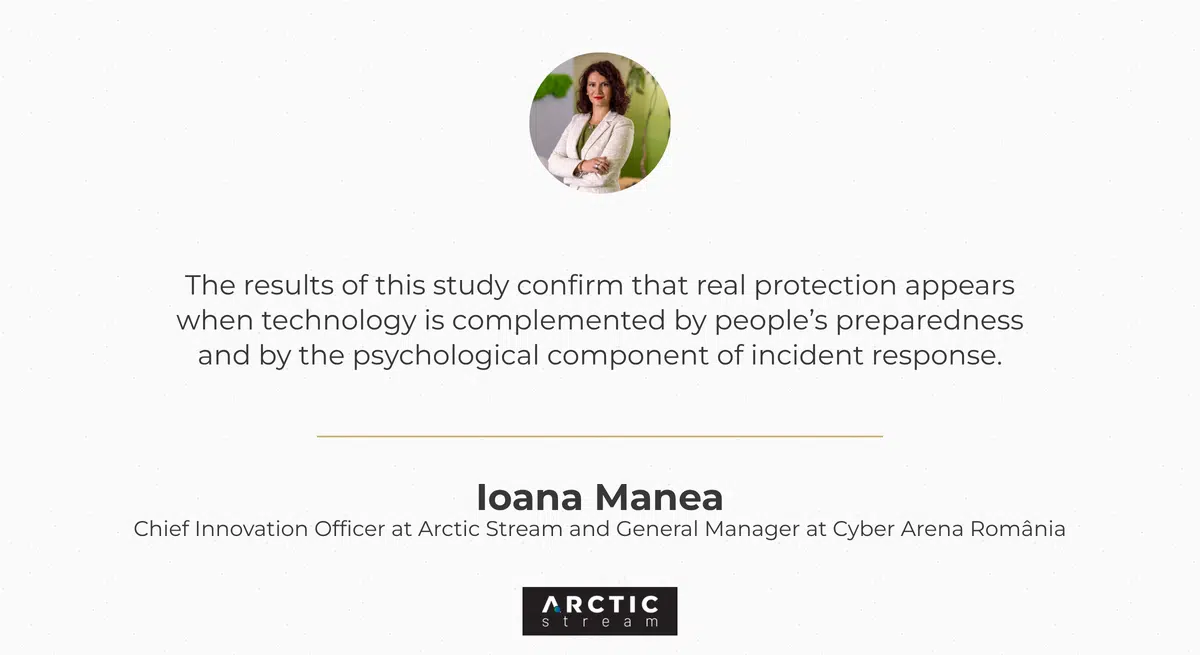
What Arctic Stream says about the study
Frequently asked questions
What is a cyber literacy study?
What does CAWI mean, and when is the method a good fit?
How representative is a sample of 1,000 employees?
Who decides what data gets published from a commissioned study?
Want a national study for your organization?
MKOR designs, runs and analyzes quantitative market research studies that the client publishes under its own brand, following the model used for Arctic Stream:
- an online questionnaire on a nationally representative target
- a report adapted to the client’s visual identity
- a joint press release with the client
- data that stays comparable over time, if the study is repeated
Tell us what question the market needs answered, and we will propose the study design, the sample and the timeline. Contact the MKOR team for a no-obligation conversation, or see more projects in the Clients and case studies section.