


The success of marketing campaigns in 2018 will be defined by authenticity in communication, empathy, the influence of micro-communities, personalization at every level, and the creation of experiences.
Brands that commit to active involvement in communities and create a framework for collaboration with the people they serve will enjoy attention, trust, and, implicitly, financial rewards from their customers.
Conținutul ghidului
Most likely, your marketing team is already using technological resources in their activity, but what they need to do as marketers is to expand their horizons and understand the important role they play in a business.
2018 in marketing is about technology, millennials, and making the right choices for business needs.
Digital marketing is a dynamic field where change is the leitmotif. Change means adapting to market needs and demands, as well as streamlining how we choose to respond to them.
The development of technology and the fact that it is becoming increasingly accessible in terms of learning and costs have led to its spread among both marketers and consumers.
If 2017 was about the expansion of how consumers use smartphones and flirting with VR, AR, and 3D printing, in 2018 we will see how these intersect and how they will energize marketing.
This year, the trends that have already emerged in the last two years will continue and intensify: we will see more video content, more personalization, more storytelling, more AI and VR, and more Big Data.
We are dealing with consumers equipped with smartphones and smart gadgets, connected to the Internet, but with less and less free time at their disposal. Consumers are open to responding to those who speak their language, in the environments they prefer, and in real-time.
New challenges bring new opportunities (see the section on GDPR). Marketers can take advantage of them by keeping a few aspects in mind.
In 2018, it is important to learn about your consumers and deliver personalized products and services. Find out what and where they are searching and take advantage of their micro-moments to place a trigger to the sales page.
Search engines learn from every use, thus collecting a wealth of data about users. Marketers just need to decipher this information that is right in front of them.
About the “Digital Marketing Trends” White Paper
The purpose of this white paper is not to generate a moment of FOMO (Fear of Missing Out). As you read, you might realize you are behind on some technologies or that you didn’t even know millennials could influence consumer behavior so much. Monitor the evolution of new technologies, but remember that technology should serve consumers and not the other way around.
Download White Paper Digital Marketing Trends 2018I Want Instant Access
We dedicated several good days to documenting the content of this white paper and ensuring you receive relevant information. We aggregated information obtained from specialized publications, blogs of major gurus in the field, marketing webinars, conferences we attended in 2017, and, of course, we extracted data from our own studies.
This white paper presents the digital trends that will define the marketing field in 2018. The trends cover already known technologies that will see growth this year (for example, Artificial Intelligence), as well as new elements such as voice searches.
Therefore, we hope this document answers your questions and helps you formulate new ones.
Why Customer Experience (CX) is important
The future consists of creating interactions that humanize the process of learning, documenting, socializing and, ultimately, purchasing products and services. In 2018, businesses should be in tune with their customers’ needs and desires, who are motivated not by the intention to buy as much as possible, but by the desire to experience as much as possible.
Customer experience is the starting point for each of the trends to be presented. Start by identifying your brand’s consumers, understand their needs, measure their perceptions, identify challenges and opportunities to increase satisfaction, and take action.
No trend will help your organization grow if you don’t start with the end consumer in mind. No matter how much artificial intelligence the website contains, it is in vain if the user did not find what they wanted.
No chatbot will improve the consumer’s perception of the brand if the order was not delivered on time. No augmented reality application will improve the relationship with customers if your brand does not offer the promised services.
What the brand needs is a process based on the data obtained, corroborated with a digital solution that puts consumers at the center of decisions, actions, and offers.
According to the study conducted by Digital Information World, 74% of consumers feel frustrated when a site’s content is not personalized, and 58% say that personalization influences their purchasing decisions. Therefore, personalizing the consumer experience is the key to increasing the conversion rate.
Megatrend: Multisensory
Trend: Augmented Reality (AR)
In 2017, Augmented Reality (AR) moved from the stage of niche technology to that of a must-have, becoming mainstream. In June 2017, Apple introduced ARKit, a tool addressed to software developers to help them develop AR experiences for iPhone. Google shortly after released ARCore, the version for Android.
Tim Cook, CEO of Apple, stated that no industry will be able to exist without AR. Although this technology stood out especially through the already popular game – Pokémon Go, AR is no longer just a game, but a real facility that can come to the aid of consumers with concrete benefits.
From providing additional information to consumers about products to giving them the opportunity to test them virtually, the applicability of AR can already be seen in the gaming, fashion, retail, and marketing industries.
AR causes consumers to interact more with products on the store shelf. Brands use AR technology to bring product labels to life and thus offer a unique experience to the consumer. Those interactive moments bring a new breath and help with product differentiation in the consumer’s mind.
The interactivity generated by AR does not stop within the store walls, passing beyond them directly online. AR technology has the advantage of generating social media content, improving the word-of-mouth marketing strategy.
With the emergence of multiple communication channels, marketers will take into account the lack of distributive attention of consumers and will have to carefully choose where to promote.
Another challenge for print marketing is the preference for media consumption. A smart solution for this challenge lies at the intersection of print and media, where interactivity is the key.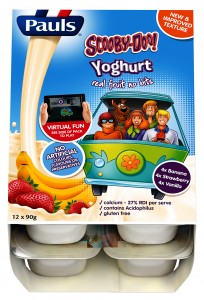
The Pauls dairy brand introduced fruit yogurts for children to the market, which had characters from the Scooby-Doo cartoon printed on the packaging. Using a phone or tablet pointed at the yogurt packaging, children could bring the characters to life. Moreover, through the application developed by Pauls, children could enter a game to be rewarded with a spooky snack.
The fashion brand GAP has developed an application that allows its customers to virtually try on clothes. The first step is for users to select the outfit they want, and then select one of the five body types provided. Through this feature, Gap customers can see how the clothes will actually fit.
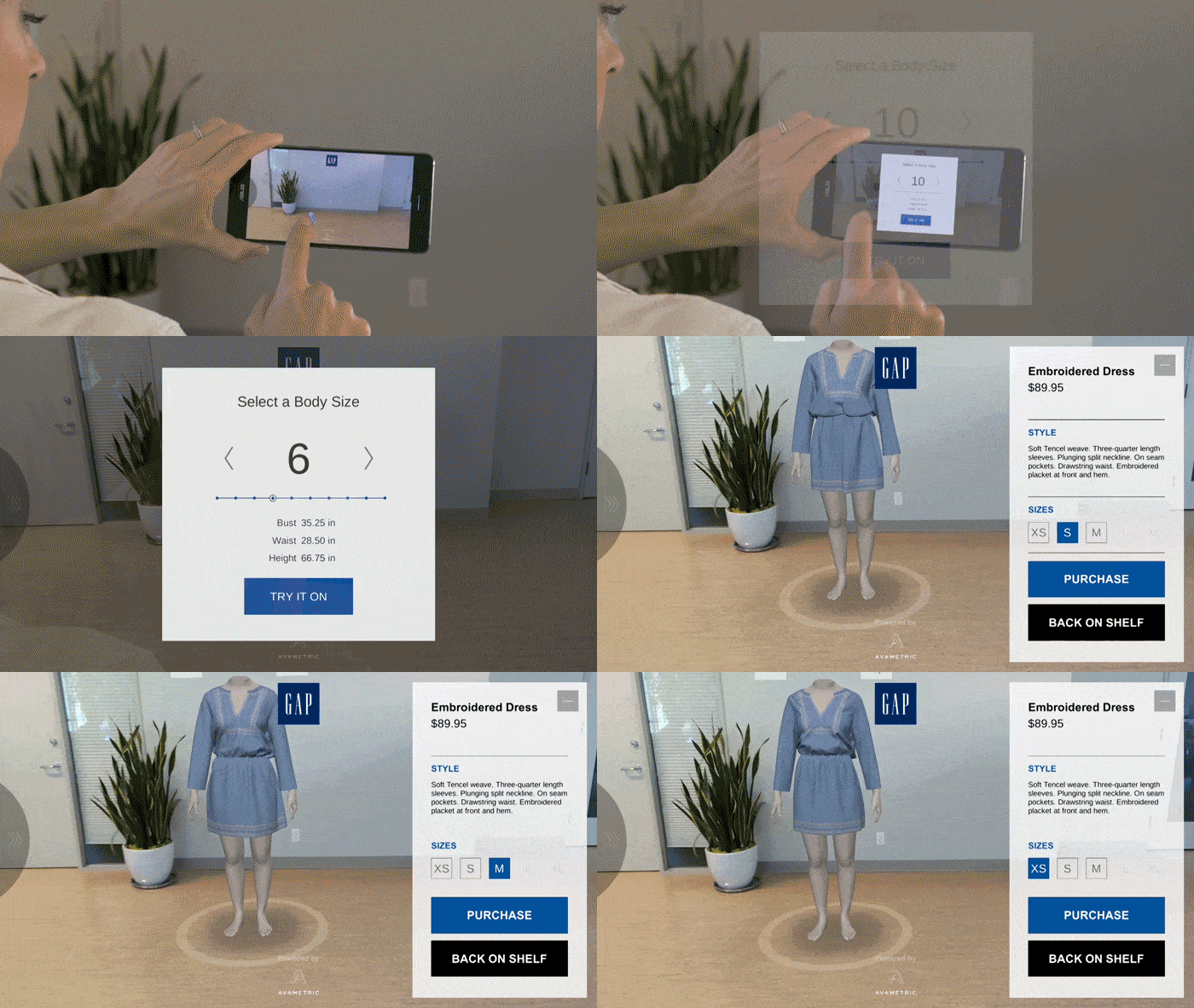
Gap certainly responded to a real consumer need when it chose to invest in the development of this AR application. In the fall of 2017, MKOR Consulting identified this need in the Romanian fashion market as well. According to the study Digital Fashion Consumer Trends 8.6% of respondents freely mentioned the need to be able to try on virtually.
Trend: Virtual Reality (VR)
The spread of high-speed internet access (5G) will increase the demand for unique experiences facilitated by technology. This is also the case for Virtual Reality (VR) applications. By 2022, the total VR market will exceed $26 billion, according to research conducted by Zion Market Research. Retailers, brands, and service providers will have to rethink their strategy taking these aspects into account.
Brands that offer 3D experiences will receive more attention from consumers. Advertising and the way sales are made will be heavily influenced by VR. Using the consumer profile (or persona), marketers will be able to place targeted ads directly into the 3D experience that the user finds relevant.
A unique use of VR came from a father who managed to see his unborn daughter in virtual reality. With the help of the Aava Medical Center and the 4D ultrasound manufacturer, General Electric, the father extracted the 4D ultrasound data with which he then formed the 3D model of the baby. With the help of a VR set, the parents could see their daughter as she is in the mother’s womb.

A restaurant in Japan offers its customers culinary and virtual experiences. Its menu includes dishes from destinations such as Hawaii, Rome, Paris, or New York. Customers can not only enjoy local food but can even travel virtually to those destinations. The restaurant’s concept consists of arranging the space like an airplane.
For authenticity, Airbus seats are used, and the food is served by former flight attendants. Basically, customers can enjoy a pizza on a virtual flight to Rome. Even the booking website is built in the manner of an airline website.
This nail salon in London has created a unique concept. Built on two floors, where the actual salon is in the basement, and the first floor is set up to offer unique experiences to customers. With a VR set, customers can “try on” various colors and patterns for their nails, and after they have chosen their preferences, they can wait while enjoying a cocktail.
V-Commerce
The potential that this technology has is impressive. VR already allows visual and audio experiences. The next senses to be stimulated are the olfactory and tactile ones, so we will be able to speak of a transposition into another reality.
These upgrades will allow consumers to test and feel products before buying them. VR is part of the future of retail. Thus, we will no longer talk only about e-commerce (electronic commerce), but also about v-commerce (virtual commerce) or virtual trade.
The giant Alibaba introduced in 2016 a virtual store through which VR headset users could walk around, and if a specific product was of interest, they could find out more information and even purchase it. In the first few days, the retailer managed to attract 30,000 users, and in a week it already exceeded 8 million users.
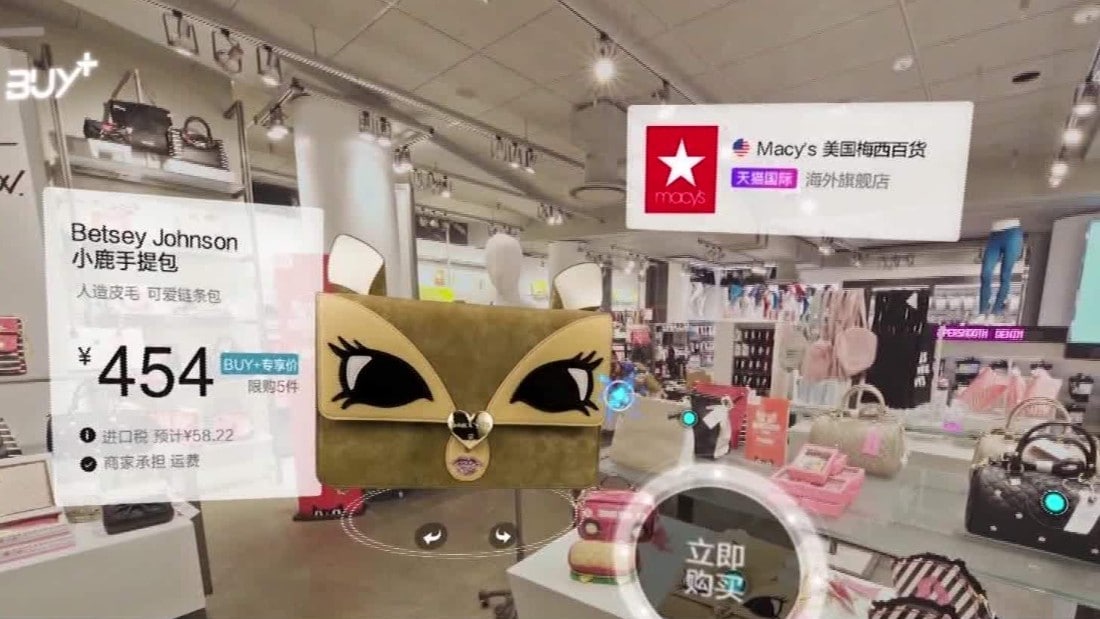
VR can also be used in e-retail. WebVR is an open-source tool developed to be integrated into the browser. The tool allows users to view 3D objects directly in the browser, without the need to download additional applications. Basically, the user who wants to find out more details puts on the 3D glasses that integrate the smartphone on which the product image is displayed in the browser. The user can see the product from all angles, rotate it, and even try its functionalities.
Download WhitePaper Trends in Digital Marketing 2018I Want To Get Instant Access
Megatrend: Artificial Intelligence (AI)
The trend is to bring online facilities directly to store shelves. Retail and technology will become inseparable. Artificial intelligence, virtual & augmented reality, and the Internet of Things will contribute significantly to personalizing the shopping experience.
Artificial Intelligence (AI) has the potential to change the way organizations and businesses communicate and innovate. By 2020, 20% of companies will have employees to monitor and guide neural networks.
Any industry that operates with huge amounts of data, those data sets that cannot be analyzed and interpreted independently by the human mind, can turn to AI. According to a study conducted by Gartner, 59% of organizations are still collecting information on how they can build their AI strategy, while others are already running pilot projects or have adopted AI solutions.
Of course, any industry that needs customer support services will find suitable solutions in AI. Already, in customer care, we talk to robots that solve problems. It is expected that in the near future these robots will also be emotionally intelligent, having the ability to recognize and communicate emotions and feelings.
Trend: Chatbot
Due to the expansion of internet access and the increase in the number of smartphone users, messaging applications have become a significant part of the mobile application market, offering users an alternative to SMS messages. Messaging applications have improved features, such as group chats or photo sharing.
Over half of mobile device users use messaging apps monthly. In 2016, over 1.58 billion smartphone users accessed messaging apps to communicate. By 2021, this figure is expected to grow to 2.48 billion users.
Mobile messaging applications are ideal communication channels, especially for consumers who are always on the move and want an instant response. Consumers want to know that their problems are important and that someone will deal with their resolution immediately. A chatbot has this ability to respond immediately and even solve tasks that an employee would have to allocate time for.
Chatbots can be used in marketing as the first contact with customers and to collect their email addresses for newsletter subscriptions, for example. According to Expertsender, 29% of consumers prefer to use messaging apps to get in touch with retailers 24/7, and 63% consider the possibility of writing to a chatbot to get in touch with a brand.
A chatbot will come to your aid by expanding the ways to get in touch with your audience and converting them into subscribers to communication channels.
To promote its “Alexander Wang” collection, the Adidas brand created a chatbot to facilitate the placement and delivery of orders in a unique way. Customers were able to place the order through a written message, which was then taken over by a chatbot. The order was delivered on the same day by a bicycle courier dressed in the collection’s clothes. Adidas thus offered an exclusive experience and responded instantly to customer requests.
Trend: Wearables
Digitalization influences a multitude of aspects of daily life. New generations are already considered digital natives, easily accept technology, and give it full trust. Artificial Intelligence is incorporated and finds its utility in the most unexpected ways.
Wearables or smart wearable devices already have an established audience. In 2016 alone, the wearables market almost doubled, experiencing a 45% growth, and by 2019, the growth is estimated at 64%.
Until recently, the most well-known gadgets were smartwatches or fitness tracking bracelets. Consumers will not give them up, but they will look for those wearables that aesthetically integrate their style, preferring those gadgets with a minimalist, discreet design. Manufacturers use technology to create discreet devices that practically become an extension of the human body.
A simple ring is the new way to control the interface of augmented reality experiences. The prototype ring will replace the controllers that are currently large, cumbersome, and not very intuitive. To use it, the wearer will make a few simple gestures, such as pointing, pressing, or rotating it. The advantage of this smart ring is that it can be used in public spaces without attracting attention.
The desire to be constantly connected is part of the modern consumer’s lifestyle. Thus, devices that can be worn directly on the skin are the solution that responds directly to the need for hyper-connectivity. The devices use NFC (Near Field Communication) technology to store and transmit information.
Because they offer an integrated digital experience, the applications of this technology are numerous: monitoring a patient’s health status, allowing access to concerts and sporting events, or making payments.
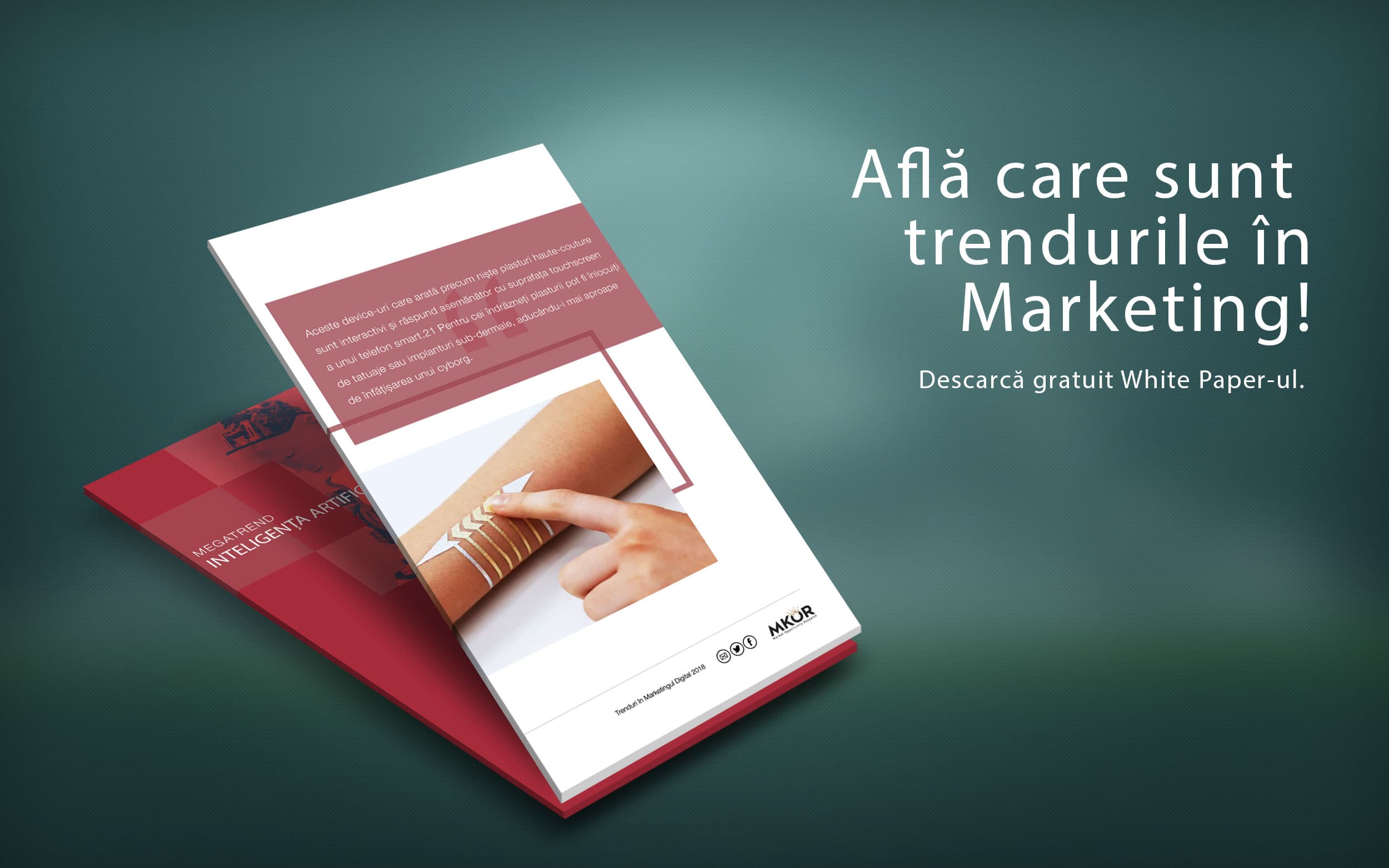
These devices that look like haute-couture patches are interactive and respond similarly to the touchscreen surface of a smartphone. For the bold, the patches can be replaced by tattoos or sub-dermal implants, bringing them closer to the appearance of a cyborg.

Commonplace devices such as headphones will also undergo a design rethink. Third Skin has developed a prototype of headphones that are almost invisible when worn, and the battery lasts up to 18 hours.
Trend: AI-Assisted Personalization
AI applications are numerous and can be of real use in improving the consumer experience. For example, AI can be used in language interpretation and facial recognition to understand feelings, context, intent, and to predict consumer needs.
AI is becoming the consumer’s personal assistant, helping them select hyper-personalized products. Retail, especially in the health & beauty area, will be dominated by precise needs diagnosis and product recommendations.
Recently launched, the cosmetics brand Proven uses artificial intelligence to find the ideal skin care product, tailored to each individual client. The algorithm analyzed 100,000 cosmetic products and 8 million reviews to formulate templates with optimal recommendations for each skin type. After completing a detailed questionnaire, customers receive personalized product offers.
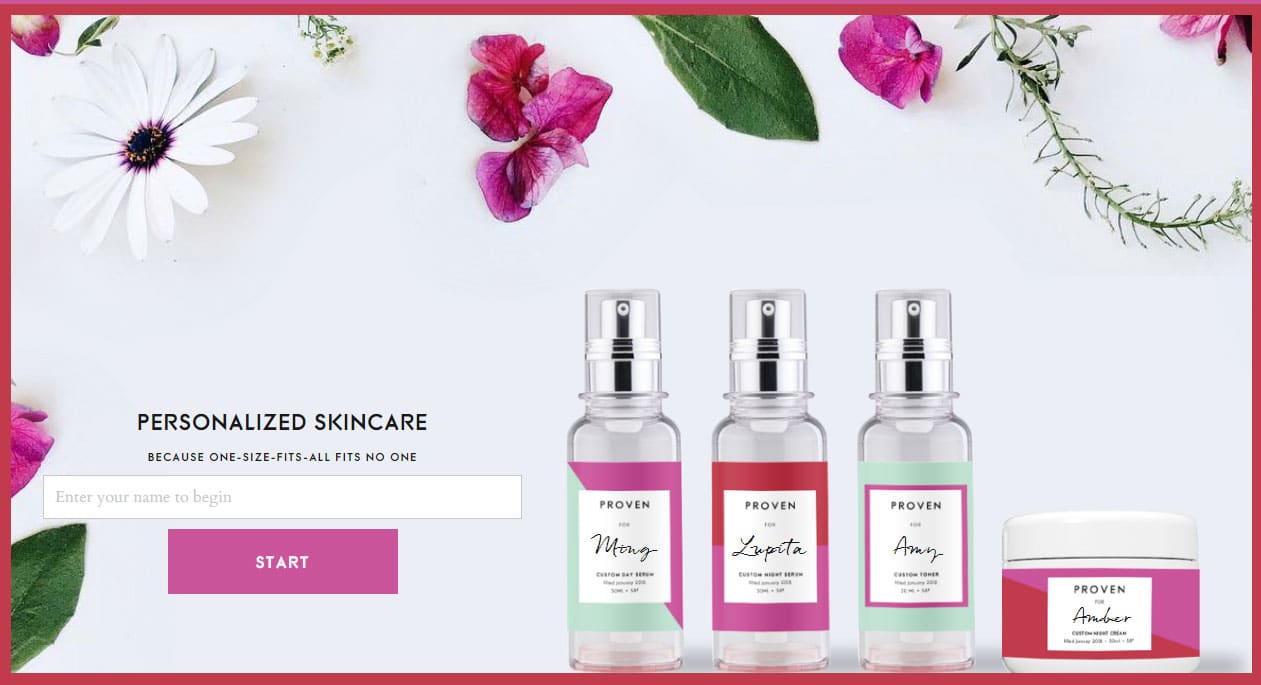
Consumers are feeling increasingly comfortable sharing their personal data in exchange for knowledge and convenience. This will influence marketing on a broader level because customers will be willing to provide intimate details in exchange for a hyper-personalized experience.
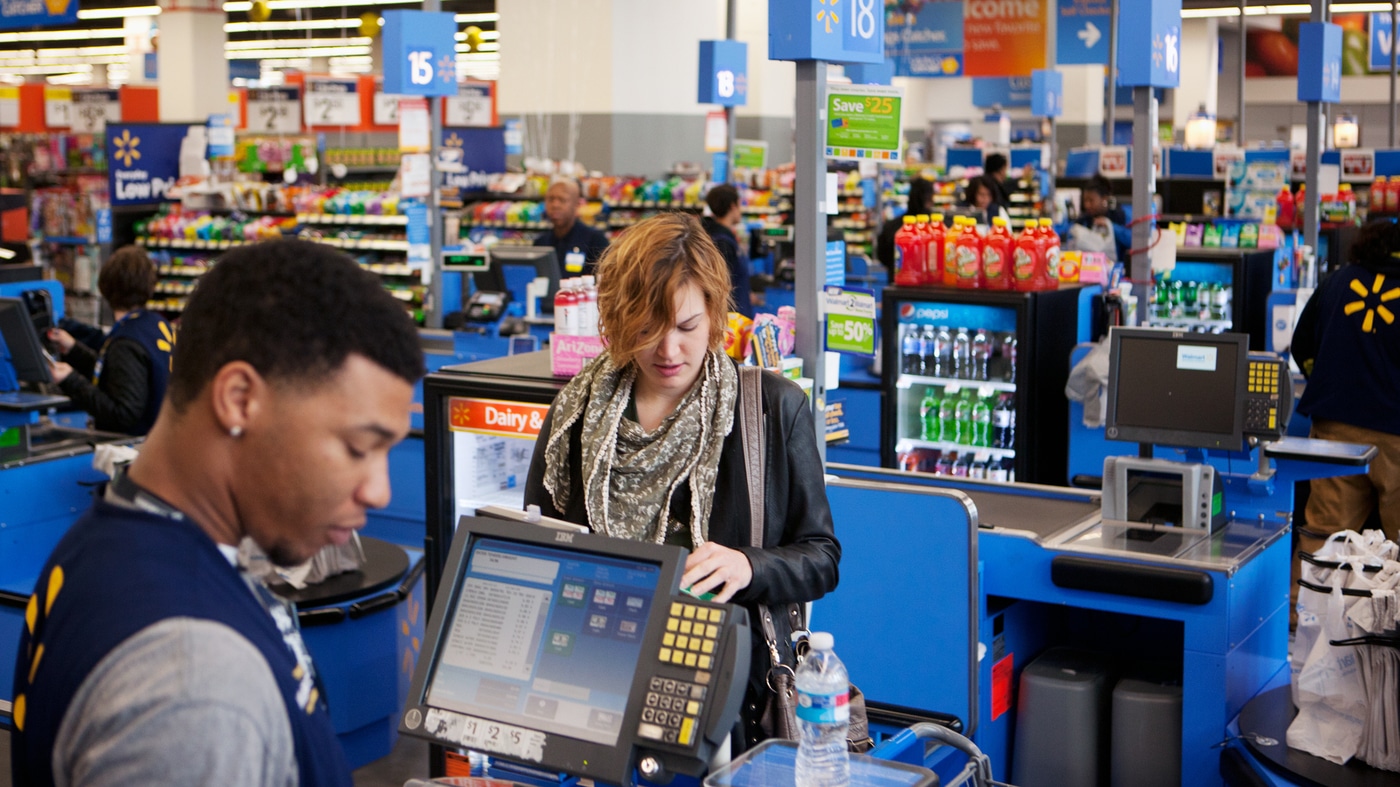
Walmart wants to use, with the help of artificial intelligence, a system to identify the dissatisfied looks of customers. The cameras, which will be located at the checkout counters, will track people’s behavior and the way they choose to spend money. Customers who are dissatisfied will be approached by employees who have been trained in this regard. Using this system, Walmart aims to increase customer retention.
Wave Division and Dialogica tested, in partnership with Farmec, the largest cosmetics manufacturer in Romania, the facial detection service called Shopper Reality Mining. A miniature and discreet video camera was placed on a product display to analyze consumer behavior and interaction with Farmec products. This allowed the team to calculate the values of the demographic profiles of each individual consumer (event participant), as well as the traffic in the location and the relevance of the displayed message.
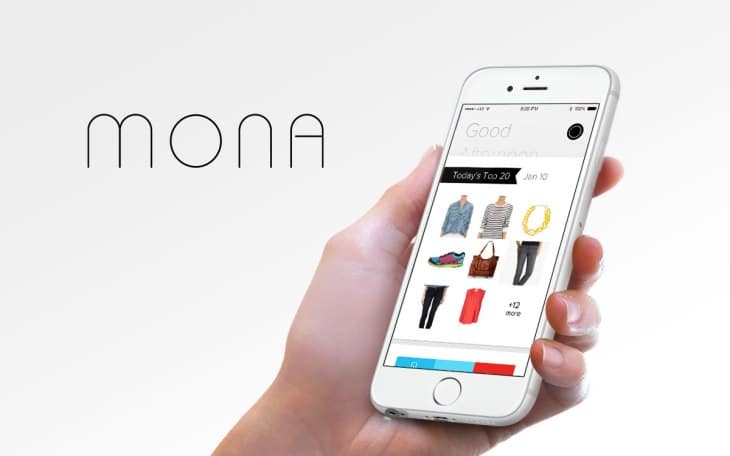
Mona is an application that assists consumers with shopping. The application uses AI, Big Data, and specialist expertise to provide simplified and more enjoyable shopping experiences. Mona learns about the user’s lifestyle, favorite brands, and allocated budget, so as to offer only relevant suggestions.
Download WhitePaper Digital Marketing Trends 2018I Want to Receive Instant Access
Megatrend: Storytelling
Stories have been loved for thousands of years, regardless of the culture we belong to or whether we are 0 or 100 years old. The art of storytelling has taken many forms, from theater to print media to cinema, and today we share stories on the Internet in the most creative ways. Currently, technology facilitates the collaboration of the audience with authors, the art of storytelling becoming interactive.
The art of storytelling is the new soul of commerce. Stories convey experiences and emotions that the audience identifies with, whetting their appetite to learn more. A brand’s story has several facets: it informs the audience about the vision of the lifestyle the brand adheres to and provides information about the origin of the products. The narrative thread of a story reveals those things that we as humans have in common, opening new horizons for the brand to connect with its customers.
Trend: Authenticity
Authenticity and relevance sell and are favored by the algorithms of the main online marketing channels, Google and Facebook. Stories have the quality of being non-intrusive, and when inserted into advertising, they can generate non-invasive ads, indirect and authentic marketing, which will sell much better than the promotional techniques we are used to.
The Netflix platform offers children an interactive animation. The cartoons tell the story of fairy tale characters, such as Puss in Boots, and invite children to decide with the push of a button which path their hero should take at key moments in the story.
In the context of competition between brands, where products have similar benefits, the strategy of simply increasing sales is no longer enough. Differentiation between brands will be made by the way they are sold, the way brands manage to connect emotionally with customers, and the way they manage to build a community around the values they believe in.
For example, this distributor promotes its products dairy and meat products through packaging that tells the story of the origin of the ingredients. The hand-drawn illustrations depict an anthropomorphized hen as a wise grandmother. The goal is to convey the message that the chicken breast in the tray comes from farm-raised and properly fed birds.

Trend: Influencer Marketing
A good way that brands use to tell their story and convey authenticity is partnering with social media influencers.
Content remains the most relevant element for marketing, but the context in which it is delivered has become more important than ever. Good content is delivered organically with the help of an influencer. The fact that the product tells a story is more relevant to consumers who are increasingly attentive to how they interact with a brand.
Brands must be very careful when entering into a partnership with an influencer. Marketers will consider aligning the content they want to popularize with the chosen influencer, so as to be as authentic as possible in front of the public.
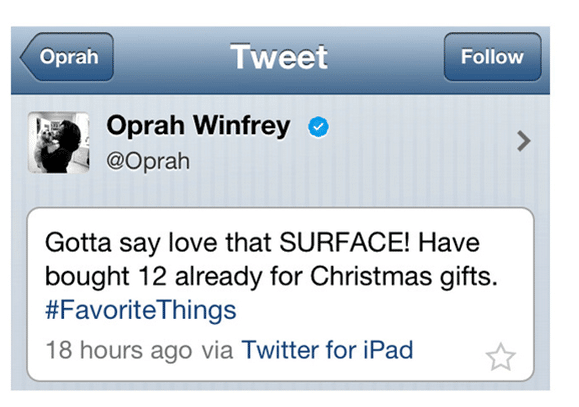
For example, the giant Microsoft, in an attempt to promote the new Microsoft Surface portable device, secured a partnership with Oprah Winfrey, a trusted personality in the American market. The problem arose when Oprah wrote a tweet recommending the new Surface tablets using an iPad, a product of Microsoft’s direct competitor. People immediately noticed the lack of authenticity, and thus the Microsoft-Winfrey partnership failed.
 Trend: Video Content
 Trend: Video Content
For authentically told content in the digital world, video is essential. By 2019, it is expected that 80% of internet traffic will be generated by video content.
Video content captures the brand story in a way that communicates experiences. A video clip can convey feelings and emotions that customers identify with, thus strengthening the connection with the brand. Video content has the advantage of spreading virally in an organic way, which is an important aspect considering the latest changes regarding social media algorithms.
Short videos, in particular, will be part of the experience of consumers who use Twitter, Instagram, and YouTube to share brand-related experiences. By understanding the story behind it, people are more open to starting discussions and promoting the brand.
Every business delivers solutions and products dedicated to people, so any marketing is relevant to them when they feel it is addressed to them.
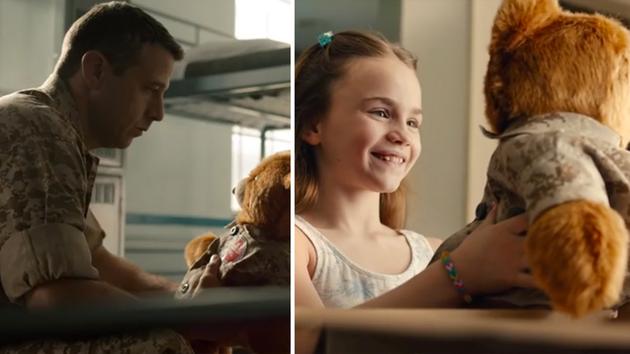
The Duracell battery brand chose to create a commercial inspired by a real story of the relationship between a military father and his daughter. The father, being away on a mission, sends her a message using the audio recording device inside a teddy bear.
The little girl listens to the message countless times until the day her father returns home. In addition to the moving story, the spot aims to raise funds directed to an association that addresses children affected by their parents’ departure on military missions.
Download WhitePaper Trends in Digital Marketing 2018I Want to Get Instant Access
Megatrend: Omnichannel
The boundary between digital and real has significantly diminished. Being present in only one of these places is not an option for brands that not only want to be noticed by consumers but also want to offer them unique experiences to build loyalty.
The digitalization of the marketing strategy has among its advantages the spreading of the brand’s message and connecting with new potential customers. Digital is faster, and as consumers are equipped with at least one digital device, the marketing department’s efforts reach the target group instantly.
Consumers want smooth shopping experiences in the transition from offline to online and vice versa, without a clear distinction between the two channels. This could mean they can buy online and pick up products in-store, buy online and return in-store, receive home delivery, or use the mall’s mobile app while shopping.
Trend: Showroom & Pop-up Store
2018 is the year of the Showroom and Pop-Up stores. This type of store increases visibility in new markets. They also play a role in increasing consumer awareness by presenting them with a new shopping option. Moreover, the Showroom and Pop-up Store contribute to customer loyalty.
But why do consumers prefer this solution? According to the report by the eCommerce Foundation, for 42% of users, the main barrier to purchasing products online is trust and the less pleasant experience had on the site.
And according to “Digital Fashion Consumer Trends“, a study conducted by MKOR Consulting in November 2017, more than a quarter (27%) of Romanians who usually visit virtual stores do not buy online. This is because they prefer to see and test products in a physical store (56% of them), or they fear that the sizes do not fit them (52%).
In addition, more than a third (34%) of those who visit online fashion stores only want to compare prices and find products they buy offline.
These store concepts exploit everything omnichannel means to its full potential. They offer consumers a shopping experience through which they find the desired products, whether it is an order placed online or products directly from the store shelf. Customers will be surprised by the element of novelty and the creativity with which marketers will greet them.
A showroom is practically the natural step in a retailer’s development because consumers already use stores and online in this way: before placing an online order, they prefer to see the real product, directly on the shelf.
URL (Uniform Resource Locator) becomes IRL (In Real Life). Far from closing real stores, e-commerce brands are revitalizing themselves through store concepts found at the intersection of URL and IRL. For example, a New York startup rents temporary spaces to e-commerce brands that usually sell exclusively online. The space is metaphorically compared to a lifestyle blog. The startup’s founder believes that if stores are considered marketing channels, it no longer matters whether the conversion takes place online or in real life (IRL).
A pop-up store comes to the aid of retailers who have so far developed exclusively online. Online merchants resort to pop-up stores to offer a unique experience attributed to the brand, rather than to make on-the-spot sales.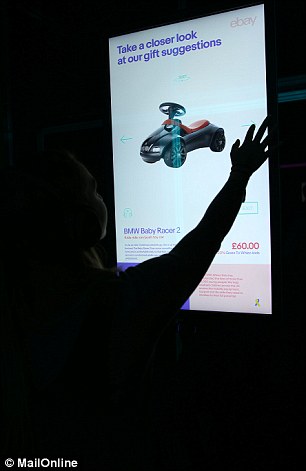
Online retailer eBay thought of coming to the aid of its customers by solving the problem of choosing Christmas gifts. In this regard, they opened a pop-up store and used facial emotion recognition technology to find the right gift.
The entire experience starts from the emotions shown towards the images of various products displayed. The ultimate goal is for people to escape the stress caused by choosing gifts and to buy those products they truly want.
Consumer involvement in promotional campaigns is one of the interactive trends of 2018. Consumers see and hear hundreds of advertisements daily. By offering them an interactive experience, appealing to other senses as well, brands will succeed in standing out.
An American online retailer, Jet.com, was brought to life through a pop-up store featuring approximately 700 of the products sold online. Thus, their customers could test kitchen utensils, browse cookbooks, and taste snacks.
To create as lively a space as possible, the retailer used multisensory decorations: artificial grass flooring, wallpaper that emitted scents when touched, and other themed exhibits. Moreover, cooking workshops were held in this space for 6 weeks, and renowned chefs were invited.

Showrooms also represent potential for brands that have made a name for themselves through a classic presence in the retail market. They have the opportunity to assert themselves by integrating digital into their sales strategy, practically being present on multiple channels.
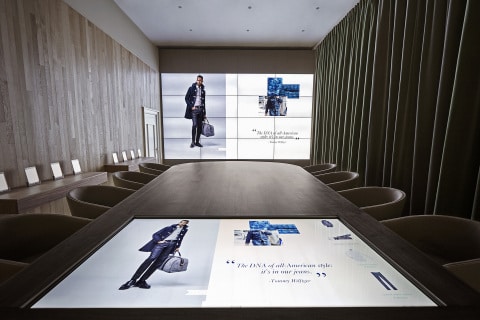
An example of this is Tommy Hilfiger, which opened a digital showroom in Amsterdam. In a space decorated without excess and imposing, there are interactive HD screens that allow the user to choose and personalize their outfits.
The digital platform provides detailed information about each individual product. Through this move, Tommy Hilfiger offers a high-tech and interactive experience to its customers.
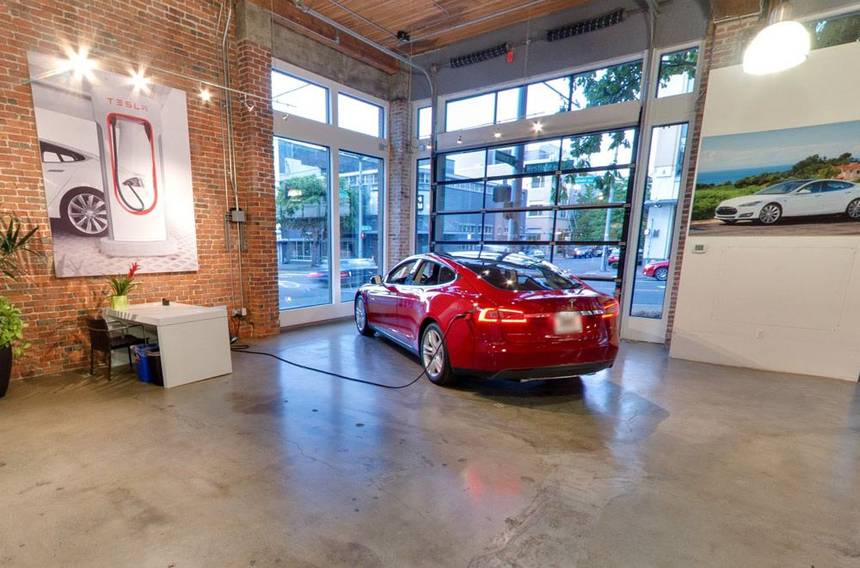
The innovative automotive brand Tesla, through a partnership with Google Street View, offers the possibility of virtually visiting their showroom located in Seattle. Visitors enjoy an experience true to reality thanks to HD quality. They can visit the Tesla headquarters and even get inside the new Model S electric car model.
Download WhitePaper Digital Marketing Trends 2018I Want To Receive Instant Access
Trend: Blur the Lines
Physical stores will transform from sales channels into experience providers. Digital assistance is already being used independently by consumers.
According to a study conducted by MKOR Consulting, searching for desired products on Google is the main source of information for both online and offline consumers: approximately 60% of them use Internet searches to identify the stores where they will make purchases.
It has become normal for information to be just a click away, and buyers can become frustrated if they do not have immediate access to details about the products they are interested in. Brands can take advantage of the increasing interconnectivity used by consumers and use it to identify those micro-moments to turn into sales.
Digital assistance, whether in-store or online, is essential for modern consumers seeking personalized experiences.
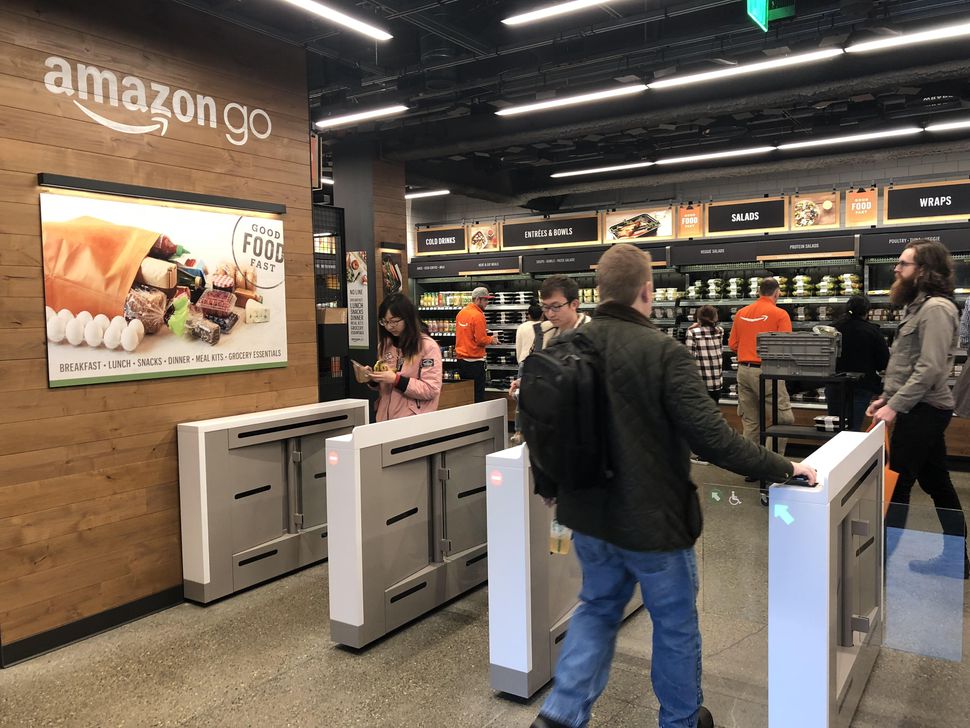
Amazon launched a store called Amazon Go where there are no longer cashiers or cash registers, thus reducing queues. Customers enter the store by scanning an app, buy the desired products and leave, with payment being made directly from their account.
Furthermore, Amazon will implement a Robomart (automated store on wheels) that does not need a driver, being fully electric and intended for people living in rural areas without access to supermarkets.
With the rebranding, the marketing team at ASICS also rethought the digital marketing strategy. In this regard, they created a map of the emotional journey of customers who enter the store, then starting from this, they identified the vulnerable points which they eliminated by placing digital screens.
The screens aim to reduce the abandonment rate by allowing customers to make informed decisions. The products displayed on the digital screen are accompanied by technical details and information regarding their performance. At the same time, the store staff received specialized training to advise users of the digital screens.
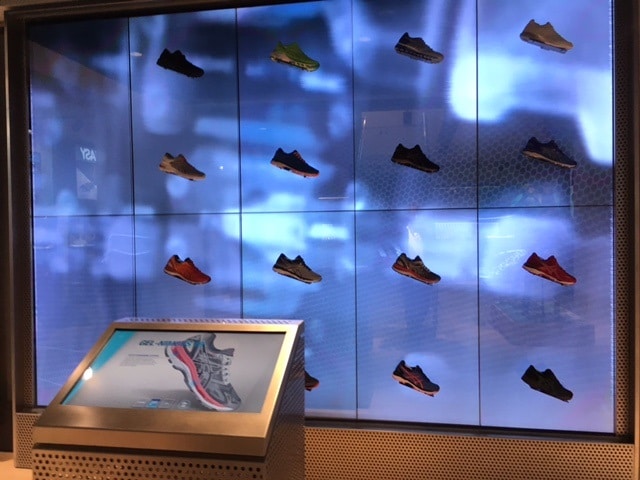
Customers can create a runner profile and customize the product selection in great detail. Once the choice is made, the selected product is signaled by lights on the shelf located on the wall in front of them.
In the store’s rest area, screens have been placed that display maps with the preferred routes of the city’s athletes. The routes were established following consultation with the city’s sports community. Also in this area are barcode reading devices that provide technical information about the shoes, including video footage.
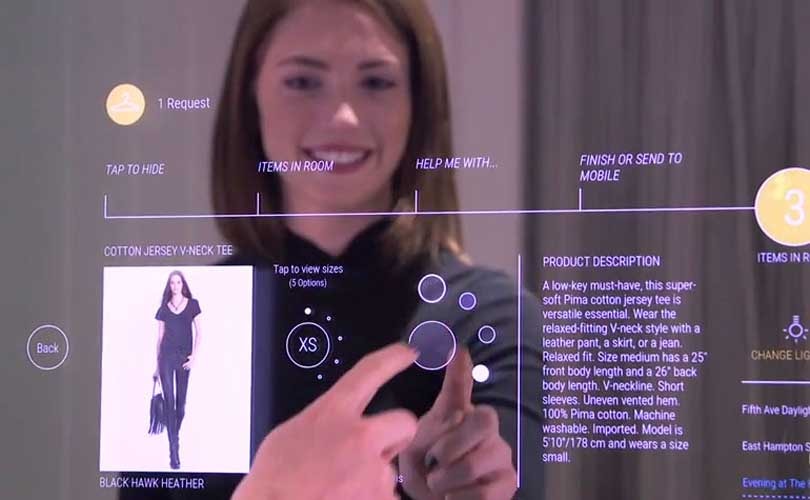
The Ralph Lauren brand implemented a smart mirror in the fitting room. As soon as the customer steps into the fitting room, the clothing tags are automatically read, and the mirror invites them to try them on, offering suggestions for other clothes that can be matched.
The mirror allows communication with the store staff via a touchscreen, to whom they can request other clothing models and sizes, which are then politely brought to the fitting room.
Download WhitePaper Trends in Digital Marketing 2018I Want To Get Instant Access
Megatrend: Economics of Caring
People have lost trust in national governments, in the fact that they still have the power to solve problems of the modern era. From cryptocurrencies to corporate social responsibility programs, by 2020 the economics of caring or the economy of social issues will grow considerably. Consumers expect companies to be more responsible, fair, and ethical.
Consumers, especially millennials, believe that the products they buy must represent more than their final purpose. The brands they purchase must mean more than product quality. Companies that join a cause or propose innovative solutions to old problems will gain a significant demographic group.
Trend: Civic Marketing
Millennials want a transparent brand with a declared purpose, otherwise they will refuse to buy. This consumer segment is interested not in finding out what product is being sold to them, but why it was created. Millennials are careful about how they choose to spend their money. It is in vain for a company to declare that t-shirts are made of organic cotton if they were sewn by exploited women in a sweatshop. They will buy a product that guarantees full manufacturing fairness.
Their concern with global issues does not stop at manufacturing. Millennials are also attentive to how products and services are marketed. If they do not agree with the message of a marketing campaign, they will not only refuse to buy from that brand but will even take a public sanctioning stance (calling out).
If in the past consumers felt discouraged in the face of a problem generated by a brand, social media platforms offer them the opportunity to express themselves both individually and collectively. According to a study from 2017, 46% of consumers expressed their opinion regarding a brand, and 57% of them either bought or boycotted brands based on the set of values they adhere to.
Hashtag activism is continuously growing, directly proportional to people’s access to social media. The global success of the #MeToo movement, in the context of sexual harassment scandals, reveals the power consumers have when they use their collective voice to fight against injustices and to sanction brands.
The voice of consumers is doubled by legal regulations that force companies to be more responsible in communication, but also in practice. In France, Italy, Spain, and Israel, models can only practice if they have a certificate from a doctor stating that their body mass does not endanger their health.
The French government has taken a very firm position on the issue of digitally edited photos of models to make them appear thinner or more attractive. Thus, in France, any photograph that has undergone digital modifications must be accompanied by a mention that it has been retouched.
For example, in the perfume industry, there is a shift from targeting through advertisements that sexualize women to advertisements that promote individual authenticity and confidence.
Perfume marketing today no longer presents scents to consumers as a means of attracting men, but as a way of declaring their independence. “If in the past perfume ads contained a lot of sex appeal and romance, after asking women why they use perfumes, I received the answer: because it makes them feel good,” said a former director of The Honest Company.

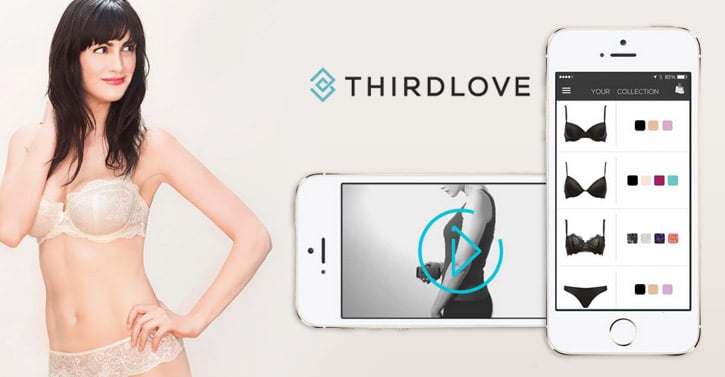
Brands are starting to focus on the “direct-to-consumer” model, a model that is becoming increasingly popular in the fashion world. ThirdLove differentiates itself from other brands by offering an intermediate size and thus responds to the need of many women who cannot find the right bra at major retailers.
From the 30 basic sizes, it has reached 60, and currently, there is a waiting list of approximately 500,000 interested women for another 15 sizes that are about to appear.
General Electric, as part of the “Unseen Stars” campaign in September 2017, created laser animations of 12 women scientists. Those at GE chose to make known the women who, throughout their lives, have achieved remarkable results in the field of science.
During the campaign, people were encouraged to take photos and post them on social networks, especially on Snapchat where you could find geofilters, and on Facebook where they could use specially created frames. Through this campaign, GE promoted its policy of supporting women in STEM fields.
https://www.youtube.com/watch?v=6OuJgGr9F30
The universally accepted Sex sells has transformed into Activism sells. People need to feel that they are doing good around them, to feel that through their actions they can improve society.
A study conducted by MKOR Consulting shows that 64% of Romanians would purchase products associated with social causes. While some would pay even more for such products, a significant part does not trust the certainty of the cause.
For example, companies and brands in Romania reacted differently, but with much imagination, to the protests in the winter of 2017. If some offered goods and services, others only noticed the opportunity to promote a hashtag, meme, or a joke.
Trend: Prosumerism
New generations of consumers are concerned about responsible consumption; therefore, they have started to buy less, but better. What does this mean?
Consumption in the eyes of the millennial generation is about quality, and not quantity. In this sense, mobile applications and services that function as a curator and select offers are appreciated. The solution is at the consumers’ fingertips, and they thus feel they are making a change at a global level.
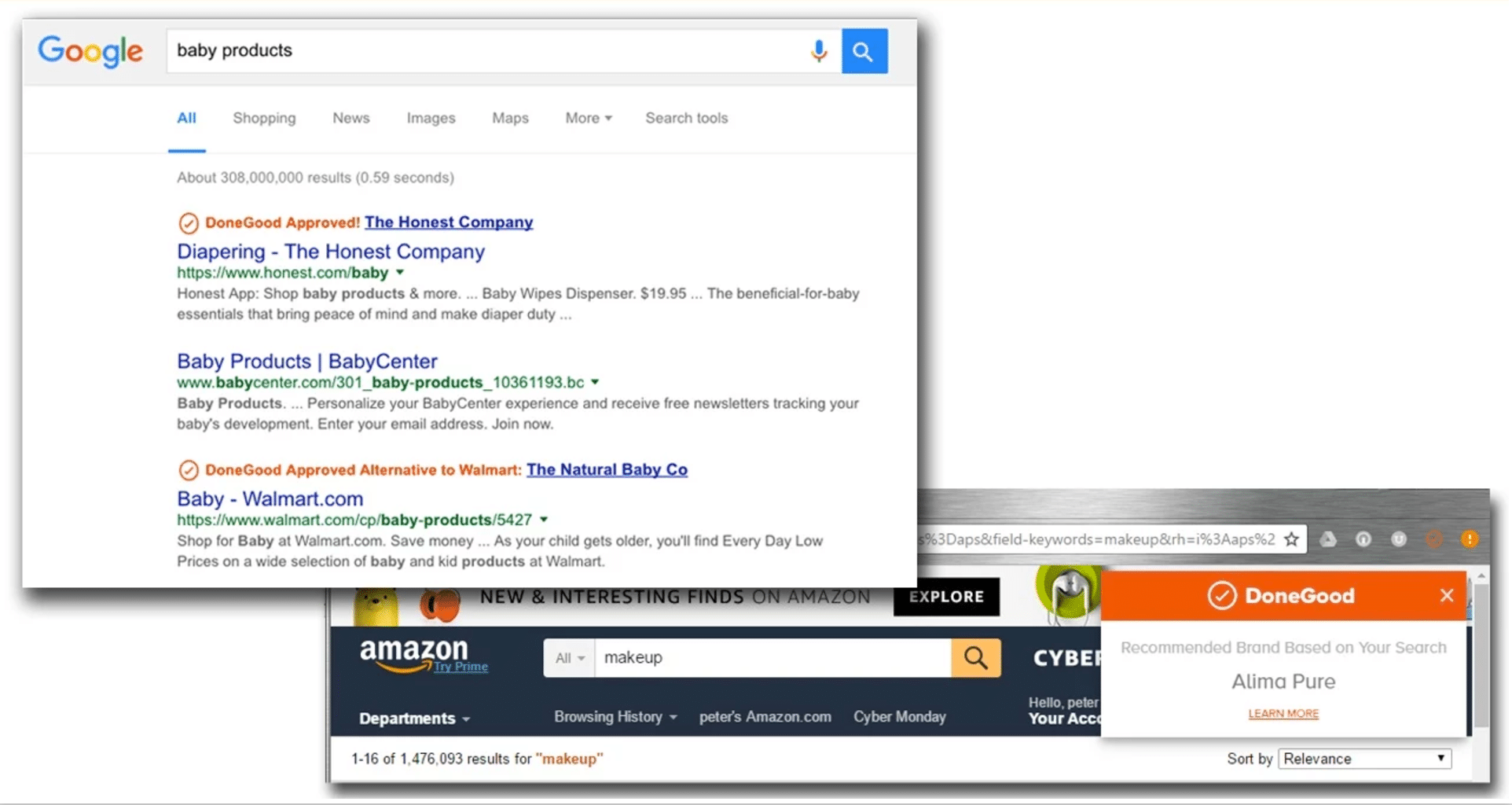
The DoneGood extension, developed for the Google Chrome browser, aims to simplify choices when shopping for those who want fairly manufactured products. The extension suggests alternatives to the previously searched product.
The plugin helps shoppers save money and receive discounts from brands. DoneGood alerts users to ethically made offers and products when they perform a search on Amazon or other similar sites.
Buy Me Once is an online store that aims to combat the fast-fashion culture and the culture of throwing away things we consider useless with such ease.
Many of the things we buy online are of questionable quality or were manufactured under suspicious conditions. This online store aims to become an alternative by offering clothes and household goods that are of high quality and ethically manufactured.
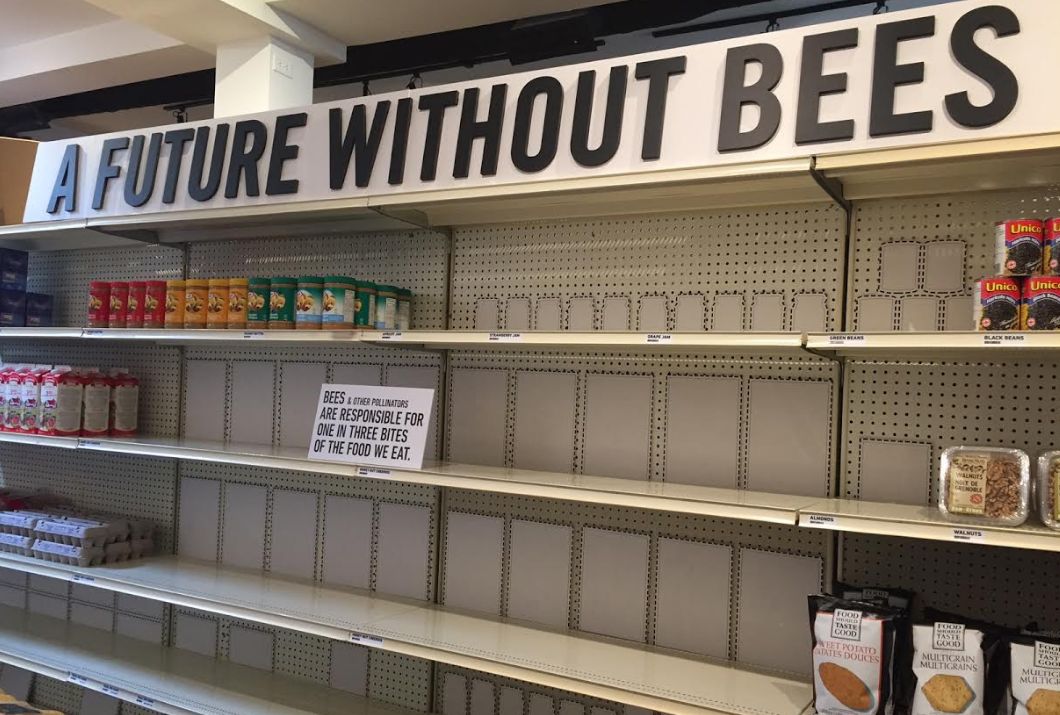
Honey Nut Cheerios hosted a pop-up store for two days to show customers what supermarkets will look like in the future if bees disappear due to pollution. Many of the pop-up store’s shelves were empty, indicating that the products that should have been there will disappear along with the bees.
This pop-up is part of the campaign called #BringBackTheBees, a campaign that tries to show people the importance of protecting bees.
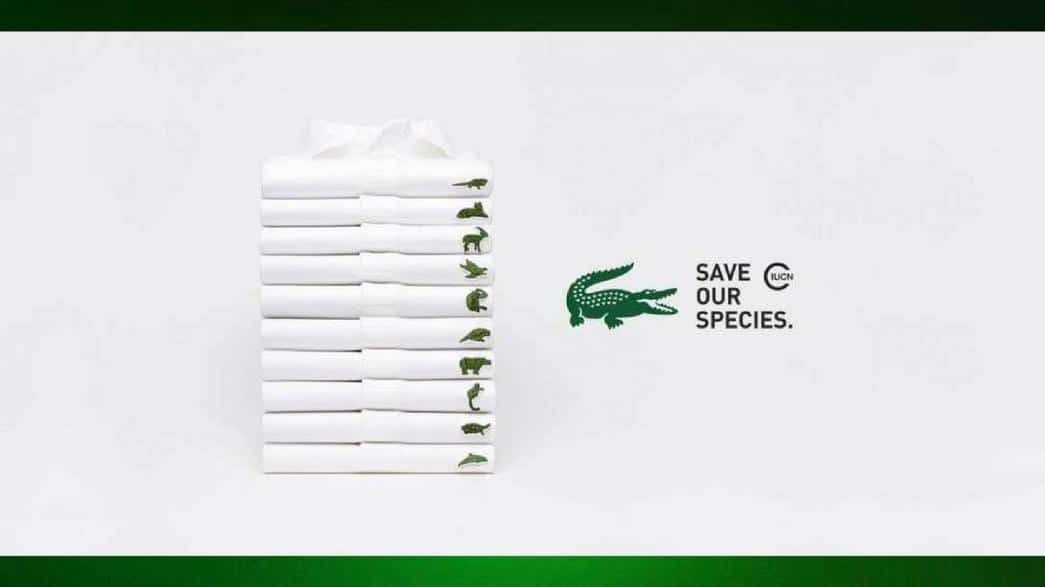
The clothing brand Lacoste has redesigned its famous logo depicting a crocodile to raise awareness about certain endangered species.
Thus, using the same well-known embroidery technique, the Lacoste crocodile was replaced by the California condor, the Sumatran tiger, or the Javan rhino.
Download WhitePaper Digital Marketing Trends 2018I Want To Receive Instant Access
Megatrend: Big Data
Although the term Big Data is no longer as present in marketers’ vocabulary, the notion itself is more important than ever. The Internet of Things (IoT) will be the main collector and generator of consumer data, so necessary in the activity of top marketing teams.
Also noteworthy is the trend regarding the protection of this data. New regulations, as well as consumers who know their rights, will influence how decisions are made within the marketing department.
Trend: Voice Searches
Consumers are feeling increasingly comfortable performing searches via voice command. Digital personal assistants, such as Amazon Echo and Google Home, are expected to cross the early adopters barrier and enter mainstream consumption. The use of the Internet of Things (IoT) will soon surpass the use of computers and smartphones.
By 2020, 20.8 billion IoT gadgets are expected to be in operation. This is happening because technology has evolved so that communication accuracy increases, significantly reducing user frustration. Gadgets are smart enough to understand and provide reliable results.
IoT devices call upon previous searches, just like a regular browser. But, due to the ease of use via voice command, these types of devices record many more searches. Thus, search results can be personalized and become relevant to consumers.
And because most voice searches are made when users are on the go, they demand problem-solving in proximity. Therefore, voice searches generate hyper-localized results, a real opportunity for local businesses.
For the marketing department, this means adapting content to the SEO strategy to become relevant to this type of consumer. Voice searches are more natural in expression than text searches. Therefore, keywords in the SEO strategy will need to be adapted to these new requirements.
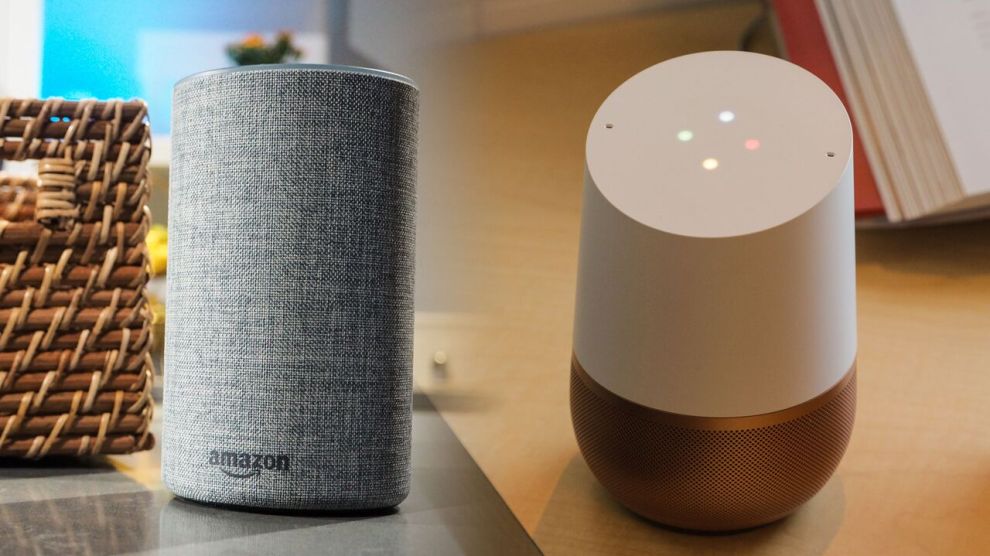
Voicelabs, a company that has pioneered the market for sales generated by voice commands, has launched a new service. Alpine.AI is a solution that develops applications for retailers and operates based on voice commands.
Basically, the application imports the retailer’s product catalog, which is then processed by AI technology, so that it responds as easily as possible to consumers’ voice searches.
Trend: GDPR
Data collection technologies and Big Data have advantages for both marketers and consumers. The information obtained in this way will provide a better understanding of customer preferences that will help marketers create loyalty systems.
Consumers know that in exchange for information regarding their preferences, they will receive improved products and services and are willing to provide it. At the same time, they are concerned about how their personal data is collected and, especially, what happens to it.
In light of new transnational regulations, such as GDPR, brands should align themselves and show concern for the security of the data they handle.
The General Data Protection Regulation, GDPR for short, will come into force on 25.05.2018, the date from which it will have to be applied by all companies in the European Union.
The regulation refers to any type of personal data and applies to all companies that hold and process such data. And since almost all companies process data at least about their employees and customers, they implicitly become subject to GDPR.
According to a study conducted by MKOR Consulting, more than a third of companies in Romania have not yet heard about GDPR or believe that the Regulation does not apply to them.
Although the compliance deadline is knocking at the door, almost a third (31%) of the companies that understood they would have to apply the new regulations have at most informed themselves about GDPR, without however taking action. To these are added another 13% who have not even tried to find out details about how they will be affected.
However, there are also companies that have taken more or fewer steps to implement the changes necessary for compliance with the Regulation.
Although GDPR seems to pose obstacles for marketers, it also brings a series of benefits:
- GDPR gives consumers more decision-making power and understanding regarding how data is collected and used. Consent for data collection, obtained under these conditions, is a good filter to create the basis of a community truly interested in the goods and services offered.
- The Regulation can help marketers build a closer relationship with customers. Knowing exactly what type of experience they prefer, the marketing team can deliver even beyond expectations. Quality data means quality marketing.
Download WhitePaper Trends in Digital Marketing 2018I Want To Receive Instant Access
Megatrend: Smart & Minimalist Lifestyle
Read more about this Megatrend and its related Trends in the ebook we have prepared for you. Download it here!
Conclusions
Marketing is a field flooded with new technologies without which we would consider that we could not work. Sophisticated tools, digital strategies, and smart technologies make the work of marketers easier, but also make their choice more difficult.
The good news is that to do your job well, it is not absolutely necessary to familiarize yourself with yet another new technology. What you need to do is create new opportunities for yourself using technology!
Technology creates new opportunities. For example, in retail we are dealing with chatbots, facial recognition, image recognition, and robotics.
All of these provide marketers with information to train Artificial Intelligence and thus deliver personalized and geographically localized experiences, impressing their customers.
These trends should not be seen as a must-have, but must be understood and filtered through the critical sense of the marketer who ultimately chooses those technologies that support their business objectives. Therefore, before moving to implementation, we propose a few criteria that can be helpful in defining the digital marketing strategy.
Make decisions that serve the company’s purpose
B2B Marketing Academy co-founder Peg Miller talks in this conference about how important it is for marketers to make decisions in the interest of the business they serve and not based on the technological tools they are inevitably bombarded with.
Her speech has three main messages:
- Place people and processes before technology.
The classic decision-making model, decades old, places people-process-technology in that order. However, companies make marketing decisions that require technological means without first understanding the process behind them. For many of these companies, change comes from correctly prioritizing the process and does not require the adoption of new technologies. - Look for the simplest possible solution.
Plan for no more than a year. Move towards those tools that require minimal centralization and that satisfy even the most skeptical in the team. Avoid over-analyzing. - Ask questions from multiple perspectives.
When looking for a tool or an automation solution provider, ask many questions because you want to know what to expect. Do not look for predefined answers.
Download WhitePaper Digital Marketing Trends 2018I Want to Get Instant Access
Have you read everything? Comment / join our newsletter / read our other research posts!