


In recent years, marketing has undergone a series of transformations aimed at penetrating deeper into the consumer’s mind and imprinting the desired message to trigger a purchasing decision.
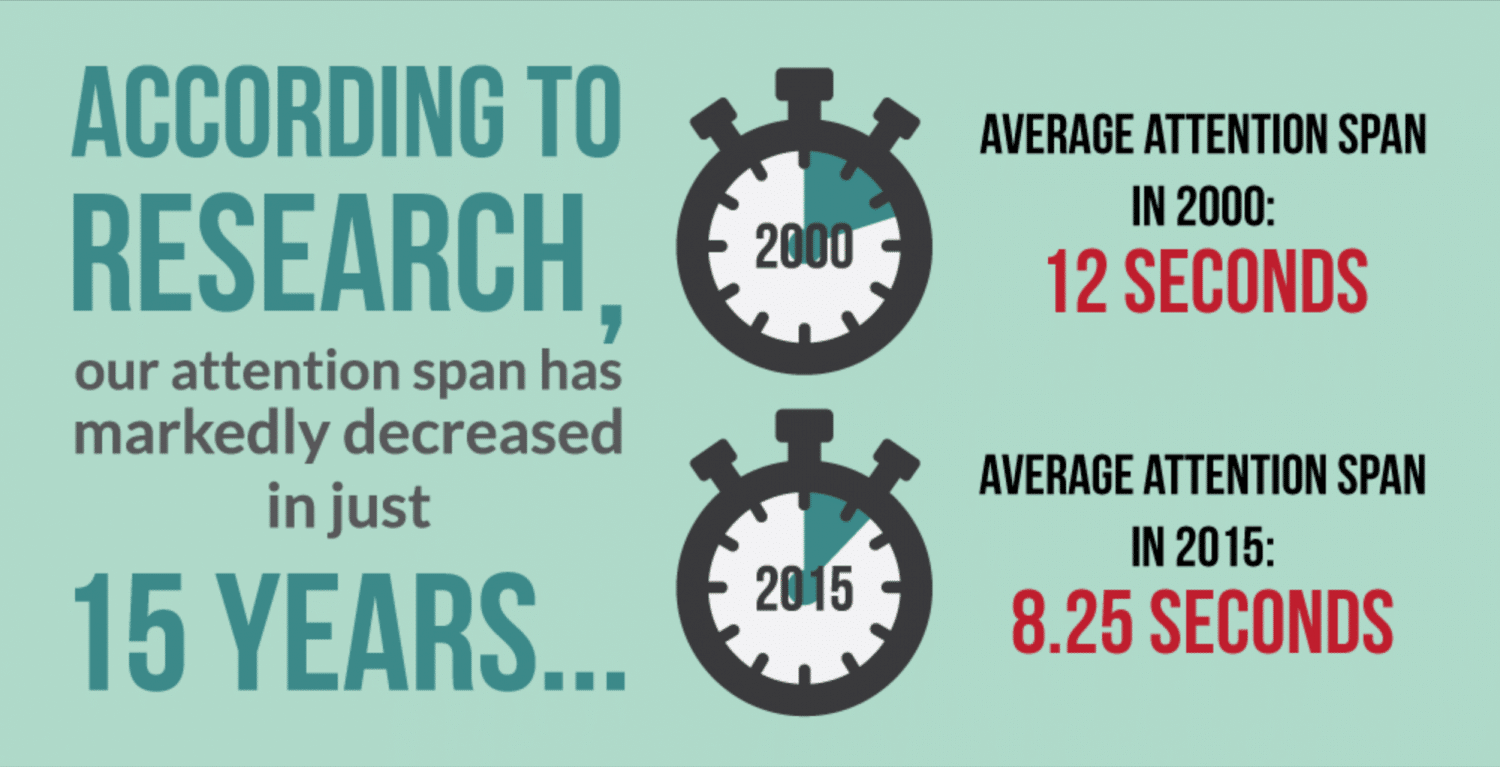
Moreover, promotional campaigns must have shorter and more effective messages, given that traditional forms of advertising fail to hold the consumer’s attention for more than 8 seconds, on average.
The Role of Storytelling
Barbara Hardy, a British author known for her academic contributions to 19th-century literature, summarizes in a few lines the role that stories play in our lives:
“We dream in narrative, day-dream in narrative, remember, anticipate, hope, despair, believe, doubt, plan, revise, criticize, construct, gossip, learn, hate, and love by narrative. In order really to live, we make up stories about ourselves and others, about the personal as well as the social past and future.”
Romanian version:
We dream in narratives, we daydream about narratives, we remember, anticipate, hope, despair, believe, doubt, plan, revise, criticize, construct, gossip, learn, hate, and love through narrative. To truly live, we invent stories about ourselves and others, about personal things, as well as about the social past and future.
Top brands quickly understood the need to use an effective storytelling technique to help them earn a place in consumers’ minds.
Volvo Moments
https://www.youtube.com/watch?v=pjQt2lEZIXg
In this regard, the Volvo commercial serves as an example, where a little girl talks to her mother about the opportunities she will have in the future after her first day of school.
The concept of Unique Selling Proposition (USP) is integrated into the story at the end of the clip, demonstrating the safety of the system that applies the autonomous emergency brake: sometimes the moments that matter are the ones that didn’t actually happen.
Heinz – Ed Sheeran
Another chosen example of the storytelling technique is the Heinz Tomato Ketchup commercial featuring Ed Sheeran as an endorser. According to the creators of this ad, the script is based on a conversation that took place in April 2019 on Instagram between Ed Sheeran and Heinz.
Ed Sheeran’s notoriety and the original way of applying the storytelling technique are the ingredients that turned the commercial into a success.
Old Spice – Storyyelling
The problem arises when advertising becomes too aggressive through style and excessive broadcasting. The Old Spice commercial is a clear example of storyyelling, not storytelling.
Beyond the fact that it presents a pattern of the masculine ideal, which doesn’t necessarily match women’s desires, the commercial doesn’t deliver a specific message, tell a story, or educate; however, it resonated well with the male audience, who found the series of commercials funny.
Storyscaping – A New Way of Doing Marketing
Storyscaping is a concept that appeared relatively recently, a few years ago, in the bestseller “Storyscaping: Stop Creating Ads, Start Creating Worlds.”
The concept addressed by authors SapientNitro’s Gaston Legorburu and Darren McColl refers to how marketing has evolved and the shift from storytelling to storyscaping.
Thus, in recent years, there has been a noticeable departure from traditional means of seducing the target audience and convincing them to buy the promoted products.
Storyscaping offers a new compelling approach to advertising and marketing in the digital age. Stories are used as a foundation for designing emotional and transactional experiences for customers, both online and offline.
Every connection inspires consumers to interact with others, so the brand becomes part of the consumer’s story. This step-by-step, guided approach shows how to create immersive experiences that solve the challenge of connecting brands and consumers. You can discover how to:
- Identify and define the desired consumer segment;
- Unlock or define the organization’s purpose or brand;
- Understand the consumer’s emotional desires;
- Establish a clear positioning and product / service offering;
- Understand how the consumer engages with the category and the product / service;
- Apply technology and build a Story-System.
Storyscaping outlines the process of developing an organizing idea and a creative plan for an immersive storyscape experience and explains how to define the role of marketing channels.
Therefore, you can measure, optimize, and evaluate the customer experience by using a powerful narrative that compels consumers to buy your product, but also to influence others to do the same.
According to the two authors, the storyscaping model involves a direct interaction between the consumer and the brand, generating positive emotions and feelings.
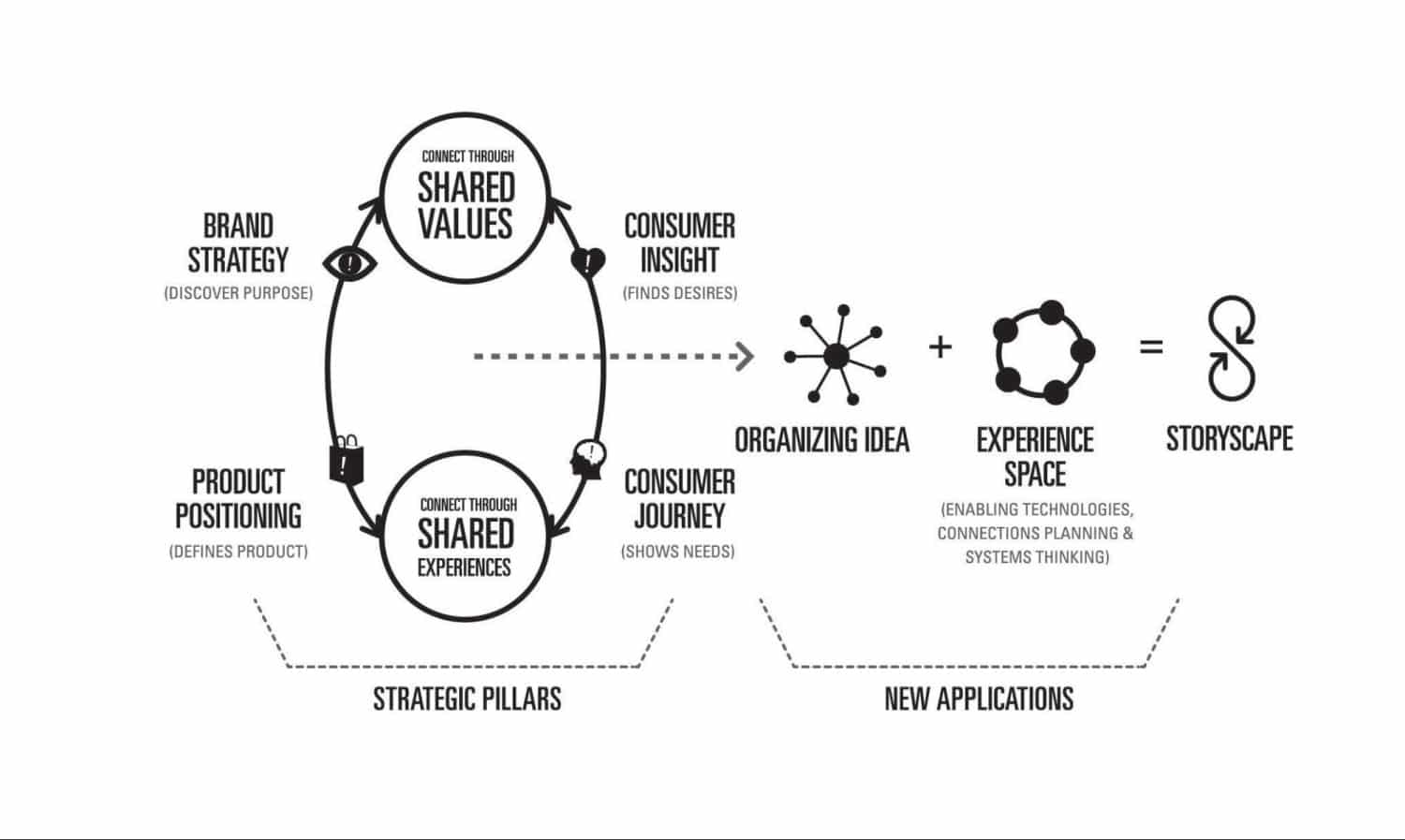
Shared values refer to the emotional connection established between a brand and its consumers.
Shared experiences show that the brand succeeds in meeting a consumer need.
Shared stories refer to the brand’s use of storytelling techniques to create an emotional connection with the consumer and its ability to deliver quality products or services as well as to build environments conducive to positive experiences.
The organizing idea is the active expression, designed to inspire experiences, and is the link that connects all other aspects. The Storyscaping model is non-linear – therefore, one can start anywhere, provided there is an organizing idea that applies to the experience space.
Experiential marketing, more than a trend
Unlike storytelling, the concept of storyscaping brings a new breath to brand promotion, because stories are universal, but the experience is personal. If at first experiential marketing was considered just a trend, in recent years, more and more marketers have realized that this concept responds to the brand’s need to win a favorable place in the consumer’s mind and heart.
Experiential marketing is a marketing technique based on creating connections between brands and consumers.
Experiences that are memorable for users transform brands into lovemarks. Among the most frequent experiential campaigns are sampling, experiences, events, etc.
Experiential marketing creates engaging content that awakens emotions, sensations and is based on multisensory experiences.
If in the past brands played the main role in the constructed stories, today the consumer becomes the main hero of the trademark, the brand becomes the mentor that offers them experiences, and the promoted product or service is the gift that solves the consumer’s problems. Thus, the brand aligns with consumer desires through its purpose.
Active participant in the brand experience
Now brands no longer tell stories for the consumer, but offer them the possibility to be an active participant in the story or even the protagonist.
In Storyscaping, consumer insights are used, relying on the emotional side. In this way, an authentic and much deeper connection is achieved, which traditional advertising cannot generate.
Dove – Real Beauty Sketches
https://www.youtube.com/watch?v=XpaOjMXyJGk
Dove is among the first brands to turn towards storyscaping, and the Real Beauty Sketches campaign stands as a testament, aiming to highlight the differences in perception between how others perceive us and how we perceive ourselves.
Thus, each woman in the clip is portrayed in two poses by Gil Zamora, a sketch artist who works for the FBI – one based on her own description, and the other using the observations of a stranger.
Coca Cola – Drinkable Advertising
Another campaign built around brand experiences is “Drinkable”, a campaign created by Coca-Cola in collaboration with Shazam. Using the Shazam app, viewers could watch Coca-Cola Zero being poured into a glass on their smartphone screens.
Following this experience lived through technology, i.e., after the glass was filled, those interested could benefit from a free Coca-Cola Zero from participating stores.
MasterCard – Tiny Home
 MasterCard offers us another example of experiential marketing. During the 6th edition of the Electric Castle festival that took place in 2018, Mastercard in partnership with McCann Worldgroup Romania developed the Tiny Home campaign, which resulted in the setup of an accommodation space in the middle of the event. Read more about how the entire campaign unfolded on IqAds.
The impact of Experiential Marketing on consumers
Studies conducted by Bizzabo, EventTrack, and Statista have shown the impact that Experiential Marketing has on consumers.
According to Bizzabo, 80% of marketers believe that live events are extremely important for the success of the brand they represent.
Also, 95% of marketing managers believe that brand activations offer participants a very good opportunity to create an impactful connection with different brands. Especially considering that the dissemination of messages from companies to the general public is carried out through digital channels.
The report conducted by EventTrack revealed the following results:
- 77% of marketers use Experiential Marketing in their promotion strategies;
- 74% of consumers improved their opinion regarding certain companies, brands, or products after participating in a live event;
- 98% of consumers decide to buy a certain product after participating in a brand activation;
- 98% of consumers create digital content for social networks when participating in an event;
- 72% of consumers claim that friends’ posts about experiences offered by certain brands largely determine them to buy its products.
According to research conducted by Statista, 79% of marketers state that brand activations generate sales, and 93% of consumers claim that live events influence them more than TV commercials.
Apply Storyscaping in your own campaigns!
If you want to find out how you can test and apply the storyscaping concept in your brand’s marketing campaigns, the MKOR Consulting team can help you with market research. Contact us for more details!
Have you read everything? Comment / join our newsletter / read our other research posts!