


Almost every company says it does good work. Few take the time to look closely at how they make decisions, how they treat their people and what they learn from their own mistakes, which is exactly what the Baldrige framework examines.
We made that time. We have been doing market research since the end of 2012, and our job is to ask good questions and go beyond the first comfortable answer. It felt natural to ask ourselves the same questions, as an organisation. If #realdata is our promise to clients, then this framework made us look at the data inside our own company: the key indicators, the important processes and the most profitable services.
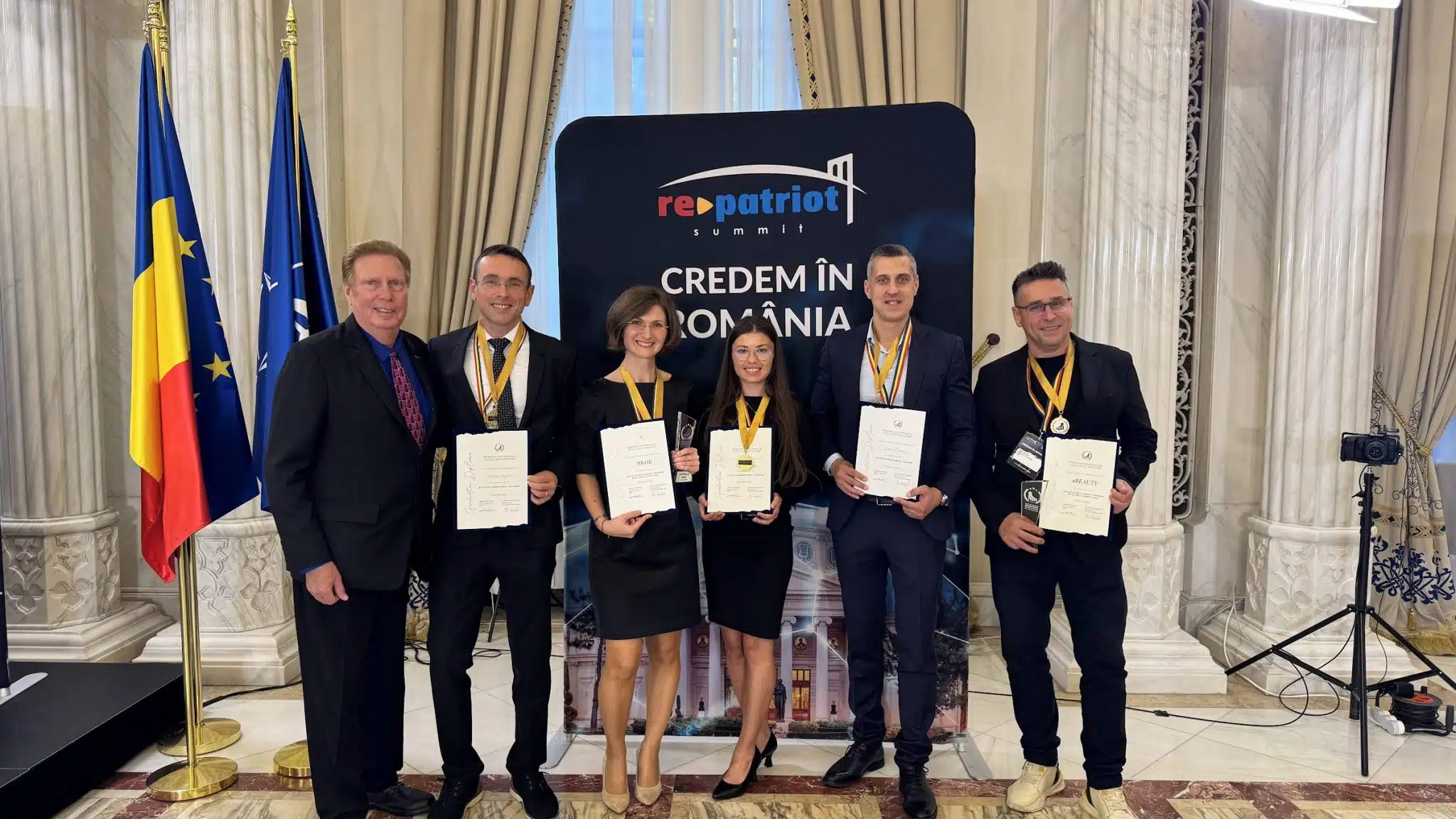
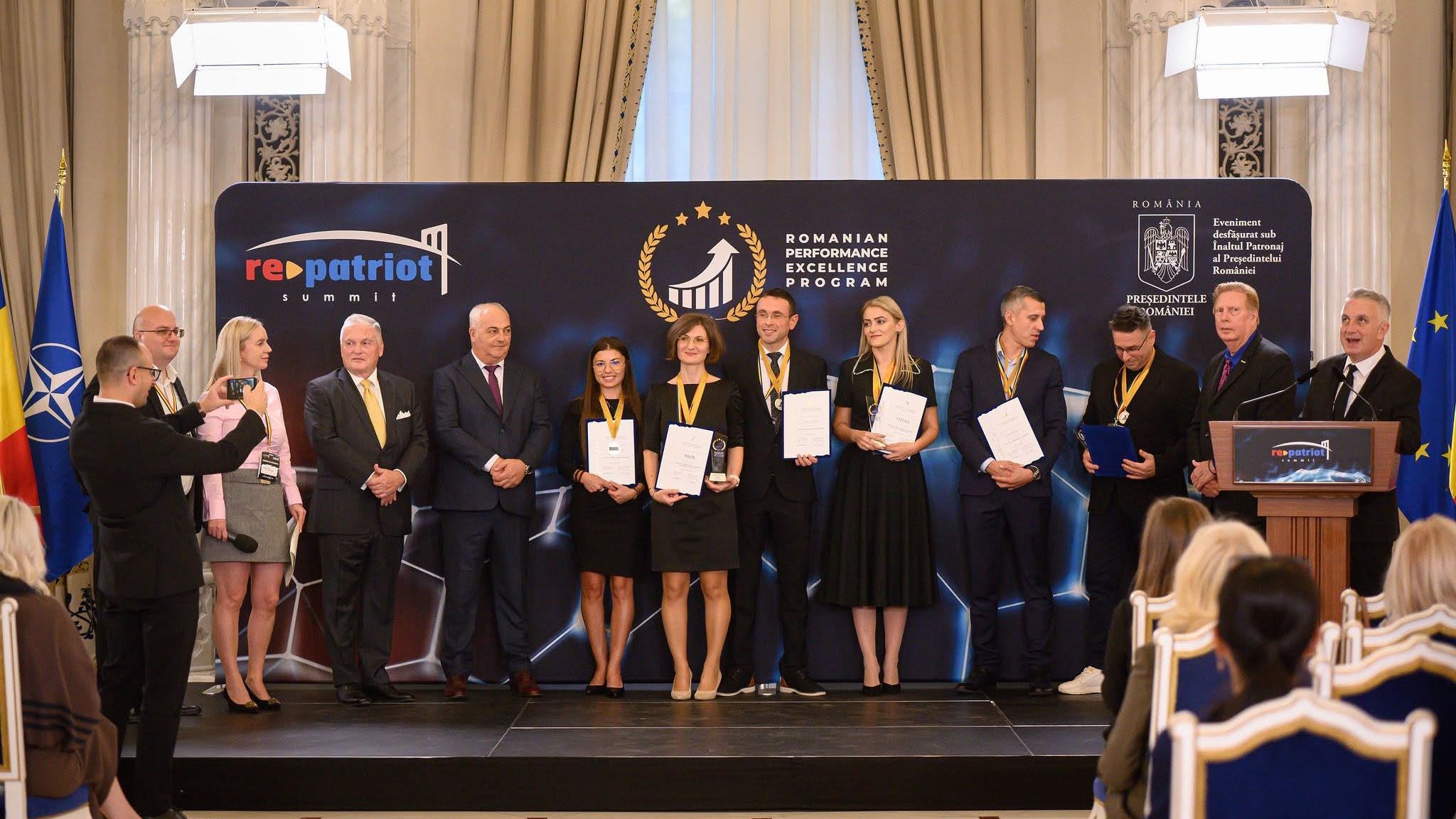
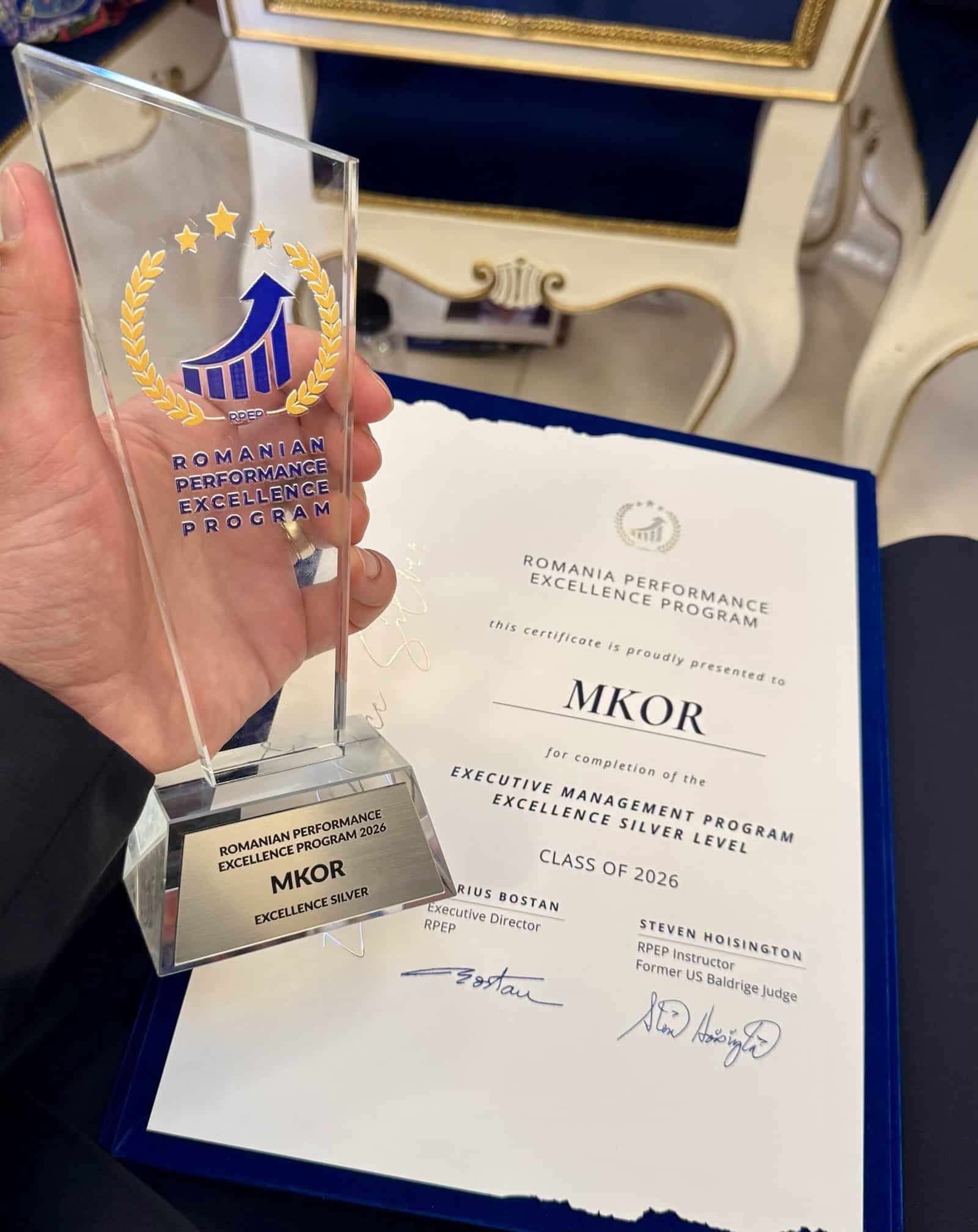
On 1 October 2026, at the gala at Cotroceni Palace, we received the Excellence Silver distinction in the Romanian Performance Excellence Program (RPEP), a programme built on the Baldrige criteria. We are very glad about the award. We are even gladder about the road that led to it, because it showed us what we do well, what we were doing well without knowing it, and where we still have work to do.
Below we explain what the framework is, what an assessment looks like and which working practices counted for our application. We also describe what MKOR is like as a place to work, because the application covered how we treat our colleagues too. At the end you will find five ideas that any organisation can apply, including one smaller than ours.
Contents
A framework that makes you ask a lot of questions
The Baldrige Excellence Framework is a management framework for organisational excellence, published by NIST (the National Institute of Standards and Technology). The programme has run in the United States since 1987. The national award it supports, the Malcolm Baldrige National Quality Award, is described by NIST as the highest national recognition an American organisation can receive for performance.
This management and thinking framework does not tell you what to do. NIST calls it “nonprescriptive”: it imposes no recipes and can be applied to any kind of organisation, large or small, private or public. The framework asks the questions, and the answers have to come from your own company’s practices. We liked that from the start, because all we had to do was show how we are and how we do things.
The seven Baldrige categories and what gets assessed
The Baldrige criteria are grouped into seven categories:
- Leadership: how the management team leads the organisation and takes responsibility, both towards the team (vision, values, an environment where people can make mistakes and learn) and towards clients, partners and the community (ethics, transparency, data protection).
- Strategy: how we set direction and turn it into concrete objectives.
- Customers: how we listen to them, build relationships and measure their satisfaction.
- Measurement, analysis and knowledge management: what data we track and how we use it in decisions.
- Workforce: how we support, develop and engage our people.
- Operations: how we organise our day-to-day work and improve it.
- Results: what the numbers show, over time and against others.
Processes (categories 1 to 6) are assessed from four angles: how systematic the approach is, how consistently it is applied across the organisation, how much has been learned from it and how well it connects to everything else. Results (category 7) are judged on level, trend, comparison with external benchmarks (where they exist and are relevant) and how they are used in decisions.
That is why assessors always ask for concrete examples and data. In this framework, a good process only really counts when it is repeatable, measured and improved on the basis of data.
From Washington to Cotroceni: what RPEP is
RPEP is a Romanian programme inspired by the principles of the Baldrige award. It is run by the National Foundation of Young Managers, in strategic partnership with the Romanian-American University and RePatriot, with the support of Alvarez & Marsal. The idea appeared at RePatriot Summit in 2018, from the wish to bring an internationally recognised standard of excellence to Romania.
The programme has four participation levels: Pioneer, Champion, Commitment and Excellence. Excellence is the most demanding level, with an application covering all seven categories, and our distinction is at this level.
Within the Excellence level, recognition is also awarded according to the score obtained, in three tiers: Bronze, Silver and Gold. The distinction we received is Excellence Silver.
We are glad of the recognition, but for us the gain began long before the gala. To apply, we had to put on paper how we actually work and gather the data that shows it. That exercise alone showed us things we could not see from the inside. Then external assessors looked at everything, at the data and the concrete examples, and told us openly where we could do better. For a company our size, that is a mirror that is hard to get any other way.
Excellence is one of our values
Excellence in everything we do is one of MKOR’s values. We see it as a direction that guides our decisions, from how we build a research instrument to how we organise our week. Still, a value you only declare remains an intention. When we found out there was a programme that measures excellence against an internationally recognised standard, we did not hesitate for long.
In spring 2026, Cori Cimpoca (founder) and Mădălina Iorga (senior research partner) joined The Executive Management Program, a nine-month track within the Romanian Performance Excellence Program (RPEP). RPEP brings the Baldrige model to Romania, the American framework through which organisations assess and improve the way they work.
The first step was an intensive four-day training on the framework: the core values, the organisational profile and, one by one, each of the seven assessed categories. They came away with a simple and slightly uncomfortable question: what would MKOR look like if we put it in front of the same questions?
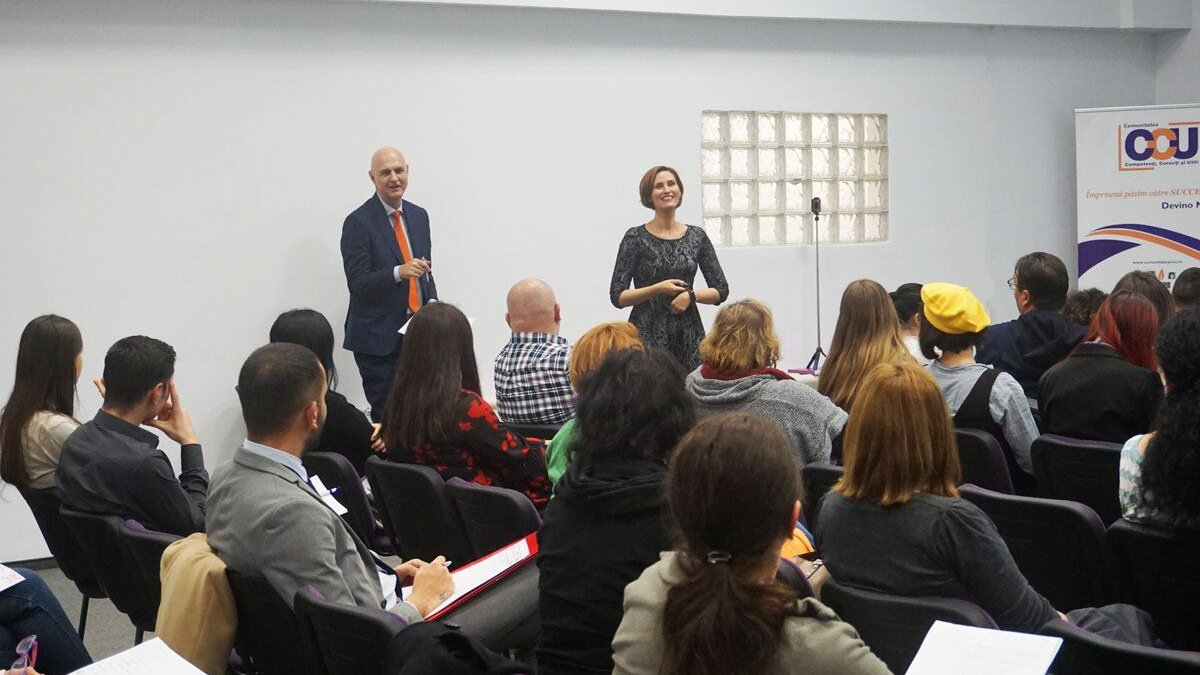
We decided to find out. In April, at the quarterly planning meeting, an external expert ran a training on the framework for the core team, to see how ready MKOR was to apply for the distinction, and also so the rest of the team could get to know this system for assessing operational performance. Eight MKOR team members (out of 11 in total) attended the two-day training.
Every organisation that completes the programme writes an Organisational Profile, meaning the answers to the basic questions: who it is, what it offers, who its clients and partners are, who it competes with and what challenges it faces. Whoever also wants to enter the competition for the award chooses a level, and the level determines how much of the Baldrige framework has to be covered:
- Pioneer: the Organisational Profile only;
- Champion: the Profile plus category 7, Results;
- Commitment: the Profile plus all seven categories, in the short version of the criteria (Baldrige Excellence Builder);
- Excellence: the Profile plus all seven categories, in the full version (Baldrige Excellence Framework), with up to 10 pages for the profile and 50 for the categories.
We chose Excellence, the most demanding level.
In May, the leadership team worked on the application for a few days, built on a clear set of questions for each category. By the beginning of July we had completed all seven categories, with as much relevant detail as possible, and in September we updated the figures.
The last stage was the assessment visit, in mid-September. It takes place only at the Champion, Commitment and Excellence levels. The assessors check what they read in the application, clarify unclear points and look for the evidence behind the answers. Our visit was online and lasted about three hours, during which the assessors talked to the founders and part of the MKOR team.
It was an unusual experience for us. In our day-to-day work, we are the ones asking the questions: we build questionnaires, moderate discussions and look for the “why” behind every answer. This time we were the ones who had to answer, with evidence.
Along the way we found something we did not expect. Some practices had worked well for years but were not written down anywhere. They lived in the team’s habits and in the memory of a few people. Others, once put on paper, turned out to be more fragile than we thought and need work and improvement. Both discoveries were equally valuable.
The routines that keep us moving
Completing the application forced us to look closely at the rhythm of the company: what we do daily, weekly, monthly, quarterly and yearly, and why. These are the practices that mattered most.
Daily planning. Every morning, each colleague writes their plan for the day in the team’s Slack channel. It takes two minutes and helps all of us know who is working on what, without extra meetings. It also helps us organise our day and priorities with the calendar in front of us, because the to-do list is endless but the time in a day is not.
The operations meeting and the “colleague on duty”. Every Monday we hold the operations meeting, led by the “colleague on duty”. The role rotates weekly, and the colleague on duty runs the meeting from a written checklist. They update the project calendar, check the workload of each colleague and each PM, and look at upcoming actions to spot early whether any deadline is at risk. That way the meeting works just as well whoever leads it, and each of us gets to see the company, in turn, from the perspective of the person keeping it moving.
We also have a short daily strategy meet, attended by the managers for sales, operations, marketing and innovation, and the CEO.
Sales meetings. Sales has a dedicated weekly meeting where we go through offers, leads and priorities. The principle is the same as everywhere in MKOR: what we decide in a meeting must then show in the way we work.
Maker Time. On Wednesday mornings we set aside special working time, which we use for procedures, internal analyses and everything left unfinished that needs focus. We learned that important, relevant work does not get done “when we have time”, but when we reserve time for it in the calendar.
Learning Points. Every four to six weeks we review together one or two finished projects: what went well, what did not and where an error appeared in the process. We do not look for culprits, because we care more about causes, and above all about solutions. Each colleague who worked on the project also fills in a form, and the conclusions end up in our internal procedures and materials. We look honestly at what we did well and what we did not. We are not afraid of mistakes. We are afraid of repeating them. That is exactly why colleagues can say openly what did not work, without fear of being judged (or punished) for it.
Quarterly planning. Since 2023, once a quarter, the founders and department managers spend two days on strategic planning for the next three months. The first day is a retrospective, with data and feedback from the team. The second day is strategy. The result is a set of objectives and key results (OKRs) for 90 days, which are then broken down into weekly and daily planning.
Training and support. On Thursdays we have an internal training, built on the company’s procedures, and the time for it is reserved in the calendar like any other project. Besides that, any colleague can work with an external coach, and the team attends specialist courses and conferences.
Data quality. Every telephone interview is checked 100% by someone on our team. This practice costs us, and it is one reason our services are more expensive, but it is the only one compatible with our #realdata principle.
Taken separately, none of these practices is spectacular. What matters is that they connect to each other and happen the same way every time, because we have procedures that we really apply, with discipline and consistency. And that is exactly what Baldrige assessors look for.
What we offer our team and who we are looking for
The “Workforce (Team)” category in Baldrige asks how we support, develop and engage our people. Our answer shows in the routines above, but we also say it directly.
At MKOR, development is part of ordinary work. There is an internal training every week, and any colleague can work with an external coach. The team goes to specialist courses and conferences.
Every month, each colleague has a 1:1 conversation with their direct coordinator. The session is designed as a mentoring conversation, where the colleague can talk about how they feel in the role, where they want to grow and what support they need. Every quarter we also ask colleagues what problems they see, what they would improve and what training they lack, and the answers are discussed in the quarterly planning.
Colleagues get responsibilities that help them grow. The “colleague on duty” role rotates, every project has a project manager, and mistakes are discussed at Learning Points, so that we understand the process and do not look for culprits. For us, a fair employer means written rules, honest feedback and people who know what is expected of them and what they can ask of the company.
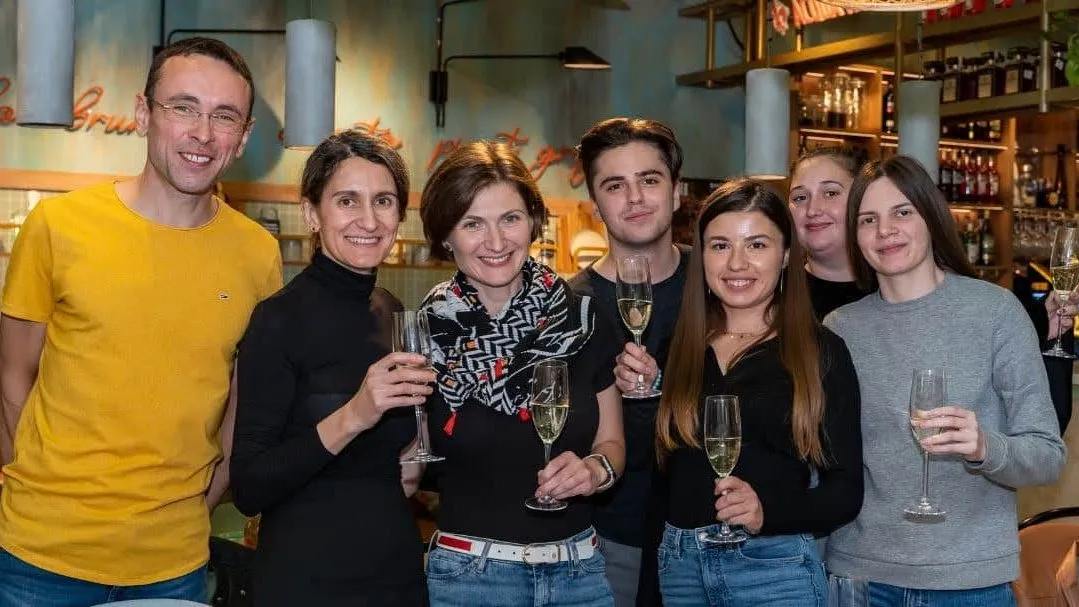
We look for people with a growth mindset: curious, eager to learn and open to feedback. We look for flexible, adaptable and responsible people who see the work through and say early when something is not working. And we look for solution-oriented people, who come to the discussion with a proposed fix as well as the problem. In short, people who believe a better world starts with themselves.
If you recognise yourself in the way we work, you will find open roles and how to apply in the Careers section.
What the award means for clients and for the team
The award does not say we are perfect. It says we presented our way of working to assessors who ask for evidence, and that we went through the whole assessment process. It is a recognition of how we function as an organisation.
For our clients, the meaning is very practical: the rigour, consistency and quality control we propose from the proposal stage were assessed independently, against objective criteria.
For the team, the meaning is different. The application forced us to put on paper the routines that keep the company moving, what makes us truly a team (not just a group of people who work together) and to see which of them hold up under close scrutiny. We came out of the process with a clearer map of our own organisation and a still long list of things to improve. Because another core value of ours is continuous learning.
A company grows to the level of those who lead it
“MKOR was born in November 2012. Since then we have been through all kinds of programmes, methods and experiments, from an MBA taken in the first year of business to today’s routines. Some stayed, others did not. The goal was always the same: the wish to grow.
What motivates me is growth, of the organisation and my own. I often heard the idea that a business grows only to the level of the entrepreneur’s (in)competence, so I always try to develop myself and, together with me, the organisation. Over the years, we tried all kinds of programmes and ideas so that MKOR could grow and reach where it is now, almost 14 years after its founding. Excellence is the direction we are heading in.”
Cori Cimpoca, founder and CEO of MKOR
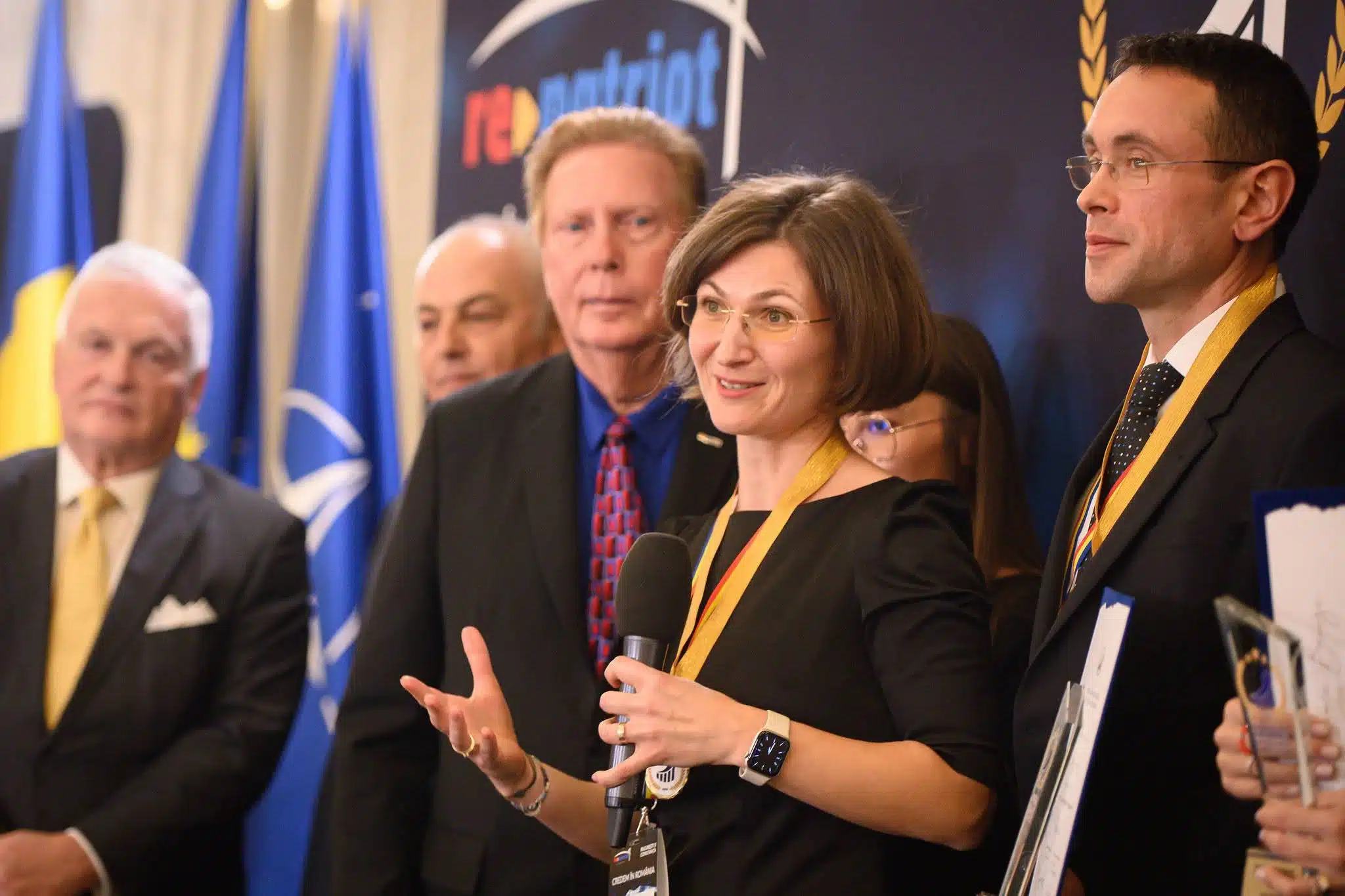
For MKOR, Baldrige is a working tool, a set of questions we will come back to every year. This award is only the beginning of even more intense work with ourselves.
Five lessons any organisation can apply
You do not need an assessment form or a complex application to use the Baldrige logic. Here is what we learned and what anyone can apply, from a team of three to a company with hundreds of employees.
- Write down what you already do. Many good practices live only in the team’s heads. Once on paper, they can be checked, handed to a new colleague and improved.
- Pick a rhythm and keep it. One daily routine, one weekly, one monthly and one quarterly are enough. It does not matter how sophisticated they are, only that they happen just as consistently every time, with continuous improvement in mind.
- Review finished projects. One hour after every important project, with the whole team and without looking for culprits, brings more improvements than an expensive training.
- Measure what is relevant and follow it over time. You do not need dozens of indicators. A short series of data, kept consistently, helps you grow more than a long list of indicators you cannot follow consistently.
- Involve the team in growing the organisation. People grow when they are responsible for something concrete. With us, every project and every important result has an owner, plus one or two colleagues who can stand in temporarily. That way the team develops and the company no longer depends on a few people.
What comes next
We are going back to what we do best: data you can rely on. With one difference: now we understand better what already works and what we still have to improve.
If you have read this far, we leave you with the question that stayed with us throughout the process: if you looked at your own company tomorrow through these seven categories, what would you discover? And if you are at the start of your career or looking for a place to grow, ask yourself something else: would you like to work in a team that asks itself questions like these? If you want to be part of one, write to us.