



The time has come to launch a new product or service on the market, but you have doubts regarding consumer receptivity. You’ve thought that your company’s brand deserves to be better known, but you don’t know how you could position yourself in the market so as not to get lost among competitors.
Advertising concept testing can provide answers and guidance in such a situation. Testing on the target market segment can determine the appropriate price, brand concepts, or how attractive the brand is.
What is Advertising Concept Testing?
Advertising Concept Testing is a type of research aimed at measuring and improving the effectiveness of the marketing strategy and is specifically addressed to a mature business.
The ultimate goal of advertising is to increase sales. In contrast, smart advertising will not only increase sales but will also play a role in the brand awareness process by bringing consumers closer to the brand.
Through advertising concept testing, marketers can determine the effectiveness of the ad based on consumer feedback.
Even if your business does not have a very large advertising budget, it is still recommended to test the advertising concept. This is one of the best ways to find out the potential of the idea to be implemented. This way, you ensure that money will not be spent in vain or that you won’t take consumers by surprise in an unpleasant way.

Why would you test an advertising concept?
Following the testing, you will be able to make informed decisions and know how to better manage the advertising budget.
Advertising concept testing allows you to:
- reach specific market segments with relevant content;
- receive feedback, which you can share with the creative team;
- obtain figures based on which you can launch a promotional campaign;
- optimize the message you want to convey;
- predict the effectiveness of advertising regarding purchase intent.
How do you test an advertising concept?
Establish the purpose of the advertising concept
The first step is to clearly establish the purpose of the advertising campaign and what you aim to achieve through it. Some ads are built to increase awareness, others seek to define a brand or develop a behavior.
Regardless of the intent of the advertising concept, before testing, it is important to define its purpose.
Identify the target audience
Advertising concept testing aims to obtain feedback from the target audience. Define a consumer profile based on the characteristics that the concept testing participants should possess, as well as based on demographics.
Choose the best testing method
You can make the decision regarding the testing method by taking into account how in-depth the feedback should be, the characteristics of the target audience, time, and budget. The most common methods are: the interview, the questionnaire, and the focus group.
A study can be conducted in several stages, using more than one method, as each of them has advantages and disadvantages.
The interview allows for qualitative measurement by collecting extremely detailed information.
The interviewee opens up more easily in a one-on-one discussion, but data collection takes longer.
The interview allows for measuring reactions and can be video or audio recorded. The reactions of those interviewed can be tracked with eye-tracking technologies, which means you can determine consumer preferences much more easily.

The focus group is a marketing research method through which you can collect information about similarities and dominant trends.
Through this method, information related to consumer expectations is obtained, brand images can be identified, brand perceptions are evaluated, and attitudes regarding new products, concepts, packaging, slogans, and prices are tested.
In a focus group, mock-ups of the advertising concept are presented on a monitor or in print. Eye-tracking technologies measure the group’s reactions to these and, thus, an advertising concept variant that resonates with customer preferences can be chosen.
Case Study: Apple pie filling
We have successfully applied the focus group method for our clients. Focus groups accompanied by tasting sessions targeted housewives who usually cook sweets. These sessions took place over two weeks at the MKOR Consulting headquarters.
The results of the focus groups and tasting sessions led, first of all, to choosing / establishing the recipe that will be part of the future apple processing factory’s portfolio and then to establishing the consumer’s willingness to accept / consume this type of product.
In addition to testing the advertising concept, within these focus groups, we tested possible labels and packaging for the future product. Also within this project, we studied the jam and marmalade market in Romania and the competitive environment.
The questionnaire is a tool with which you can determine consumer preferences, behavior (for example, food consumption), and attitudes. Through an online survey, representative data can be obtained, and it is a cheap and fast method.
In addition to quantitative information, the questionnaire allows – with the help of technology – for obtaining qualitative data. Through a plug-in, you can perform eye-tracking and mouse & click tracking. This will help you determine which advertising concept variants are agreed upon and what needs to be improved.
The platforms and solutions we use allow us to do this.
Develop testing methods
At this stage, the project team develops visual presentations or mock-ups for each concept variant to be tested.
The way these materials will be presented depends on the chosen testing method, the nature of each concept, and the characteristics of the testing participants.
A/B Testing
Another testing method used in online marketing is A/B Testing. This type of testing involves designing two advertising concept variants, A and B, which are then launched publicly, and the variant with the best feedback remains on the market. 
A/B Testing helps you determine which of the approaches has the greater potential to increase the conversion rate. The method is flexible and can be used in email marketing, Facebook ads, choosing a logo, labels, slogan, or even choosing a website layout.
Test
Depending on the chosen method, testing can begin. At the beginning, it is good to remind participants that there are no right or wrong answers. They must be informed about the purpose of the research, and their consent for video or audio recording must be obtained.

Process and analyze the data
The research report must include:
- Context – What was tested?, What were the testing objectives?, Who participated?, How was the testing conducted?;
- Key points – Highlights the main results obtained from the testing;
- Results – Details participants’ reactions, includes essential quotes from the testing participants, presents which of the concepts worked and why;
- Conclusions and Recommendations – Describes the main conclusions and formulates suggestions to help define the advertising concepts.
Implement the testing results
Together with the implementation team, use the recommendations and improve the advertising concept. Research will help you make informed decisions. Most of the time, testing will indicate a preferred concept and thus, you will have a path you can develop.
Examples
How Not To – Pepsi
This year, the soft drink manufacturer – Pepsi – launched an advertising concept on the market that was rejected by American consumers. Briefly, the commercial depicts Kendall Jenner joining a mass of protesters and offering a can of Pepsi to a police officer, thus saving the situation.

Recent US history shows social conflicts between the African-American community and law enforcement. Those who criticized the spot claim that Pepsi ignores the violent confrontations that have taken place in recent years and capitalizes on human rights movements (Black Lives Matter).
This case exemplifies how, even if there are consistent budgets allocated to advertising, the lack of market research can lead to results contrary to those expected.
How To – Nike
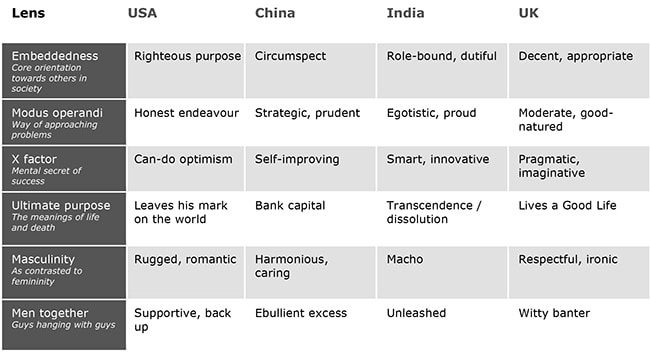
Brands that are spread across the globe have the mission of conveying the same message in all markets where they are located, but at the same time taking into account the local cultural specificity. This approach is called glocalization – a combination of the terms globalization and local.
Nike successfully manages to address multiple markets, including the Chinese and American ones. From a cultural perspective, the two markets are very different: Americans value individualism and risk-taking, while the Chinese consider collectivity important and are cautious.
Nevertheless, Just Do It is seamlessly associated with the Nike brand. Following the research conducted, the sports clothing and footwear manufacturer created a table to help the communication team:
Do you want to test an advertising concept?
Ideally, advertising concept testing is recommended to be carried out by specialists or the creative team within the company. Regardless of who performs the testing, it is important to maintain objectivity.
We, at MKOR, have the specialists and tools necessary for advertising concept testing. If you want to test us, you can contact us and we will respond as soon as possible!
Did you like this article? Subscribe to the MKOR newsletter to receive useful business tips.