


Have you tried promoting your business through various methods, but your message isn’t reaching customers and potential consumers? Discover a tool that is easily accepted, and even sought after by consumers: Native Advertising.
Find out how this tool works and how to use it to achieve measurable results!
What is Native Advertising?
Native Advertising is a concept launched in 2012 by Dan Greenberg, CEO of Sharethrough, which caught everyone’s attention through its simplicity and novelty.
Native Advertising is a non-intrusive type of promotion.

Native means natural, innate. Therefore, native advertising refers to the coherence between the advertising message and the other content elements within the context in which it is delivered.
Thus, by using Native Advertising, your advertising message will take a form similar to its context.
Why Native Integrated Advertising?
According to Shareaholic, 70% of consumers want to learn about products through the content they read or watch, rather than through traditional media.
Furthermore, people pay 53% more attention to natively promoted materials compared to banner ads. And when media elements are included, the conversion rate increases by up to 60%.
Advertising is about emotion, and by integrating it into spaces that consumers are used to as emotion generators (Facebook, YouTube, etc.), the chances of it being perceived as such increase considerably.
For example, the viral video created by Friskies reached 18 million views. Out of these, how many are now buying the Friskies brand?
Only the sales department knows the answer, but what we know as marketers is that these people have created an emotional connection with the brand and are much more open to buying their products or accepting new messages in the future.
Moreover, this type of promotion offers a range of benefits. Here are a few of them:
- Native Advertising messages are more frequently viewed, read, and heard by the target audience. Generally, people are tired of the amount of advertising present at every turn and have learned to ignore it. When the message is integrated into the content, you have a better chance of it being accessed by your audience.
- The target audience has greater trust in your message. Sponsored ads are viewed with skepticism because someone is paying for their promotion (and customers cannot be sure of the quality of the products/services presented).
- Native advertising is not “caught” by ad-blocking software because it is integrated into the content of the platform’s articles and distributed along with them.

It is said that he was contacted by transport companies of the time (the year 1873) to mention them in his work, but it is not known if he also received money in exchange for this service.
How do you create native advertising that works?
If you have decided to use this type of promotion, you will need to consider a few aspects. With the help of these rules, you will succeed in creating content that brings you the desired results:
- Write relevant content for your audience. Advertisements must provide accurate, relevant, and valuable information. Every message transmitted by the brand must meet the expectations of its audience.
- Match the message to the context. Ensure that the message fits perfectly with the existing content. Provide information about your product/service without giving readers the impression that they are leaving the page to view an ad.
- Write a story. It will be easier for your audience to understand and internalize the message. People will identify with the story and will want to respond and contribute to the narrative thread.
- Measure the results. At every step you take, you must think about measuring the results of your campaign. Measurement units you can consider are: interaction rate (or engagement) with the content, page views, click-through rate, time spent reading the message.

Native Advertising is not content marketing!
Do not confuse Native Advertising with content marketing because there is a major difference between the two. Native Advertising is a pay for play type service.
By opting for native advertising, you will have to rent/buy a space within a platform. The platform you choose already benefits from an audience that you want to reach with your advertising message. So, Native Advertising takes place on someone else’s platforms and is a paid campaign.
If you do content marketing, then you don’t have to pay for your message to be displayed. You only use your own platforms (site, blog etc.) to make your message known to the public. It is a long-term activity because you will have to consistently distribute relevant content.
Therefore, you cannot ignore the amount of content that is constantly being created nowadays, but you can use it to reach your exact audience. Native Advertising is a necessary tool if you want to be sure you reach the right decision-makers for your target audience.
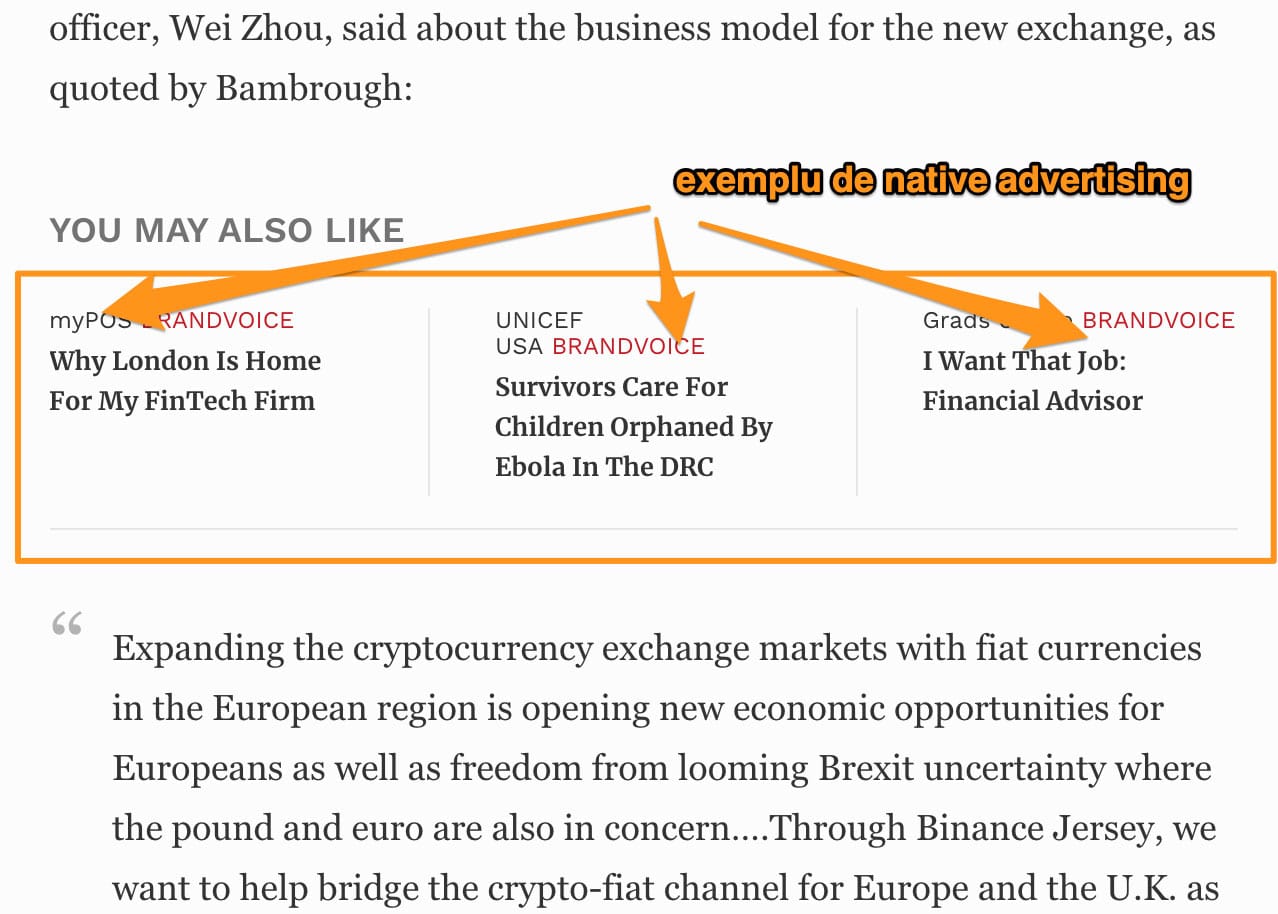
To better illustrate the concept, here is another example of native advertising, in which the ad content is included directly in an article. The screenshot is taken from an article on forbes.com.
How can you use Native Advertising?
You’ve found out what Native Advertising is, but are you curious to discover how it works?
The principle is quite simple: you write your campaign message so that it fits the context in which you want to promote it. Then, you choose the platforms where you want your message to be broadcast. You rent the space for promotion, pay the “rent,” and wait for the results.
It is very important that your message is written in such a way that it perfectly fits the context in which it is promoted. Ideally, it should blend in with the content so that the target audience does not reject it.
Campaigns built within Native Advertising must not interrupt the content of the platform on which they are published.
Brands choose themes that resonate with their audience and carefully select the platforms they broadcast on.
Once created and approved, this type of content will be labeled as an “ad” or “paid ad.” Due to this aspect, native advertising becomes more transparent within the platform where it is displayed. Thus, it does not disturb in the same way that commercial advertising shown on television does.
A successful example from Romania is the initiative by Libris.ro, who decided to promote their brand on an external publication, wall-street.ro.
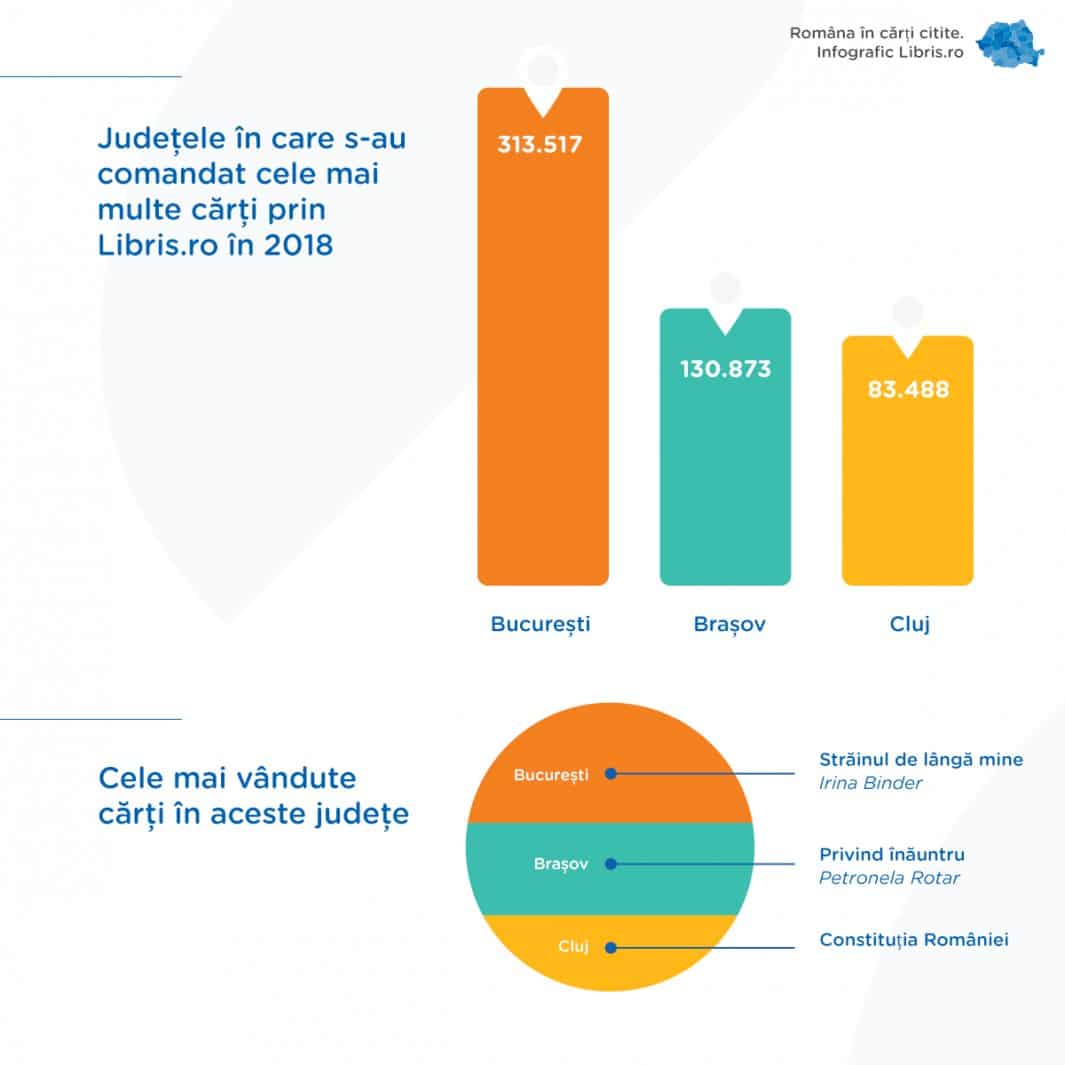
The brand created an infographic based on the results of research on book consumption. The topic addressed certainly interests their customers, and the visual presentation style is attractive. Thus, the online bookstore provides relevant information to consumers and strengthens its branding without being invasive.
Another Native Advertising success is the campaign initiated by the coffee brand L’OR. The brand financially supports the online publication Republica.ro, which documents articles of public interest. The secret of this success lies in the subject of the article, located at the intersection of the values promoted by both the brand and the publication.
The article presents relevant information for parents who are concerned about the time spent with their children, based on statistical data and even offers practical solutions in this regard. Moreover, its structure and writing style are in line with the brand’s image, with an interactive video advertisement also embedded inside.

A few practical tips
Regardless of the platform you choose, it is important to keep the following aspects in mind:
- Native Advertising is not a press release and does not represent an opportunity to promote newly launched services or products. Instead, tell stories about situations where your product or service changed someone’s life for the better or how it contributed to the well-being of the community.
- Learn from the examples of larger brands. There are a multitude of clips or articles sponsored by major brands from which you can draw inspiration. Study them and see how you can integrate your own ads on the right platforms.
- Keep consumers in mind, all the time. What will they think about your ad? Will they find it useful, confusing, informative, or annoying? Measure its effectiveness based on consumer reactions.
MKOR specialists understand the importance of Native Advertising
If you are convinced that Native Advertising is the most suitable method to promote your business and if you need more information about this tool, you can contact us anytime.
We offer you the expertise of our specialists in building an effective marketing strategy!
Update: The last update of the article was made on February 5, 2019, when the Native Advertising example from the republica.ro publication was included