


If in the past we talked about what Travel Marketing is or Vacation Marketing, today we propose ways you can put it into practice.
Trends in the tourism industry are, as is natural for the field, in constant motion and change. Keeping up with the latest news in travel marketing can be a challenge that many do not feel prepared to face.
Creating relevant content, coordinating booking platforms, testimonial platforms, the blog, the newsletter, and social media accounts might demotivate you, especially if results are slow to appear.
Travel marketing requires time, as well as the establishment and implementation of a strategy. If you are not satisfied with your online presence, conversion rate, or social media strategy, it is time to go back to basics.
Below, you will find a few ideas you can implement to keep up with the latest marketing trends and attract new leads and customers.
Understand your customers and define your persona
To build a strategy that actually works, the first step is to define your target audience and determine your customers’ persona.
Read more about persona in the Expert’s Guide on How to Conduct Market Research.
Demographic information is undoubtedly important, but beyond that, you need to ask a few questions about how customers decide to search for, plan, and book vacations.
What motivates them to travel? What frustrates them? How do they gather information?
If you have difficulty defining the persona, try using tools to make your work easier. Xtensio guides you, for free, through a persona definition process.

The profile of the Romanian tourist
In defining the persona, you can take into account secondary sources such as other market research or expert opinions.
For example, psychology specialists claim that Romanians go on vacation only to show others that they can have a good time, have the habit of complaining often about services, and spend excessively on food.
The same specialists note the trend among Romanians who prefer vacations abroad, precisely to avoid these inconveniences.
The trend is also confirmed by the results of the tourism market study that MKOR conducted at the beginning of this summer.
Thus, 50% of Romanians prefer other destinations, outside our country.
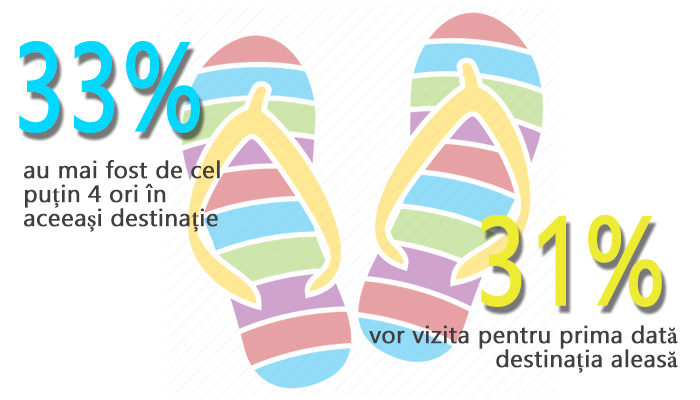
Also interesting is the way Romanians choose their holiday destination: they are either loyal to the same place or prefer to try a new location with every vacation.
According to the Summer Vacation 2017 study, regarding the destination, respondents are either rather conservative (33% have been to the same destination at least 4 times) or rather explorers (31% will visit the chosen destination for the first time).
Evaluate your website
The website often reflects your agency’s efforts in terms of marketing.
Most travel agencies have a website, but their quality and usability differ significantly.
Choose a responsive website
You can no longer ignore the increased mobile browsing rate. More than 50% of your site’s visitors will access it from a mobile device. How frustrated do you think they will feel when they try to zoom in unsuccessfully?
Find out how to improve your position in Google with Mobile First, by developing a responsive site.
Track the activity of visitors on the site
It is vital to know what your site’s visitors are looking for, what interests they have, and what path they take during the visit. To obtain this information, integrate Google Analytics.
Google Analytics collects data about the user’s online behavior: how they found your site, what pages they visited, where they left the session, how much time they spent, and many other details. This information will help you understand behavior to improve the user experience in the future.
If you don’t master this tool, call someone who does, because it is indispensable.
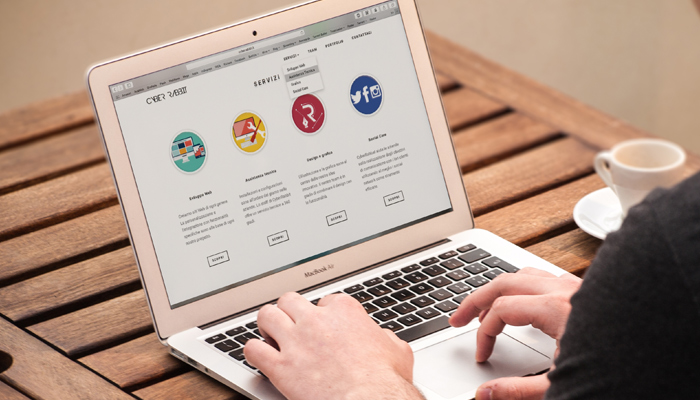
Simplify the design
Successful brands use a minimalist design to make it easier to find information.
Does your site reflect the agency’s personality?
Does it provide enough content and have a call-to-action that converts visitors into customers?
Is the interaction with the site super easy?
Exploit the website for marketing purposes
Encourage visitors to sign up for the newsletter while browsing the site and connect the newsletter content to the website.
Practice this for social media posts, blog articles, campaigns… meaning in everything.
Update frequently
Search engines love new content, so update the site to grow organically in searches.
Delegate one of your team colleagues to take care of this and you will see how this long-term effort pays off.
The importance of micro-moments in Travel
Your marketing strategy should exploit these micro-moments that customers have the moment they are looking for a new holiday.
These moments are those few seconds when the customer reaches for their phone or another device to search, discover, or buy something.
These are the moments that define desires and where decisions are made.
Thus:
- Daydreaming moments: I wish I were somewhere else right now.
- Planning moments: I want this trip to be perfect.
- Booking moments: I will book this holiday.
- Experiencing moments: I want to enjoy every moment.
By understanding that these are important moments in the consumer’s journey, you will know where your help is needed.
Social Media is not to be neglected
Social media can be an effective channel for travel marketing. Choosing the communication platform is important, but more important is setting a strategy to follow. Don’t forget to carefully choose your objectives and target audience.
Facebook remains one of the best platforms for travel agencies and tour operators. Facebook applications are a good way to build a community of fans.
Furthermore, Facebook offers the possibility to integrate the feed of other platforms such as Instagram and allows for the organization of contests, sign-ups, and more.
Facebook provides you with statistics about each individual post and campaign. Based on these figures, you can optimize your strategy. Learn from larger agencies how they managed to promote themselves on social media.
Email Marketing
The contact database you own is one of the most important aspects of marketing. The simple fact that you add a newsletter sign-up form to your site is important because the visitor might leave, and you could lose a valuable lead.
Encourage offline contacts to sign up for the newsletter and then establish a strategy to communicate with them effectively. A good newsletter will drive traffic to the site, will encourage shares, and will generate leads.
If you already have a newsletter, but with poor results, it might be time to try a new format. Think about how often you plan to send emails and what kind of content you will include.
Most database management providers, such as MailChimp, allow segmentation so that each user receives content relevant to him or her.
Subscribe to the MKOR newsletter and “borrow” from our techniques, you will benefit! 🙂
Constantly expand your contact base. Don’t forget that there will be users who will no longer want to receive news from your agency; therefore, make every email count.
 Smartphone Marketing
 Smartphone Marketing
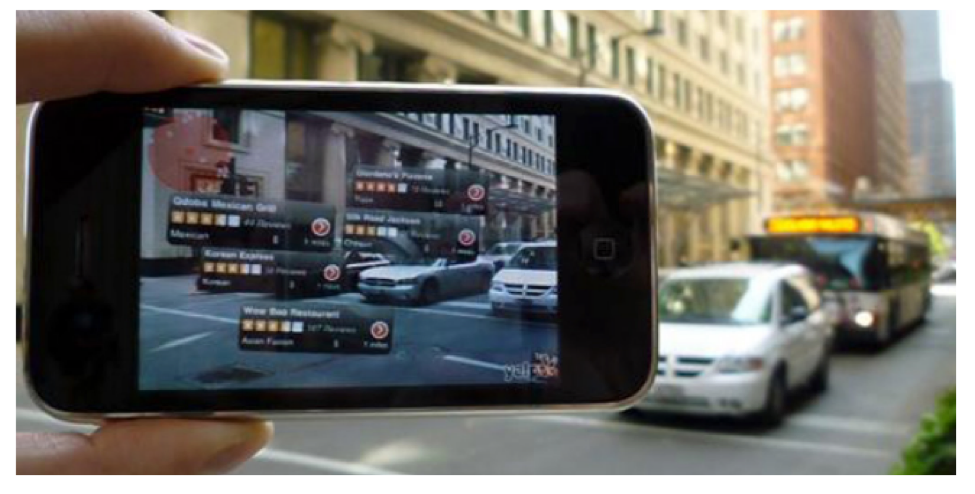
Smartphones play an important role in the holiday consumer’s journey. The latest technologies you should know about are AR (Augmented Reality) and NFC (Near Field Communications).
AR is an innovation that intensifies the traveler’s experience, stimulating the senses and sparking their interest.
NFC is a technology that allows communication between devices in proximity.
It is the same technology you use for mobile phone payments (Paypass). With a little creativity, you can implement NFC in brochures, itineraries, or anything else that comes to mind.
Online Ads – Google Adwords & Retargeting
Classic banners displayed on high-traffic sites are expensive and ineffective. But implemented correctly, Google Adwords & Retargeting can offer you a conversion rate that’s hard to ignore.
This is possible because you can target those who have shown interest in buying your product or service.
Adwords is competitive, and if you don’t feel confident in using this tool, we recommend seeking professional help. Otherwise, this exercise can be costly and unproductive.
https://www.youtube.com/watch?v=2BdULu4tI5M
Videos bring the travel experience closer
The potential customer will certainly feel closer to the holiday destination by watching a video than by reading an article. Now it is possible to get a decent-looking video using free tools.
Open a YouTube account for the agency, where you can post videos of tours, staff holidays, customer testimonials, destination reviews, or anything else that could satisfy customers and meet specific persona needs.
Share your agency’s knowledge on the blog
If you are short on time, invite your colleagues to write on the blog. Articles don’t have to be long, but they must be interesting and relevant in content for the target audience you previously identified.
The blog should be part of the marketing strategy, focused on content generation. Try to understand your consumer’s journey and identify how blog content can convert leads.

Reviews and check-ins
Reputation is built customer by customer. Reviews are one of the factors that contribute to the final purchase decision.
Facilitate customer access to review platforms, such as Trip Advisor, Expedia, on social networks and on your company’s website.
Reviews will not only increase customer trust in your brand and services, but this type of user-generated content will strengthen your search engine ranking position and increase the conversion rate.
Live Streaming
For a long time, Live Streaming was only accessible to those who owned the appropriate technological means. Now, however, this is no longer the case.
With the help of apps like Periscope and Facebook Live, anyone can broadcast live. Livestreaming is much more powerful than a simple video because it opens up real-time communication.
Travel agencies can livestream during tours to give potential customers the opportunity to see how they unfold and ask questions.
An agency offering cruise tours can do a livestream from the ship, presenting the main attractions.
Implement!
We hope the ideas presented will be useful to you and once implemented, you will be able to differentiate yourself in the market with a creative marketing strategy. Don’t forget that the ultimate goal is customer satisfaction.
If you are unsure about your customers’ desires and don’t know which marketing solution would attract them most, you can find out simply through a market study.
Tourism Market Study – Summer Holiday 2017
The MKOR team conducted, at the beginning of this summer, a study on the tourism market in Romania, specifically we found out what Romanians’ preferences are regarding the 2017 summer holiday. Download the study results here for free and send us your feedback!
If you do not have sufficient resources to implement the ideas effectively, do not hesitate to call on specialists. MKOR is at your disposal with advice at any time. All you have to do is leave us a message or give us a call and we will take care of the rest.
Have you read everything? Comment / join our newsletter / read our other research posts!