


Have you ever made a business decision based on intuition and later regretted it? Many, many entrepreneurs and managers have experienced this.
You think you know what your customers want. You think you understand the market. You invest resources, time, and energy… only to discover that reality was completely different.
For example, we had a client who wanted to find out if there were potential customers for a digital guide.
Before investing time and money (research, writing, proofreading, design, a marketing campaign with a landing page, email marketing, social media), the client came to us and discovered that people expect to receive such eBooks for free. Or they would buy them, but at a very low price. And they also have various preconceptions about the digital guide’s topic.
The real business challenge? What you think about your customers is not as true (and useful in business) as what they say.
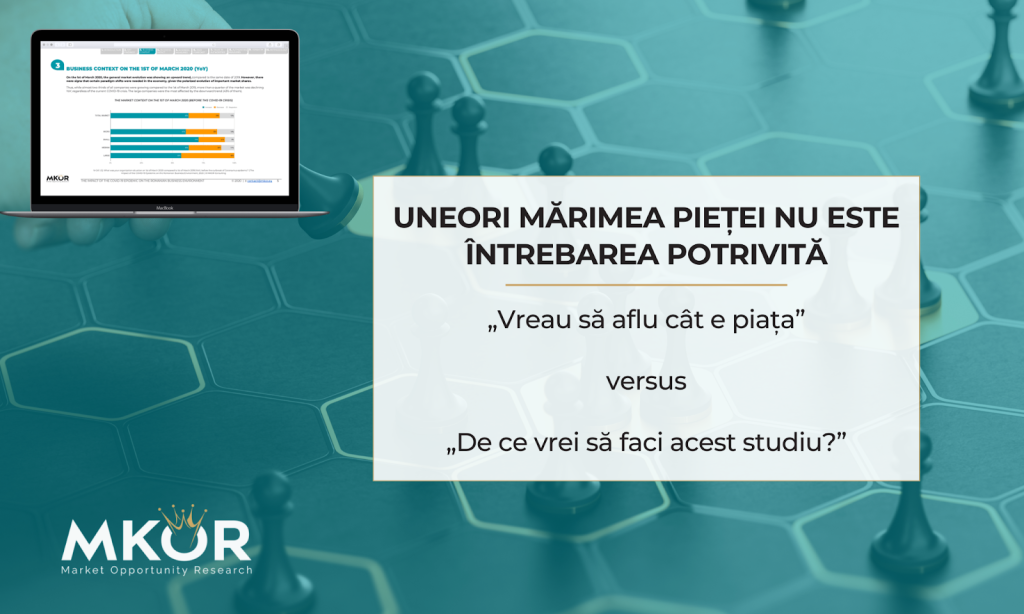
When Market Size Isn’t the Right Question
“I want to know the size of the market” is probably the most frequent request we receive at MKOR as a market research agency. But for many businesses, especially those just starting out, this question isn’t relevant.
Why? Because market potential is one type of information, and how the potential consumer perceives your product is a completely different type of information. Which do you think is more useful for your business’s success?
At MKOR, we don’t automatically accept research objectives proposed by clients. We leave room for discussion and debate. We ask questions, sometimes tough ones.
Perhaps the most uncomfortable of all: “Why do you want to conduct this study?”
Our consultants analyze the real needs of the business and guide the research toward questions that yield the greatest impact on strategic decisions.
Because we are a team of professionals who are, above all, human. We understand that an unclear context brings anxiety. We are here to address the tough questions, to bring clarity, and for the results to make us all proud.
Here’s an example of a concrete situation: 2-3 years ago, a potential client approached us, wanting to study the opportunity of creating a specialized online community. However, it wasn’t clear to them whom they wanted to address, nor what value they aimed to bring.
Our answer was, perhaps, surprising: “Instead of a study ‘just to get it done,’ it’s better to conduct one after you’ve created the community or, at least, the concept you want to test.”
The logic? When starting out, it’s more important to discover through trial & error what works and what doesn’t for the community of beneficiaries you have in mind.
Potential clients might want many things, but before that, it’s important for you, as an entrepreneur, to be clear about what you want (and can) offer them. Sometimes, it’s better to obtain “first-hand” data from real users through direct interactions.
Clients don’t like it when we give them work and send them to do their own research. But the reality is that no market study can tell you what business to start or how to define what you have to offer. You, as an entrepreneur, need to “do the groundwork” yourself at the beginning.
Basically, in this case, we preferred to lose money temporarily. To remain faithful to our mission and the truths we believe in.
A study makes sense when the objectives are clear, and we can truly contribute to the growth of that project.
How is MKOR’s Methodological Approach Different?
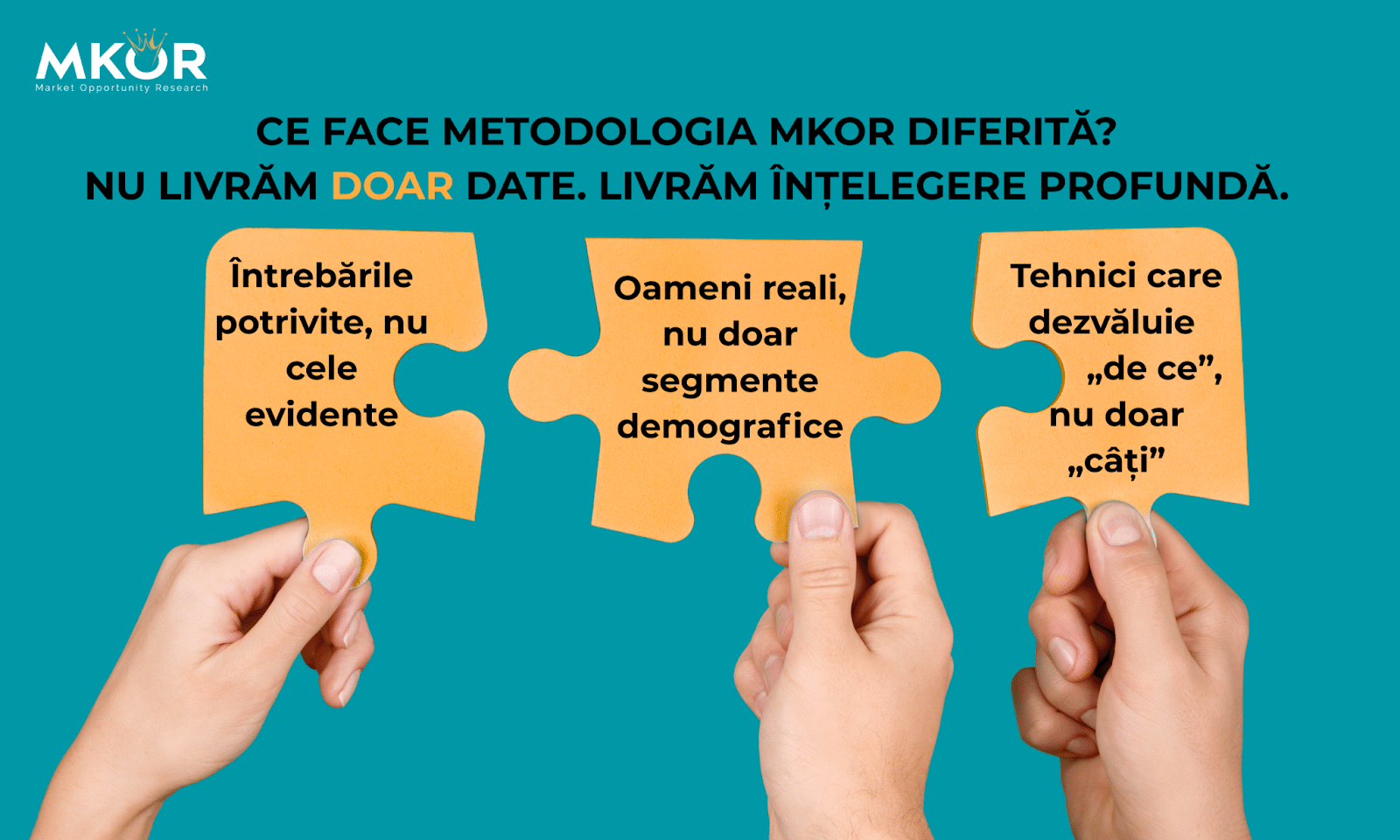
MKOR’s methodology provides market-collected data, as well as an applicable interpretation of this data, customized to the specific nature of each industry and business. Here are the 3 aspects that set us apart:
- Research objectives. We adapt them to your business’s real needs, so that each question generates relevant insights with strategic impact.
- Sampling and data source. We build samples that accurately reflect the market and consumer behaviors, based not just on standard demographic criteria.
Research methods (quantitative and qualitative). The way we collect data influences how it is analyzed and interpreted.
1. Research Objectives Adapted to Your Business’s Real Needs
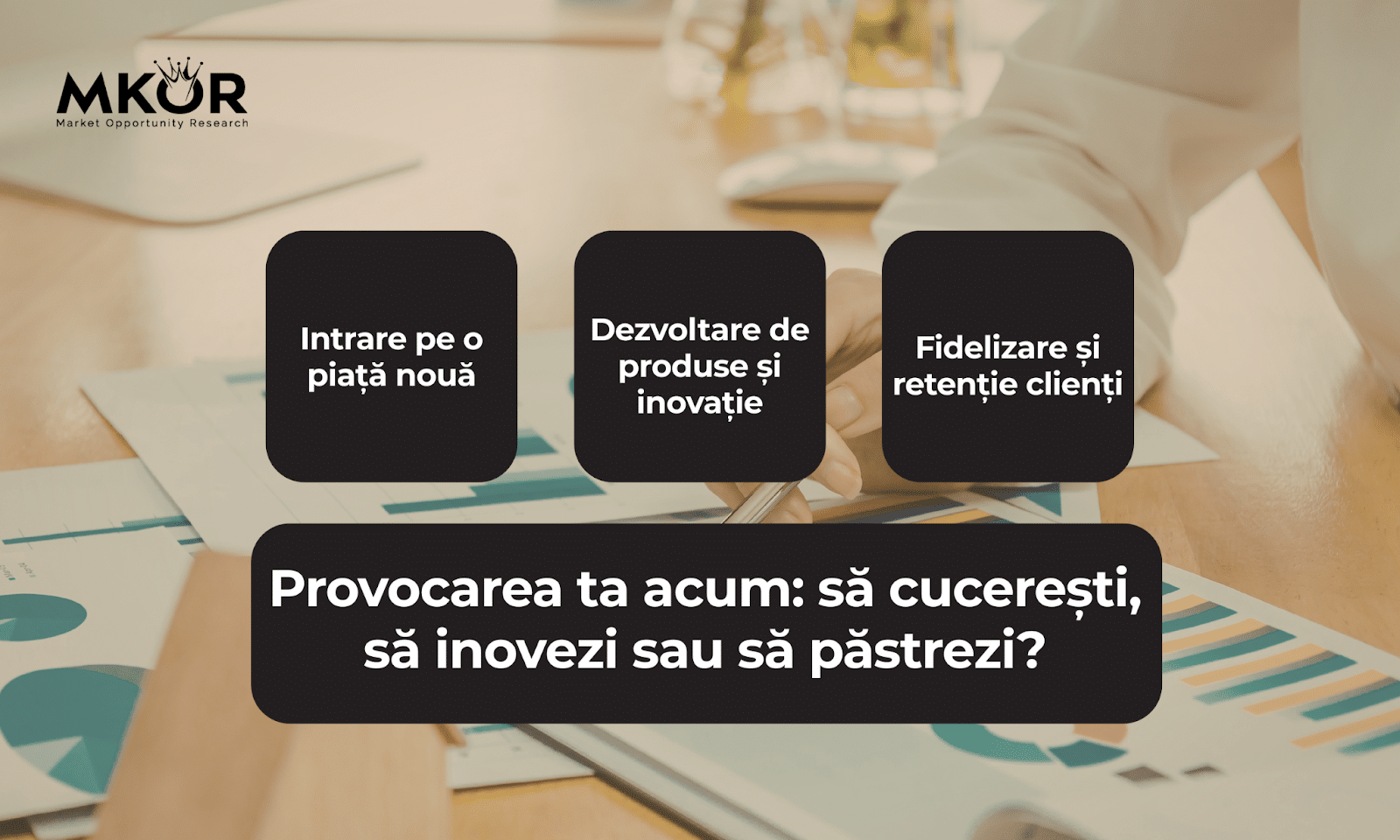
Every business desires growth and profit, but how market research can support these objectives depends on the business’s stage and specific characteristics. Depending on whether the company is entering a new market, developing innovative products, or aiming to increase customer loyalty, research objectives change, and methodological criteria are adjusted.
Here’s how research objectives change depending on each specific situation.
- Entering a new market. A company wishing to penetrate a new market needs an overview of the context: who the relevant competitors are, what positions dominate, what needs and expectations customers have, and what opportunities or risks exist.
Broad market research, such as: industry analyses, competitive benchmarks, market sizing, trends, provides real data to make well-founded, reality-anchored decisions for market entry.
- Product development and innovation. Companies aiming to innovate need to understand both unmet market needs and how consumers react to new ideas or functionalities.
Qualitative methods (interviews, focus groups) help uncover deep insights and innovation opportunities, as well as create profiles based on these needs, which are then essential in communicating the value the brand brings.
Subsequently, quantitative methods (surveys) allow for concept testing, potential estimation, and prioritization of features/functionalities that bring the greatest value. If used together, these stages accelerate the development of relevant and competitive products.
- Customer loyalty and retention. A company focused on increasing loyalty needs a nuanced understanding of customer behaviors and expectations.
Research can combine qualitative and quantitative methods to identify the real reasons behind abandonment, factors that generate attachment, key moments in the customer experience, and opportunities for improvement.
Based on this data, your company can refine processes, optimize communication, and create retention programs with a direct impact on long-term customer value.
2. Sampling and Data Source
Sampling that reflects reality, not just demographics. At MKOR, sampling is an important step in establishing the data collection methodology. We don’t limit ourselves to standard demographic criteria; instead, we build samples that reproduce real market behaviors, dynamics, and evolutions.
We have the ability to analyze who the respondents are, how they think, how their perception changes over time, and how they redistribute in different scenarios.
Through multi-wave designs, advanced calibration, and statistical modeling, we provide clients with an accurate picture of the market, not just a snapshot, but a complete, moving film.
For example, in our own study regarding the second round of the presidential elections in May 2025, MKOR used an original longitudinal three-wave design (May 8–9 / May 10–11 / May 12–14), which allowed us to track the evolution of voting intention almost in real-time during a volatile, constantly changing period.
For us, the sample is not merely “demographic”: we calibrate respondent selection based on key variables (gender, age, education, residential environment), but also on behavioral variables. In the aforementioned study, besides demographics, MKOR modeled: undecided voters, non-responses, and voting behavior (redistribution), using proprietary statistical techniques.
And the error in the second-round poll was ± 1.7%, indicating that we achieved a remarkable level of precision even in a fluctuating context.
Why is sampling important for your business? Because:
- It is the foundation of any serious study. Without sampling, there are just questions addressed to a group of people, but you know nothing about how much you can generalize the results.
- It helps you perform market segmentation and find out not only how many customers are in a demographic group, but also to understand behaviors and evolution trends, and MKOR provides you with exactly this type of analysis.
- Advanced statistical models can show not only the current profile but also the probability of change, which is essential for retention, loyalty strategies, or predictive marketing campaigns.
- Multi-wave (longitudinal) design is useful for companies that want to track the impact of a campaign, market evolution, or brand indicators, even in real-time.
We can reach large and general or specific samples, with the help of MKOR’s proprietary Panel, which has over 80,000 active respondents.
3. Research Methods (Quantitative and Qualitative)
We offer methodological rigor. At MKOR, we use standard and innovative methods, both quantitative (surveys) and qualitative (focus groups, interviews, shop alongs, observation and ethnography, journaling, online communities) to provide our clients with precise and actionable insights. Each type of research has its specific role, and combining them allows for a complete understanding of the market and consumers.
- Quantitative research
Through quantitative research, we measure, test hypotheses, and identify numerical relationships between variables. We use opinion surveys to obtain market data, trends, and correlations so that you can base your strategic business and marketing decisions.
- Qualitative research
We use qualitative research to explore ideas, experiences, and motivations to understand “why” and “how” certain phenomena occur. We use in-depth interviews, focus groups, and open-ended questions in surveys to identify themes, behavioral patterns, and other data about consumer perception.
- Mixed-methods approach
Also, many times, we combine qualitative and quantitative methods to comprehensively answer complex business questions. This allows for an understanding that is not only numerical but also contextual: it connects figures with the reasons and behaviors behind them.
For example, our opinion polls during the presidential elections were not limited to quantitative questions about voting intention but also included open-ended questions that explored voters’ motivations, values, and emotions. Thus, we obtained both precise numerical data and a good understanding of behavior and motivations, combining behavioral modeling with socio-demographic and psychographic analyses.
Furthermore, in our research projects, we bring in consultants and experts from diverse fields, such as sociology, advanced data analysis, data modeling and visualization, design, marketing, and consumer behavior, or external experts to better understand the specifics of an industry. For example, we collaborated with specialists from the National Bank of Romania in formulating the objectives of our quarterly consumer behavior studies, Consumer Sentiment.
Beyond information collection, we also differentiate ourselves methodologically by utilizing advanced statistical indicators in data analysis, such as MAE (Mean Absolute Error) and RMSE (Root Mean Square Error). The goal is to accurately evaluate model performance and the quality of the provided estimates.
This type of measurement is a mechanism by which we ensure that the data companies use for decisions is as close as possible to objective reality.
We used these indicators in the April 24-27, 2025 survey before Round 1 of the Presidential Elections on May 4, 2025. The survey was conducted on an online sample of 1,750 respondents and had a margin of error of ± 2.5%.
The total absolute error for the top 5 candidates was only 16.8 percentage points, which might seem like a lot; however, compared to other institutes, it gave us the position of “most accurate” poll before round 1.
Validation of our results came from independent sources: Professor Mircea Comșa’s analysis, as well as Europe Elects’ analysis, which confirmed that MKOR had an average error rate of just 3.36%, the lowest among institutes, regardless of methodology.
What does this mean for your business?
- MAE measures how far, on average, estimates are from actual values. A low MAE means predictions are stable and precise.
- RMSE penalizes larger errors more heavily, which is extremely important in business, where a single incorrect estimate can change decisions worth millions of euros (e.g., a demand forecast, market share estimation, or price impact assessment).
Combining the two provides a complete picture of data quality and results predictability. For your company, this level of methodological rigor means:
- Significantly lower risks in making strategic decisions (launching a new product line, entering a market, adjusting prices).
- Reliable, tested, and validated estimates, not just interpretations or approximations.
- Increased confidence in business scenarios, as large errors are detected and corrected before they influence decisions.
- Transparency: you know exactly how much variation exists between data and reality.
The Impact of MKOR Studies on Your Business Growth
Studies conducted by MKOR help you:
- Reduce risk when making decisions. We provide verified and contextualized data that eliminates uncertainty from product, marketing, and market positioning decisions.
- Gain a competitive advantage through deep understanding. We go beyond surface-level statistics: we identify real motivations and consumer behaviors to uncover differentiation opportunities that the competition misses.
- Develop strategic agility. You gain access to continuous monitoring so you can adapt and optimize your marketing and promotion campaigns in real time.
We are growth partners, not just market data providers. We help you transform data into strategic assets that you can implement for your business growth.
We deliver clarity, direction, and competitive advantage by providing access to information directly from your customers.
When you choose to work with MKOR, you receive a complete information package:
- How to use the study: clear explanations of what each result means and how to apply it in your business.
- All data, organized: complete analyses, presented simply, without getting lost in endless figures and tables.
- The questions we asked: see exactly what we asked and why.
- Valuable contacts: a list of people we spoke with who can become clients (with their consent), especially useful in B2B studies where we speak directly with decision-makers.
Everything you receive is designed for immediate action, not for reports to sit in a drawer.
At MKOR, we don’t deliver standard “recipes.” We ask the right question, with the right methodology. That is, exactly what makes the difference between guessing or intuiting and knowing with certainty.
Do you know how many clients you lose monthly because you don’t truly know what they think?
Based on market data, MKOR eliminates “we’re not sure” from your business decisions.