


Every now and then, the marketing department goes with its gut and ends up producing a message that disturbs the public.
Everyone involved in the following advertisements had the best intentions, which makes it all the more amusing given that, with pure souls and innocent eyes, they ended up encouraging pedophilia and Nazism. We present 6 marketing campaigns that hid some outrageous messages.
6. Nestle uses the wrong character
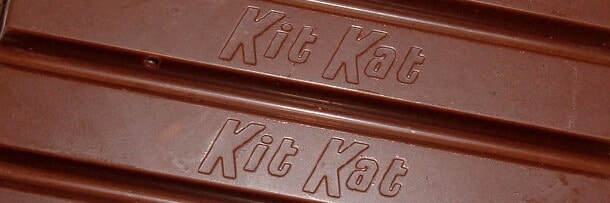
The Plan: When Nestle decided to promote its new Instagram page for Kit Kat for its Australian and New Zealand branches, they needed a mascot to spread the word. After a quick decision, they decided that a bear playing the drums was the ideal image to represent their product. It worked because the drumsticks were Kit Kat bars, and what’s friendlier than a cute little bear?
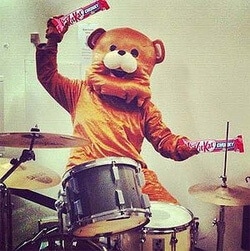
The Mistake: The Kit Kat bear looked exactly like Pedobear from 4Chan.

If you’re not familiar with this meme, Pedobear is a bear that molests children on the internet. If you’re not familiar with the internet, it’s the place that invents these kinds of things. Nestle stated they were unaware of the character’s meaning and withdrew it as a mascot.
5. Adidas released sneakers that celebrated slavery
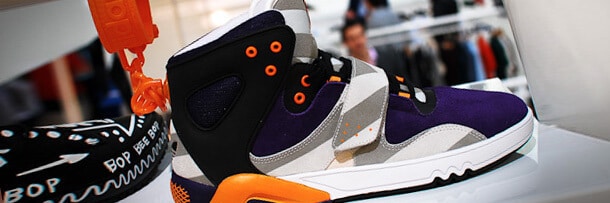
The Plan: When Adidas hired designer Jeremy Scott to come up with a new design for children’s shoes, he did the natural thing and looked to his childhood for inspiration. He found it in an 80s toy called “My Pet Monster.” It looked like this:
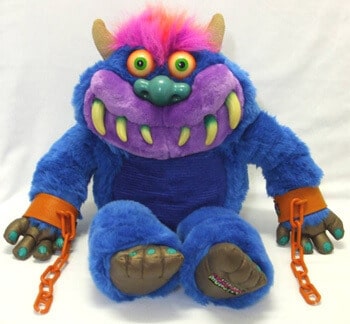
Scott’s new sneakers, called JS Roundhouse Mid, referenced the iconic image of orange shackles and looked like this:
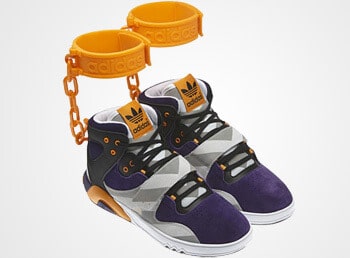
The Mistake: According to Reverend Jesse Jackson, the sneakers were “an attempt to commercialize and popularize more than 200 years of human degradation.” Scott probably didn’t use that phrase to sell his design to Adidas. You can see what Scott was trying to create now that you know the whole story, but My Pet Monster isn’t a reference that today’s youth are familiar with. And even if it were, they named the sneakers JS Roundhouse Mid, not My Pet Monster Shoes or Totally Not Slave Kicks.
Adidas apologized for the unintentional allegory and decided not to release the new models, but they defended the designer, stating that Scott’s work came from his obsession with 80s pop culture.
4. Manchester United’s newsletter looks like Nazi propaganda
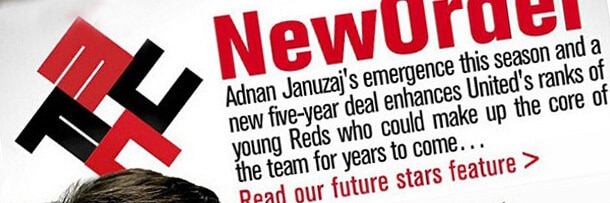
The Plan: Football is a serious business. One of these serious businesses is the English team Manchester United. They recently started sending weekly newsletters to fans. These emails were called United Uncovered, which looked like this:
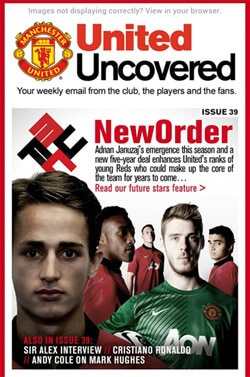
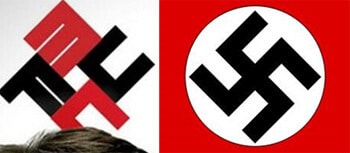
The Mistake: For starters, their logo looks like a Nazi image from a sci-fi movie.
Of course, the swastika is a simple shape, so it’s understandable if you end up accidentally creating an abstract logo that looks a bit like it. But how do you explain the deliberate presence of the phrase “New Order” right next to it? If the term doesn’t sound familiar to you, “New Order” refers to Europe under Nazi occupation and was one of Hitler’s favorite expressions.
The team’s media director, David Sternberg, apologized and promised to launch an internal investigation, which concluded that everything was an oversight.
3. The Teakettle of Intolerance from JC Penney
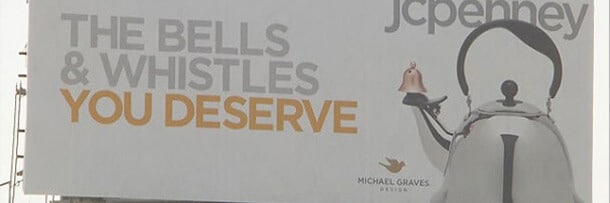
The Plan: Check out the JC Penney ad for a new teakettle. Do you see it? No? Don’t you know what could be wrong with this photo?
It’s about the slogan! The kettle has “the bells and whistle you deserve”. Kettles whistle and this one has a bell. Do you get it now?
The kettle also seems to be giving a Hitler salute.
The Mistake: Hey, how can a teakettle look like Hitler?
It certainly wasn’t an intentional part of the design. It’s a classic case of pareidolia, but look closely, the handle is shaped like Hitler’s hairstyle, the lid resembles the mustache.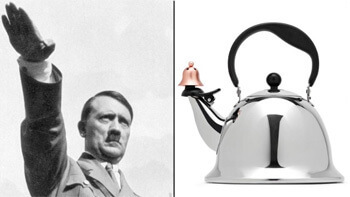
The Reddit community was the first to point out the resemblance and predicted huge sales for this model. Which is exactly what happened, the Adolf Kettler sold like hotcakes.
With fame comes popularity, and those from the Anti-Defamation League said the kettle looks like the Nazi leader. Therefore, JC Penney decided to pull the ads and stop selling the product.
2. History Channel hires a familiar face for the role of Satan
The Plan: There are several billion years of history. Of course, the people at the History Channel could run out of content, so they chose to present an abstract concept, such as a miniseries about the life of Jesus. Naturally, all movies about Jesus need Satan, and for this role, they hired a Moroccan actor, Mehdi Quazzani, who is a veteran of biblical films and looked sinister enough.
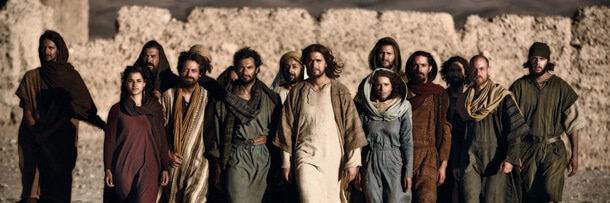
The Mistake: The problem arose when the American audience noticed that the actor looked familiar:
Hmm, so was the History Channel trying to say that the 13% of Americans who believed President Obama was the Anti-Christ were right?
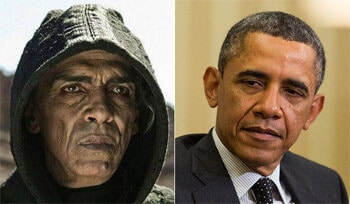
Probably not. The producers did not intentionally cast a look-alike of the president, but the media immediately picked up the story, and right-wing Christians in America showed their support; support that was not well received by the television channel.
After the incident, The History Channel released a statement saying that any resemblance between the US president and the king of Hell is purely coincidental. Even so, the producers decided that this controversy was distracting from the film’s subject and decided to remove the character of Satan.
1. The German air freshener that sparked international outrage.
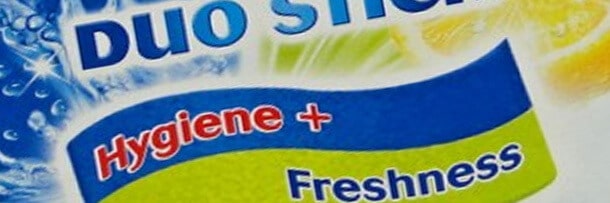
The Plan: In 2013, the detergent company Henkel launched a toilet air freshener called Bref Duo Stick. In the world of design, not even the colors of the soap you put in the toilet are chosen by chance. The product designers claimed that the chosen blue and the texture represented the cleanliness characteristic of water, while the yellow represented the fresh scent of lemon.
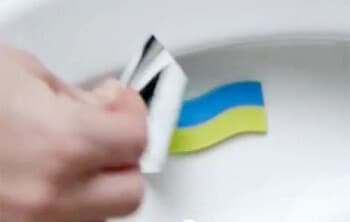
The Mistake: Do you see the product?
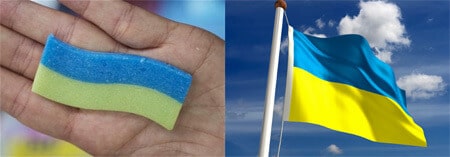
That is the flag of Ukraine. The product was not launched for the Ukrainian market, but for the Russian market.
From what you know from history or if you’ve watched the news lately, you probably know about the conflict between Russia and Ukraine. Many Ukrainians watch Russian television. Therefore, when you see something on TV that looks exactly like the Ukrainian flag in the toilet, you get outraged.
Henkel did not want to go down in history as the company that started World War III because of their toilet air freshener and stopped production of the product.
The conflict was avoided, but at what cost to all those wanting citrus-scented air fresheners?
Have you read everything? Comment / join our newsletter / read our other research posts!