

Most launch decisions start from a strong internal vision: the certainty that a new product, a range extension or a particular message will meet a real market need. This is the vital energy of any project.
The challenge appears when that vision, built on internal data and experience, meets the end consumer’s reaction.
Concept testing moves the question earlier in the process. Instead of finding out after launch whether the idea works, you find out beforehand, while you can still adjust the product, the price or the strategy without major cost.
Having a good idea doesn’t automatically mean the market wants it.
In this article we present four concept testing projects carried out by the MKOR team, in four different markets: digital products, entertainment, HoReCa and legal-tech platforms.
Spoiler alert: one of the concept testing projects ended with a recommendation not to invest in the idea’s original form. We’re including it precisely because it shows what a properly conducted market research study looks like in practice: it shows what the market says, not what the client would like to hear.
Conținut
What concept testing actually is
A concept testing study measures the target audience’s reaction to a product or service idea before it reaches the market. The goal isn’t to confirm an assumption, but to quantify three things:
- how appealing the idea is,
- how likely people are to buy it, and
- how much they’d be willing to pay.
The methodology varies with the complexity of the decision. For testing a product or a price point, an online survey (CAWI) on a representative sample provides relevant quantitative data. For decisions involving emotional reactions or content, such as a TV pilot, a mixed survey-and-focus-group methodology also allows you to understand the reasons behind the numbers.
A concept testing project usually takes between two and six weeks, depending on the sample and complexity. At the end, our client receives a report with interpretations and recommendations they can act on straight away.
Concept testing: a risk management tool, not just a launch one
Concept testing is most often associated with start-ups or completely new products, but it’s just as useful, if not more so, for already-established businesses.
A brand with history has more to lose with every wrong decision: reputation built over years, a loyal customer base, and a marketing budget large enough that a failed campaign costs visibly more than a testing study.
For these companies, pre-launch concept testing validates whether the idea makes sense on its own and manages the risk of a high-stakes decision made purely on intuition or internal data.
The difference between the four cases below says a lot about the versatility of the method. Three are start-ups, testing an idea that doesn’t yet exist on the market for the first time. The fourth is a long-established business, where the stakes were understanding the public’s reaction.
Four projects, four types of decisions
1. When the market says “no”: a personalised nutrition eBook

The challenge. The client, an entrepreneur at the very start of her journey, with experience as a chef and multiple nutrition qualifications, had a clear business idea: to start by creating a digital nutrition guide adapted to individual needs. The idea was good, but the business question was whether the market was willing to pay for this eBook.
The method. MKOR used Agile Research, a fast concept testing method, to test genuine interest and the price threshold consumers would accept.
The result. The data contradicted the client’s expectations. Overall interest in this kind of eBook was low, and the budgets indicated by respondents were significantly lower than the sale price she had estimated. The big discovery was that potential customers turned out to be sceptical about the realistic ability to create a nutrition eBook personalised to their needs.
The impact. Subsequent discussions with the client confirmed the value of the study: she avoided a risky investment in a product with no real market traction and decided to rethink the direction of the business, before allocating resources to production and marketing.
2. Testing a TV pilot before launch on the entertainment market: Buftea Studios
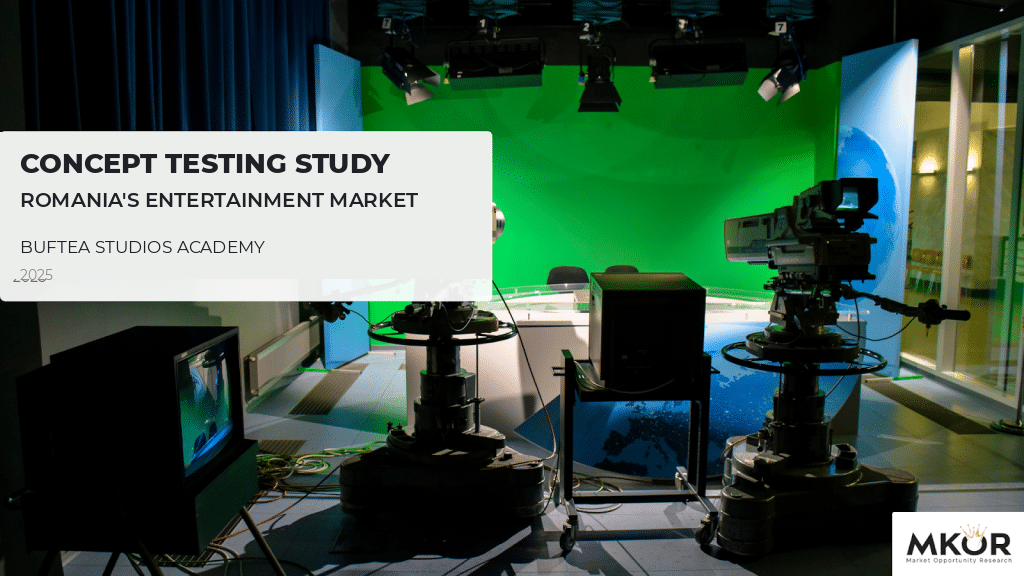
The challenge. Buftea Studios Academy was about to launch a pilot episode on Romania’s entertainment market and needed to understand the public’s reaction to the teaser before deciding the budget and launch strategy for the whole series.
The method. MKOR ran a study with a mixed methodology: participants watched the teaser, then answered survey questions. The research covered a nationally representative sample and was complemented by a focus group to explore the quantitatively measured perceptions in depth.
The result. The study measured first impressions, the elements that make the teaser appealing, overall sentiment towards the content, and the audience’s likelihood of watching the entire series. It also identified the different reasons behind viewing intent, depending on the audience segment.
The impact. The results gave Buftea Studios a concrete basis for adjusting their launch strategy, with the aim of maximising the series’ chances of success before airing.
3. Validating a family concept through a regional study: a café with a play area in Iași

The challenge. An entrepreneur from Iași was planning a major investment: a café equipped with play areas for children aged 0 to 14, with the option of running practical dance, painting or acting classes. Before fitting out a large-scale space in one of Romania’s biggest cities, he needed to know whether parents’ actual profile and expectations supported the concept.
The method. MKOR carried out a regional market study with a quantitative methodology (online CAWI survey), on a sample of 300 parents with children up to 14 years old, from Iași and the surrounding metropolitan area (+20 km).
The result. The study measured interest in the play area, the importance of a dining space, openness towards the proposed practical classes, and the shortcomings of solutions already available on the local market.
The impact. The data gave the client a basis for building the concept around the real needs of parents in Iași, rather than assumptions, directing budget and resources towards the elements validated by the market.
4. From the wrong hypothesis to the insight that changed the strategy: Immosafe
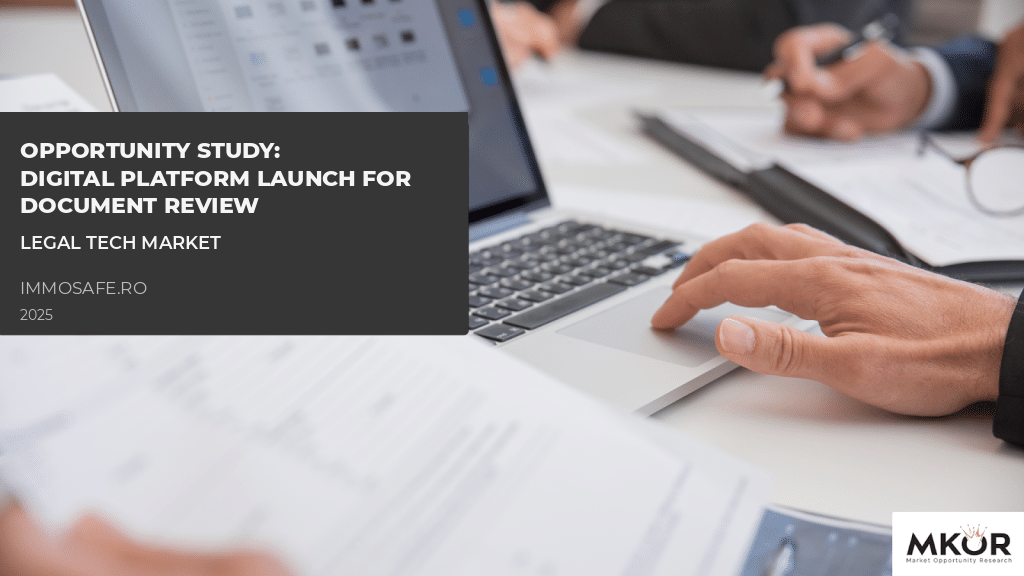
The challenge. Immosafe, a digital product launched by three entrepreneurs in the legal-tech sector, wanted to offer a digital platform where anyone could upload an official document and receive, almost instantly, a risk assessment — functionality that traditionally required a lawyer, a notary or an accountant. The risk was obvious: a considerable investment in a product for which there was, perhaps, no real need or willingness to pay.
The method. MKOR proposed a quantitative, concept-testing-type market study, run through an online survey (CAWI) on a stratified, nationally representative sample, to objectively measure the idea’s appeal, intention to use and the price thresholds accepted by potential customers.
The result. The initial hypothesis was that a low price would be the decisive factor in attracting users. The data showed something else: the biggest barrier to adoption wasn’t cost, but lack of trust. Potential customers were reluctant to upload personal and confidential documents to a new online platform, and questions about data safety and confidence in an assessment algorithm weighed more heavily than the question of price.
The impact. The insight redefined the business strategy. The focus shifted from competing on price to building a brand that inspires safety, transparency and professionalism, through clear communication and visible security guarantees. The study also established the right launch order for the three product lines (banking, employment contracts, real estate), to address the market’s most pressing needs first.
Sebastian Bereczk, Immosafe’s founder, described working with us like this:
“MKOR won us over through communication. Lavinia and the team… were extremely flexible and friendly, but professional at the same time. And that made us feel we had a partner alongside us, not just a service provider.”
What the four cases have in common
Beyond the different sectors, a few recurring patterns emerge:
The real barrier is rarely the one assumed at the start. With the nutrition eBook, the barrier wasn’t just price, but low overall interest and even scepticism towards the product. At Immosafe, the initial hypothesis was price, but the real barrier was distrust. Without research, both ideas would have been optimised for the wrong problem.
The methodology adapts to the type of decision, not the other way round. For a price and a digital product, a quantitative survey provides the necessary precision. For reaction to media content, a survey combined with a focus group brings an understanding of the reasons behind the numbers. For a regional physical investment, it’s the local sample, not the national one, that’s relevant.
The result isn’t a simple research report, but the foundation for making a lower-risk decision. In all four cases, the study changed a concrete decision: a rethought business, an adjusted launch strategy, a budget redirected towards validated elements, a brand repositioned from low price to greater trust.
What you actually get from an MKOR concept testing study
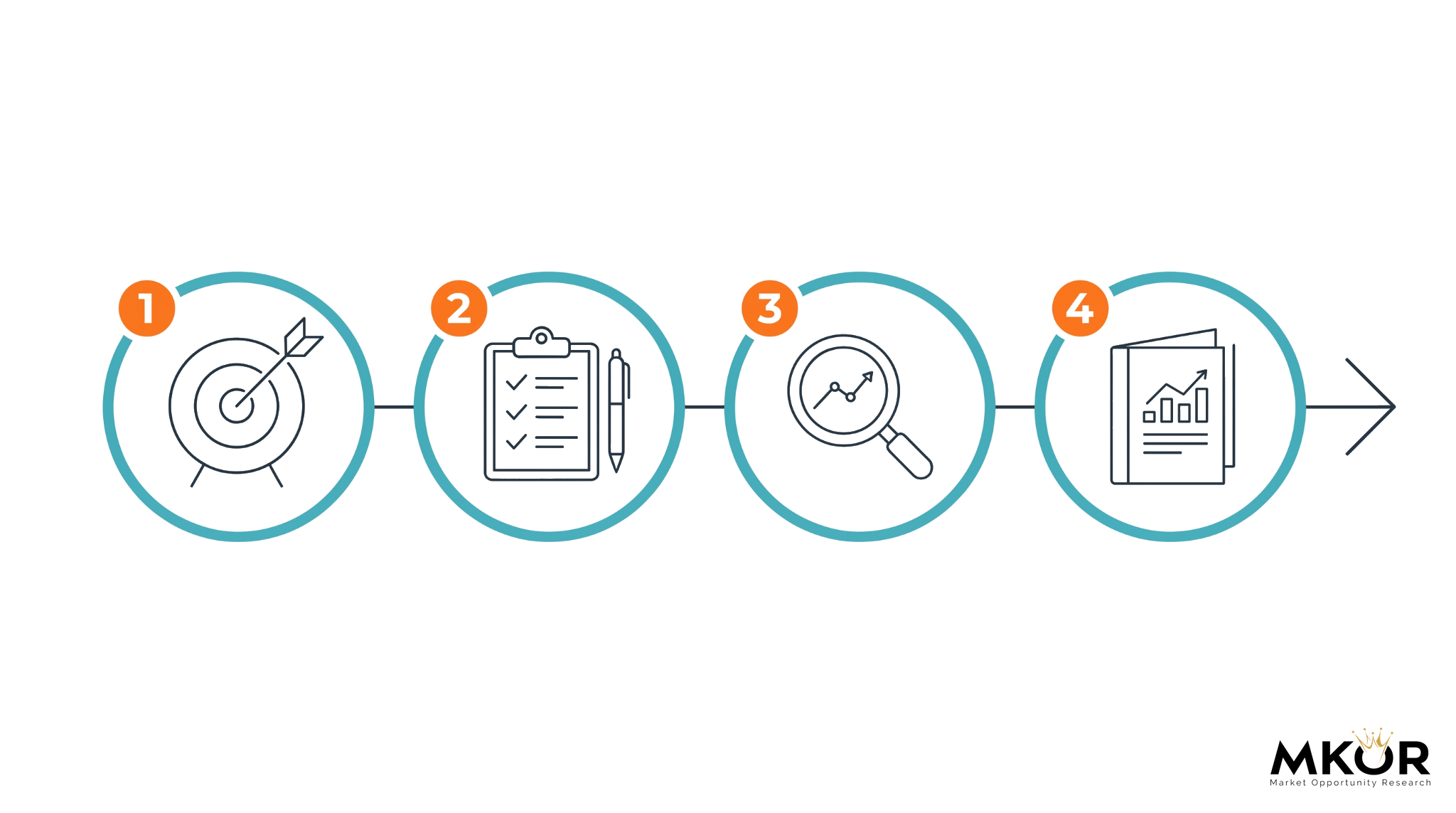
A concept testing project usually includes:
- Defining the research objectives together with you, our client
- Building the research instrument (questionnaire, focus group guide, or both) depending on what you’re testing — an idea, a product or an advertising concept
- Collecting data on a relevant sample, through an online survey (CAWI) or a mixed methodology
- Analysing the results and a strategic report with interpretations and actionable recommendations
As for duration, this varies between two and six weeks, depending on the project’s complexity and sample size.
Before you invest, test
In all 4 projects, the final decision was made on data, not intuition. In one case, that meant stopping an investment. In the other three, it meant adjusting the strategy before launch, not after.
If you’re working on a product, service or concept idea and want to know what the market says before you invest, the MKOR team can build a concept testing study tailored to the decision you need to make.
Before you invest, test to see how the market reacts. Asking your favourite AI isn’t enough. Because it will piece together information from online sources that supports your idea and perspective, without showing you the real shortcomings and barriers you’ll encounter in the market.
In the coming period, we’ll be launching a special offer for this service. It’s summer, we know there are plenty of ideas out there, and we want to help organisations make the right decisions.
If you’re working on an idea right now and want to know in advance what the market says about it, sign up now for the waiting list. Early sign-ups get the preferential offer we’re launching soon.