

This weekend I took part in Forbes ReInvent, a virtual summit where leaders from the Romanian business world were invited to talk about how we establish the “positive priorities” that will navigate businesses beyond troubled waters, ready for the next wave of growth.
Whether it’s about business strategy, marketing, sales, processes and operations, execution, or cash, the event aimed to challenge the most important leaders to answer the question on everyone’s lips: “what do we do now?”.
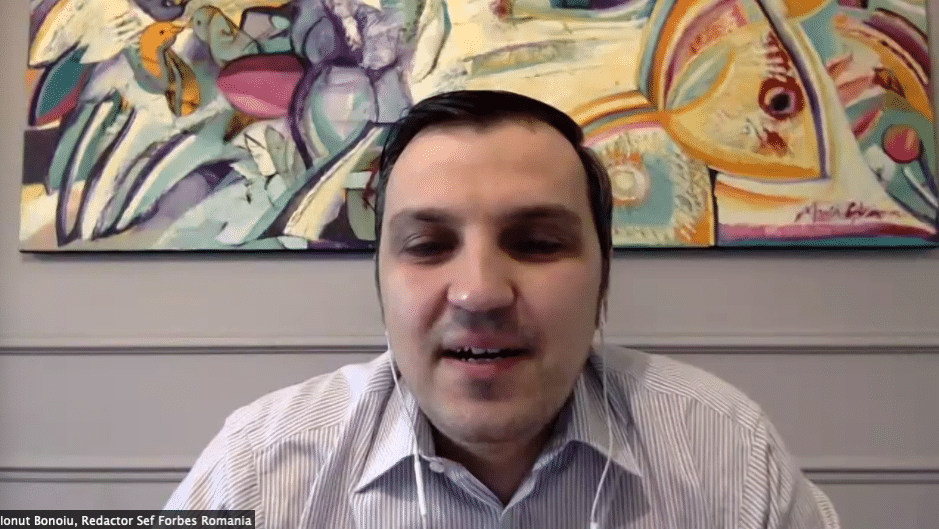
They succeeded; it truly was a no-nonsense event, full of immediately applicable advice.
Below, we invite you to take a look at the main ideas from the summit, which we transcribed in real-time.
Ion Sturza, Fribourg Capital – Routine is important: shave every day!
- Shave every day!
- In times of crisis, it is extremely important to maintain your routines and exercise, even more than usual.
- On the day of the summit (May 9th), it was his birthday, and he started his day with an 18 km forest walking marathon.
- Romania is an emerging market, located on the periphery of the civilized world; it must fight to endure. We are used to adapting; Romanians have an entrepreneurial spirit.
- If you have enough money, you can afford to be moral as a business. Some people create personal PR from the charity of the companies where they work.
- Do charity with your own money, not with the money of a company that isn’t yours!
- Let’s be realistic: companies exist to produce services and products, not to do charity. This is the role of the state, to redistribute money from taxes and fees where it is needed.
Daniel Boaje, McDonald’s Romania – Gain is measured in seconds.
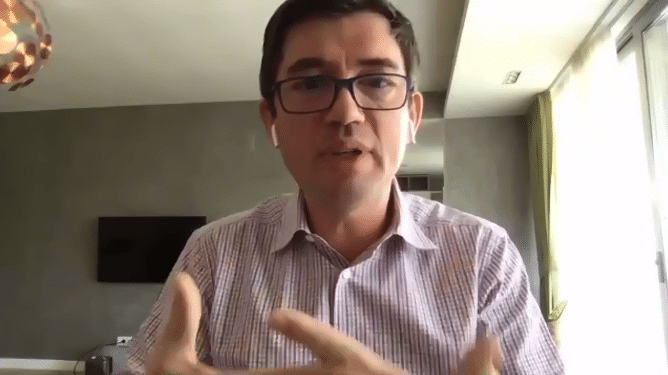
- Speed is very important; make a decision, whatever it may be, good or bad, and gain time!
- McDonald’s serves over 1,000 additional cars per day, under safety and distancing conditions. Rapid adaptation was needed to achieve this.
- Delivery has grown by over 100%.
- They are prepared for whatever comes next because they act quickly.
- McDonald’s is a volume business.
- Gain is measured in seconds.
- They didn’t allow any partner to have problems during this period; they made payments on time.
- We must restart together!
Omer Tetik, Banca Transilvania – Whoever can function alongside the community can function much better and emerges stronger after the crisis.
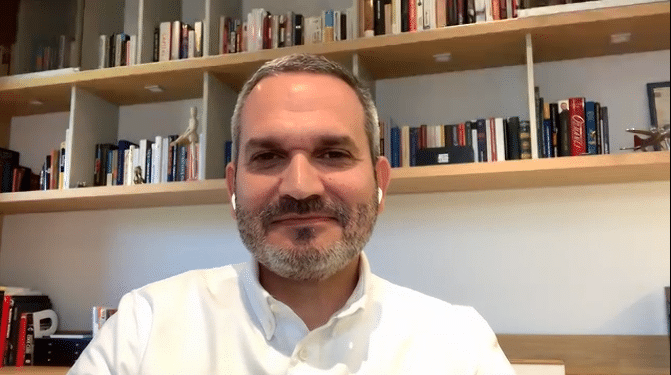
- BT people focus on (local) impact, how many businesses they have financed, not on figures.
- It’s a virtuous circle, the more businesses you finance, the more motivated you become and the further you go.
- 1st place was not an aspiration in itself. It is a source of pride, but also a responsibility.
- Of course we are happy to be part of something big, in our industry, size does matter, a large customer base and capital are needed.
- The organization’s culture, pro-people, pro-customer, helps us get through the crisis.
- We avoid complacency, resting on our laurels because we are the first, the most loved, etc.
- We are proud that most applicants to IMM Invest chose BT.
- We must utilize technology opportunities much better.
- The post-pandemic world: many changes, the role of banks has become much more balanced, better. Compared to the previous crisis, when banks were considered to have generated the problem, now banks are part of the solution.
- Whoever can function alongside the community, alongside partners, can function much better and comes out stronger after the crisis.
- Loan-deposit ratio: it was 170%, now it is 75% – which shows that the population and companies have developed.
- We are open for business, we want to be a support for the economy.
Fulga Dinu, IMMOFINANZ Romania – If you have a healthy business, it is easier to react to crisis situations.
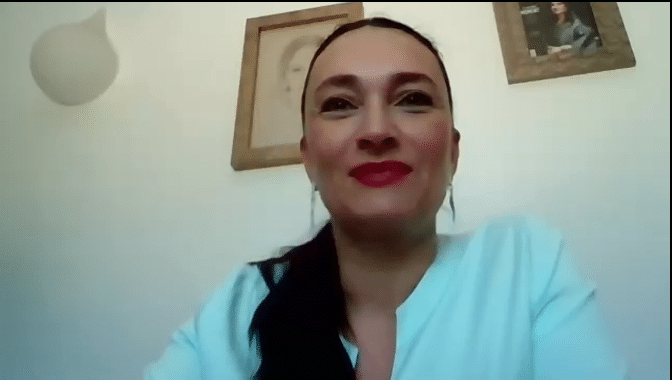
- Things will evolve for the better, that’s what we strive for, that’s why we develop.
- We faced unexpected problems, 2 and a half months ago there was no question of thinking about what we are experiencing today.
- In the business mentality, the concept of crisis existed, we knew a crisis would come, but we didn’t know where it would come from.
- From the previous crisis, we remembered lessons, especially since it is not that far from us.
- This crisis is special because of the health, humanitarian, psychological component, the degree to which it affects everyone.
- Many partners have learned that if you have a healthy business, it is easier to react to crisis situations.
- A healthy business involves portfolio balance (for example, Immofinanz has a balance between malls and offices, and the business lines support each other), a reasonable debt level, a team you can rely on.
- When you have a change, 180 degrees from one day to the next, you have to analyze quickly, make quick decisions, in order to adapt.
- Even if you have many working scenarios, you have to choose one and go with it. Keep a more pessimistic one too, in case things go worse, and if they go better… all the better!
- In the last month and a half, I have worked much harder than I ever have, but also much more agilely.
- One of the important things now is safety. If before we looked at the community, at the brands attracted to a new center, now we take care of the physical part, the safety of partners and tenants.
- There is a mobilization in communities, in business, and that is why we will get through this crisis faster.
- Every crisis brings opportunities, but you have to see them and evaluate them at their true value.
- In the future, we will adapt, we will offer more flexibility to customers. For example, if you want to expand in 3 years, you shouldn’t be stuck for 5 in the same space.
- It is said in the market that office spaces will be restricted because teams will work in shifts. On the contrary, I believe that social distancing will lead to a need for more space, not less.
- For retail, we will have actions for customers, we will organize outdoor events, there will be flows in malls.
- And yes, size does matter: we have a network that allows us to adapt quickly.
- No one imagined that we would adapt so well and be so productive from home. Romanians are adaptable and want to get out of this situation.
Radu Georgescu, GECAD Ventures – Today we must ask ourselves how we pivot, not if we pivot.
- I find that I work much more than before.
- I gain a lot from the fact that there is no commuting.
- In the first month after lockdown, people’s productivity increased significantly, we were all excited to stay home, do a bit of this and that. In the second month, it dropped a lot, lower than it had been before, at the office. For the long term, it is not something that works.
- The post-pandemic world: it will be very different, but nobody knows how.
- If you don’t change constantly, you enter a comfort zone. Change, as a way out of the comfort zone.
- Generally, change stems from chronic reasons. Now, change is required for a very acute reason.
- The world will change. How, we don’t know. Any manager, shareholder, company that wants to save its business model from 2 months ago is already dead.
- Today, 2 months after the disaster, we must ask ourselves HOW we pivot, not IF we pivot.
- Everyone must answer this question for themselves. But it’s important to at least ask ourselves this question: if until now my business was a square, how do I modify the square?
- There is no template, or rather there are too many templates, which is why none of them is truly effective.
- Every entrepreneur is different from the others, and each decides for themselves.
- If I were to do this, one thing I would do would be to take myself out of the daily madness and look at myself, first of all. You have to get out of administrative tasks, out of the daily fires to be extinguished, to stay sane.
- How to change the company: a mindset to have and to build.
- When preparing to pivot, you must ask yourself what your main assets and strengths are, not emotionally, the apparent ones, but the extremely deep ones, and what they can best be used for.
- How you see opportunities when everything around seems to be collapsing: the day has 24 hours, you have plenty of time to do both this and that…
- Change involves a great effort, you have to do introspection (yours, the company’s).
Dan Isai, Salad Box – If doctors save health, entrepreneurs save the economy.
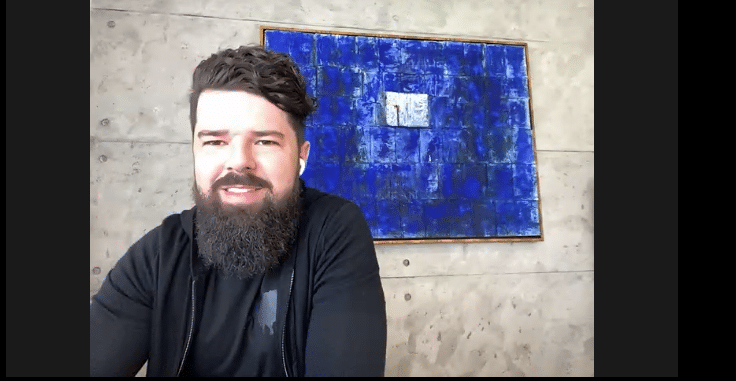
- Everyone has a plan until they get punched in the face (Mike Tyson)
- For SaladBox, the crisis was felt most strongly in Romania, because we have the most locations here. We tried to take care of our loved ones, family, and employees.
- In crisis and panic, people and companies react very differently. In a crisis, there is uncertainty; no one knows what will happen, not even large governments with high GDPs… It’s hard to have the answer.
- The old normal is not the new normal. What matters most is what is today, and where we are headed for tomorrow.
- This crisis was not generated by a mistake of ours, but the solution depends on us, on our actions.
- It is our duty to find solutions, to use the infrastructure, the ecosystem, to bring our competitors and partners to the same table, and to be transparent, examine the situation, and establish how we will collaborate in the future.
- No one expects you to have all the answers, but you must bring transparency, information, values, and principles to the table.
- The difference between companies that will succeed and those that will fail: empathy, the imagination to innovate.
- We need a ray of optimism in the near and medium future.
- We need empathy, to step into the other person’s shoes.
- It’s no longer win-win, but survive-survive.
- We are all partners: Daniel is my colleague in HoReCa, Omer at the bank, Fulga at Immofinanz, Marius with mobility…
- If doctors save health, entrepreneurs save the economy.
- Benefits of being a multinational: know-how from other markets, but timing and adaptability are important; you have to see if it’s the right moment and how to apply them.
- I am proud of my team: opening locations in the middle of a pandemic comes with many challenges, but also with the pride that if we succeed now, we will succeed anytime.
- More than ever, partnerships and empathy matter… if we don’t find a dialogue with our partners, there’s no point in opening. It’s important that what we do is sustainable; we don’t want to put suppliers, customers, etc., in difficulty.
- What period follows? Sprint, marathon?… The sprint is over, the marathon follows; we must be very careful about who we ally with, it’s a long and hard race.
- As models during this period… Even if I read reputable resources, Harvard, McKinsey… the best inspiration is those next to you, Omer Tetik, Adi Hădean… people who inspire you and help you find the opportunity to innovate.
- This period forces us to be better.
- Personally, I miss going out to a restaurant, to a football game…
Cristian Covaciu, IPEC – To keep up with technology, you must be the one who develops it.
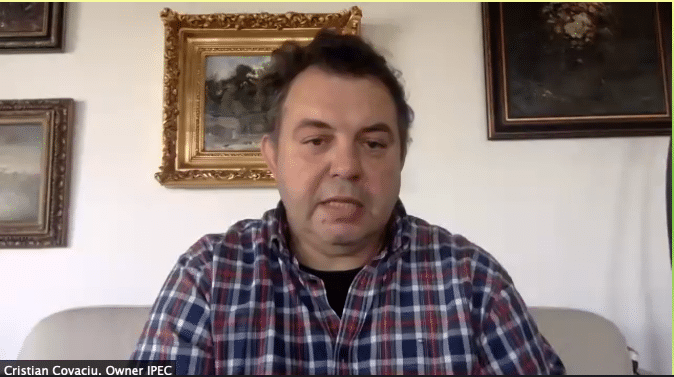
- We constantly innovate, we want to be competitive, relevant.
- We have a half-million euro research laboratory; it’s not common for a ceramics company to have such a laboratory. We test 300-400 recipes annually.
- We innovate in the process, yields increase by 30%. Every second counts, every gram counts. At 50 million plates annually, a few grams can mean losses of hundreds of thousands of euros.
- We want to give up fossil fuels, to use hydrogen, which we produce ourselves with solar energy.
- We have a website where you can configure your product, the plate by model, color, decoration.
- To keep up with technology, you have to be the one who develops it.
- An inexhaustible resource of inspiration is visits to other industries. For example, we have robots with which we polish plates. One of my friends needed this technology to polish chairs. Conversely, they have a dust absorption technology and we consider it more efficient than ours. Its implementation helps us reduce energy consumption by 30-40%.
- We will start printing on vertical surfaces; on horizontal surfaces, we printed the largest volumes in Europe, maybe even in the world, last year.
- We have a project to print on existing plates, to give them a new life. If you have a plate you’re bored with, you can bring it to IPEC and you’ll have a new plate with a new life (project together with IKEA).
- We are developing recipes for repressing, so that 50% of the raw material is recycled material.
- Most is still to be done – hence the appetite for innovation, we ask questions in all processes.
Șerban Alexandrescu, Headvertising – What you do in acute hunger, stays. If you are hungry now, you remain a precarious hungry person in the long run.
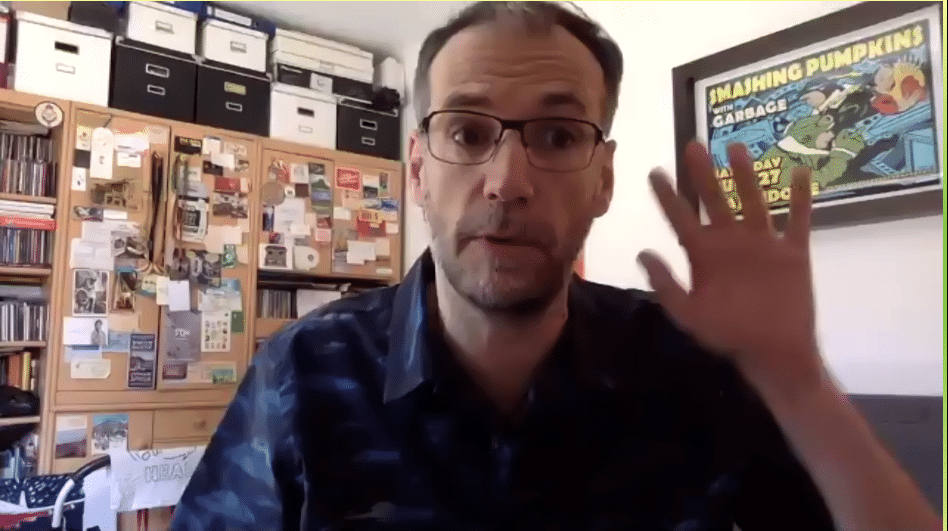
- Before we curse everything that happens to us, let’s consider what we are living now as a break, in which to reconsider what we do, if we do it well.
- There are opportunities; in the short term, it’s about human resources. The prevalent discourse lately was that we don’t have people. Now a good transfer window is starting. We can access resources that were not available or accessible before. Leaving aside the cynical side (people being fired), people are reconsidering their relationship with the employer, they are movable.
- Why does it help to go through crises? Because you learn from them. In 2010, I was amazed by the expansion of Mega Image, who were buying when everyone else was closing. The same is now true for human resources.
- Innovation: you are pressed to explore, but you are also free to explore. It’s a good climate for releasing the fear of exploration; it’s the time to challenge all the orthodoxies in your field.
- Even if only the procedures are updated… even in recent conditions, people in large companies stick to procedures, they find it hard to let go… and it’s hard to function well.
- Big sucker punch – we just received a massive punch in the stomach from this crisis.
- In the short term, the most important thing is to take care of prices. Hunger is great now, so you will be tempted to “take your pants off,” as the Romanian saying goes. You have to think 180,000 times before doing it. What you do in acute hunger, stays. If you are hungry now, you remain a precarious hungry person in the long run. And even if we do this, we must mark that it is something specific.
- You must defend your margins! And in moments of crisis, live off the “fat,” off the reserves. Which, if you have miserable margins, you won’t have.
- The new normal is bad weather all the time. There is a need for coalition and cooperation within the industry. The perpetual “little crisis” helps you stay and collaborate. You cannot be the only healthy fish in a poisoned aquarium.
- We need to change the perspective from “you and your customers” to “you and your competitors.”
Teofil Mureșan, E-Infra – The sport that can be compared to business is athletics.
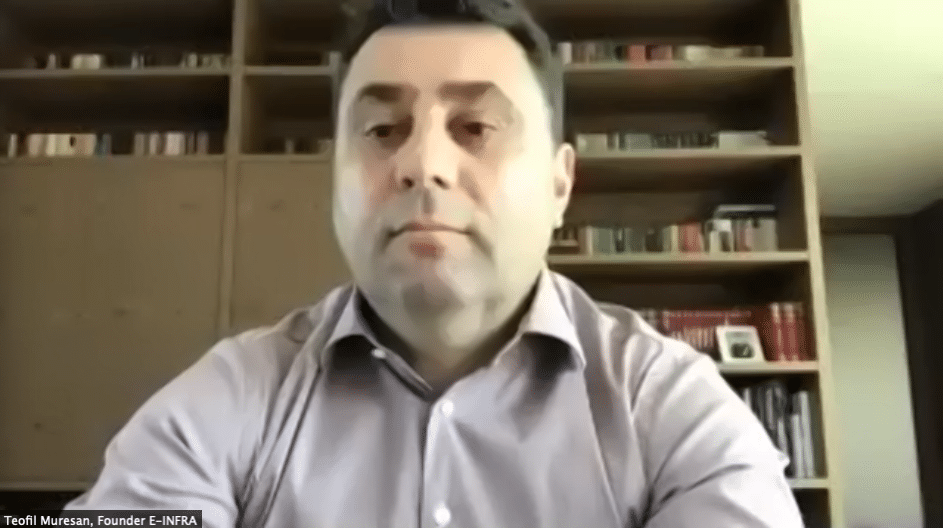
- Parallel between sport and business: competition, preparation, losers and winners, what happens in sport can inspire us a lot in business.
- The sport that can be compared to business is athletics, when you don’t have time to look at the stands. Now we are going through a period where we have time to look around.
- At E-Infra, we have brought in professional, prepared people to lead us towards becoming a multinational.
- The health of the employees is very important, but also that of the company, the cash flow.
- We have 3 days a week in which we hold meetings with the team.
- Infrastructure investors must form public-private partnerships, to be able to rely on concessions (as we do at Netcity, at Nova). There should be a more extensive legal framework, uniformity in approach.
- During this period, I enjoyed the opportunity to stay with my family, I discovered Teams (both the people and the application), casual clothes, time for analysis and reflection.
- Every crisis passes, this one will pass too, we must be adapted, each in the fields in which we work.
Marius Stefan, Autonom – It doesn’t matter what happens around us, but how we react.
- Today is Europe Day, happy Europe Day to everyone!
- Now, you have to ask yourself: what are those fundamental things for me, for us?
- It doesn’t matter what you choose, but do it!
- We, as humans, have a low tolerance for uncertainty. We try to fit what will be into what we know. Except we don’t really know! What we know remains are the values, the principles.
- Regarding corporate principles: let’s go back to basics, to teamwork. Before every meeting, take 3 minutes of silence (meditation, or just silence). Or start with an icebreaker: when was the last time you laughed until you cried? Or how about a personal update, where everyone talks for a minute about what they’ve been doing personally, with their family. Create a human connection with the team. Trust and respect. We have common interests, but it’s okay to think differently.
- We periodically ask people the question: what would you change about yourself / the job? We receive over 1000 answers, we apply 200 small changes.
- You have to ask yourselves: what are we good at, what do we do best? The question to ask the team: what are the things we are proud of in this team? That’s how you bring values to light, what makes you special.
- Common sense cannot be taught. We want to be surrounded by people with common sense. I even put in the first job advertisement: we are looking for someone with common sense and a sense of humor. How do you measure common sense? You look at them to make sure they aren’t a “smart aleck”. The rest can be learned; not everyone needs to know some code or financial formulas.
- For anyone hiring: don’t look at what the person knows, but at attitudes, behaviors, common sense, which cannot be taught.
- Why a sense of humor: if we are together 8-10 hours a day anyway, why wouldn’t we choose to have great people next to us? Adapt your recruitment process to be around cheerful, positive people.
- It’s okay to change in the evening the decision you made in the morning; we must be adaptable and flexible.
- How do we prepare for a harder period? You don’t know when it will come, nor its magnitude. So we built two things:
- 1. An adaptable and flexible organization, we work in small teams, with adaptable systems.
- 2. Cash and access to cash.
- To create a resilient, anti-fragile organization, you don’t need bureaucracy. That’s where the problems are, with very clear and strict rules. If you have to make a decision, make it, even if you reconsider it later.
- There is a lot of fear at an individual level. During this time, the leader is the message. The details of the plan don’t matter; you must have a plan, admit what you don’t know, but you must be in control and show it.
- When we realized the seriousness of the situation we were in, we spent 2.5 hours on the internal Facebook group and answered people’s questions. Moreover, all management meetings are broadcast live on Facebook, and all our people can know at any time what decisions are being made, what is happening.
- Empathy, during this time, we need empathy for those less fortunate than us. It is the most important quality you want to have in a team, and it can be cultivated.
- 25% of our clients asked for our help with operational leasing.
- I always return to Dale Carnegie’s principles: How to Win Friends and Influence People. It says almost nothing about business, but rather a way of interacting with the people around us. For example: we have two ears and one mouth, let’s use them in the same proportion. Let’s put those around us in a favorable light. Praise in public and criticize in private.
- Jim Collins, Stockdale Paradox. Prisoners of war, those who got out were the ones who had the right mindset, not the optimists. Those who were resilient: we don’t know when we’re getting out, but let’s make the most of it.
- It doesn’t matter what happens around us, because we cannot control it, but how we react. We can only influence what we and the people around us do. Action is what will lead to development.
Instead of a conclusion…
What I’ve taken away, and what emerged from absolutely all the speeches, is that it’s not the case to feel sorry for ourselves. We must roll up our sleeves and take action.
As Dan Isai said: just as doctors save health, entrepreneurs save the economy. And let’s see the opportunities, such as the fact that there is no longer a labor shortage, as Șerban Alexandrescu pointed out. Let’s pivot, if we want to move forward, as Radu Georgescu said. Let’s not forget to take care of ourselves, to respect our routines, as Ion Sturza said. Let’s create partnerships in the industries we work in, and change the paradigm from “us and our clients” to “us and our competitors”.
In short, let’s work much harder than before, as Radu Georgescu and Fulga Dinu said they are doing during this period (it’s probably true for the others as well, even if they didn’t say it explicitly).
For us, at MKOR, it is certainly true: we are working harder than ever, but we do it with joy and enthusiasm. We are working to emerge stronger from this period, which is what we wish for you too!
Let’s continue the discussion:
How does this period feel for each of you? What measures will you take, after May 15th, to continue your activity? Which of the ideas above do you find worth remembering in the long term for your businesses?
Have you read everything? Comment / join our newsletter / read our other research posts!